
What is the minimum focus distance of wells camera?
Leave a message

Hey there! As a supplier of Wells cameras, I often get asked about the minimum focus distance of our cameras. It's a crucial aspect, especially when you're using these cameras for various applications like borehole inspections, underwater surveys, and more. So, let's dive right into it and explore what the minimum focus distance of Wells cameras is all about.
First off, what exactly is the minimum focus distance? Well, it's the closest distance at which a camera can focus on an object and still produce a sharp image. In simple terms, if you try to get your camera closer to an object than its minimum focus distance, the image will turn out blurry. This is super important because different applications require different minimum focus distances.
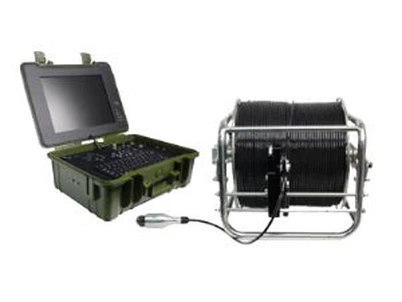
For instance, when you're using a Underwater dual view borescope inspection camera for underwater inspections, you might need to get really close to the object you're examining. Maybe it's a small crack in a pipe or some debris on the seabed. In such cases, a shorter minimum focus distance is a huge advantage. It allows you to capture detailed images of these small objects up close.


On the other hand, if you're using a Borehole Inspection Camera to inspect a large borehole, you might not need to get as close to the walls. However, having a reasonable minimum focus distance still helps in getting clear images of any irregularities or features on the borehole walls.
Our Wells cameras are designed with different minimum focus distances to cater to a wide range of applications. We understand that one size doesn't fit all, so we've got cameras with varying capabilities.
Some of our cameras have a very short minimum focus distance, as little as a few millimeters. These are great for applications where you need to get extremely close to the object. For example, in micro - inspection tasks, like checking the quality of small electronic components or the condition of tiny mechanical parts. With a short minimum focus distance, you can capture every little detail, ensuring that you don't miss any potential issues.
Other cameras in our range have a slightly longer minimum focus distance, which is more suitable for general - purpose inspections. These cameras can be used in boreholes, underwater environments, or even in industrial settings where you need to get a good view of larger objects or areas.
The minimum focus distance of a camera is determined by several factors. One of the main factors is the lens design. Different lenses have different focusing capabilities. A wide - angle lens, for example, might have a different minimum focus distance compared to a telephoto lens. Our engineers work hard to optimize the lens design of our Wells cameras to achieve the best possible minimum focus distance for each model.
Another factor is the camera's autofocus system. A good autofocus system can quickly and accurately adjust the focus to the correct distance, even if the object is moving or the distance is changing. Our cameras are equipped with advanced autofocus systems that ensure sharp images, regardless of the minimum focus distance.
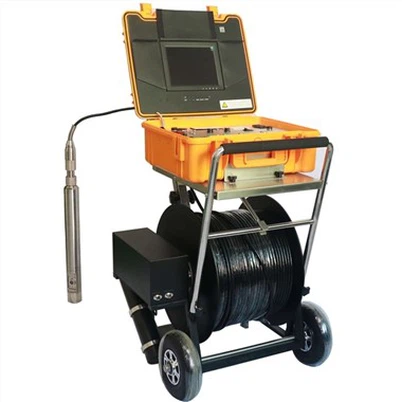
Let's talk a bit more about the Factory Borehole Water Well Camera. This camera is specifically designed for borehole and water well inspections. It has a minimum focus distance that is carefully calibrated to provide clear images of the borehole walls, water level, and any other features inside the well. Whether you're looking for signs of corrosion, blockages, or structural damage, this camera can get the job done.
The minimum focus distance also affects the depth of field. Depth of field refers to the range of distances in front of and behind the focused object that appear sharp in the image. A shorter minimum focus distance usually results in a shallower depth of field. This means that only a small area around the focused object will be sharp, while the rest of the image might be blurred. On the other hand, a longer minimum focus distance can give you a greater depth of field, which is useful when you want more of the scene to be in focus.
When choosing a Wells camera, it's important to consider your specific needs. Think about the type of objects you'll be inspecting, the distance at which you'll be working, and the level of detail you need. If you're not sure which camera is right for you, our team of experts is always here to help. We can provide you with all the information you need to make an informed decision.
In addition to the minimum focus distance, there are other features of our Wells cameras that you might find useful. For example, many of our cameras have high - resolution sensors that can capture clear and detailed images even in low - light conditions. They also come with durable housings that can withstand harsh environments, whether it's underwater, in a borehole, or in an industrial setting.
We're constantly working on improving our cameras. Our R & D team is always looking for ways to enhance the minimum focus distance, as well as other aspects of the camera's performance. We use the latest technology and materials to ensure that our cameras are at the forefront of the industry.
If you're in the market for a camera for borehole inspections, underwater surveys, or any other application, I highly recommend considering our Wells cameras. Our wide range of models with different minimum focus distances means that you're sure to find a camera that meets your requirements.
So, if you're interested in learning more about our cameras or have any questions about the minimum focus distance, don't hesitate to reach out. We're here to assist you with all your camera needs. Whether you're a professional inspector, an engineer, or someone who just needs a reliable camera for a specific task, we've got you covered.
Contact us today to start a conversation about how our Wells cameras can benefit your project. We're looking forward to working with you and helping you find the perfect camera solution.
References
- Camera Technology Handbook
- Underwater Inspection Guidelines
- Borehole Inspection Best Practices