
How do ROV robots perform in areas with strong eddies?
Leave a message

ROV (Remotely Operated Vehicle) robots have emerged as indispensable tools in various underwater exploration and inspection tasks. These sophisticated machines are used in a wide range of industries, from oil and gas to scientific research. However, when it comes to areas with strong eddies, the performance of ROV robots faces unique challenges and opportunities. As a leading ROV robot supplier, we have extensive experience in understanding how these vehicles perform in such demanding environments.
Understanding Eddies and Their Impact on ROVs
Eddies are circular currents of water that can range in size from a few centimeters to several kilometers. In areas with strong eddies, the water flow is complex and unpredictable, creating a dynamic and challenging environment for ROV operations. The forces exerted by eddies can affect the ROV's movement, stability, and the accuracy of its data collection.
One of the primary challenges that strong eddies pose to ROVs is the difficulty in maintaining position and orientation. Eddies can push the ROV off course, making it challenging to stay on target during inspections or data collection. This requires the ROV to have powerful thrusters and advanced control systems to counteract the forces of the eddies and maintain a stable position.
Another issue is the impact of eddies on the ROV's sensors and cameras. The turbulent water flow can cause debris and sediment to be stirred up, reducing visibility and potentially damaging the sensors. This can affect the quality of the data collected by the ROV, such as images and sonar readings, which are crucial for accurate inspections and analysis.
How Our ROV Robots Are Designed to Handle Strong Eddies
At our company, we understand the challenges that strong eddies present to ROV operations. That's why we have designed our ROV robots with advanced features and technologies to ensure optimal performance in these demanding environments.
Powerful Thrusters and Propulsion Systems
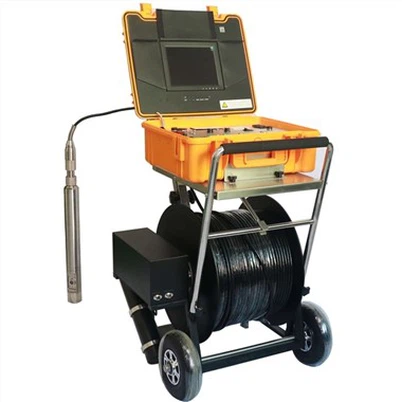
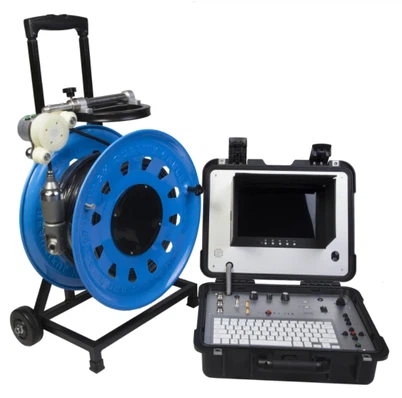
Our ROVs are equipped with high - power thrusters that can generate sufficient force to counteract the strong currents of eddies. These thrusters are strategically placed around the ROV to provide precise control in all directions. The advanced propulsion systems allow the ROV to maintain its position and orientation, even in the most turbulent waters. For example, our 5000m Depth Oil Inspection Camera is designed with a robust thruster system that enables it to operate effectively in deep - sea areas where strong eddies may be present.
Advanced Control Systems
We have incorporated state - of - the - art control systems into our ROVs. These systems use real - time data from the ROV's sensors to adjust the thrusters' output and maintain stability. The control algorithms are designed to adapt to the changing conditions of the eddies, ensuring that the ROV can respond quickly to any disturbances. This allows for more precise control and better performance during inspections and data collection.
High - Quality Sensors and Cameras
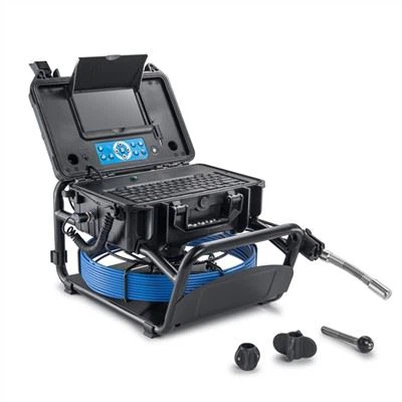
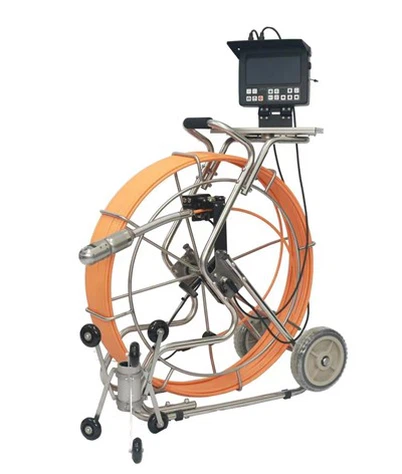
Our ROVs are equipped with high - quality sensors and cameras that are designed to withstand the harsh conditions of strong eddies. The cameras have advanced image stabilization technology to reduce the effects of the turbulent water flow on the image quality. Additionally, the sensors are protected by robust housings to prevent damage from debris and sediment. Our Deep Well Camera Drilling Inspection Camera and Oil Well Downhole Inspection Camera are prime examples of our commitment to providing reliable imaging and sensing solutions for challenging environments.
Case Studies: ROV Performance in Eddy - Prone Areas
To illustrate the effectiveness of our ROV robots in areas with strong eddies, let's look at some real - world case studies.
Oil and Gas Industry
In the oil and gas industry, ROVs are often used for pipeline inspections and maintenance. In a recent project in an offshore area known for its strong eddies, our ROV was deployed to inspect an underwater pipeline. Despite the challenging conditions, the ROV's powerful thrusters and advanced control system allowed it to maintain a stable position along the pipeline. The high - quality cameras provided clear images of the pipeline's condition, enabling the operators to identify potential issues such as corrosion and leaks. This inspection was crucial for ensuring the safety and integrity of the pipeline, and our ROV's performance was highly commended by the client.
Scientific Research
In scientific research, ROVs are used to study the marine environment. In a project focused on studying the effects of eddies on marine life, our ROV was deployed in an area with strong eddies. The ROV's sensors were able to collect valuable data on water temperature, salinity, and the distribution of marine organisms. The advanced control system allowed the ROV to navigate through the eddies and reach specific study sites, providing researchers with accurate and detailed information about the ecosystem.


Maintenance and Support for ROVs in Eddy - Prone Areas
Operating ROVs in areas with strong eddies can take a toll on the equipment. That's why we offer comprehensive maintenance and support services to ensure the long - term performance of our ROVs.
Regular maintenance is essential to keep the ROV's thrusters, sensors, and cameras in optimal condition. Our team of experts can perform routine inspections, cleaning, and calibration of the equipment. We also provide spare parts and technical support to minimize downtime in case of any issues.
In addition, we offer training programs for operators to ensure that they are well - versed in operating the ROVs in challenging eddy conditions. The training covers topics such as ROV control, sensor operation, and safety procedures, enabling operators to make the most of the ROV's capabilities.
Conclusion
In conclusion, areas with strong eddies present significant challenges for ROV operations. However, with the right design, technology, and support, ROV robots can perform effectively in these demanding environments. Our ROV robots, equipped with powerful thrusters, advanced control systems, and high - quality sensors and cameras, are well - suited for operations in eddy - prone areas. Whether it's for oil and gas inspections or scientific research, our ROVs can provide reliable and accurate data.
If you are interested in learning more about our ROV robots and how they can meet your specific needs in areas with strong eddies, we invite you to contact us for a detailed discussion. Our team of experts is ready to assist you in choosing the right ROV solution for your project and provide you with the necessary support and maintenance services.
References
- "Underwater Robotics: Technology and Applications" by Robert A. Farrell
- "Marine Hydrodynamics" by John D. F. Marchaj
- Industry reports on ROV operations in challenging underwater environments.