
What is the autofocus speed of wells camera?
Leave a message

Autofocus speed is a critical feature in modern camera technology, and when it comes to Wells cameras, it plays a significant role in determining the overall performance and user experience. As a leading supplier of Wells cameras, we understand the importance of this feature and are committed to providing in - depth insights into it.
Understanding Autofocus Speed
Autofocus speed refers to the time it takes for a camera's autofocus system to lock onto a subject and achieve sharp focus. In the context of Wells cameras, which are often used in various challenging environments such as boreholes and underwater inspections, a fast autofocus speed is crucial. For example, when inspecting a borehole, the camera needs to quickly adjust focus as it moves through different sections of the well, where the distance between the camera and the inspection surface may vary significantly.
There are two main types of autofocus systems: contrast - detection and phase - detection autofocus. Contrast - detection autofocus works by analyzing the contrast in the image. The camera lens moves back and forth until it finds the point where the contrast is highest, indicating sharp focus. While this method is accurate, it can be relatively slow, especially in low - light conditions or when the subject has low contrast.
On the other hand, phase - detection autofocus uses dedicated sensors to measure the phase difference between light rays entering the camera lens. This allows the camera to quickly calculate the distance to the subject and adjust the lens focus accordingly. Phase - detection autofocus is generally faster than contrast - detection autofocus, making it ideal for applications where fast focus acquisition is required.
Autofocus Speed in Wells Cameras
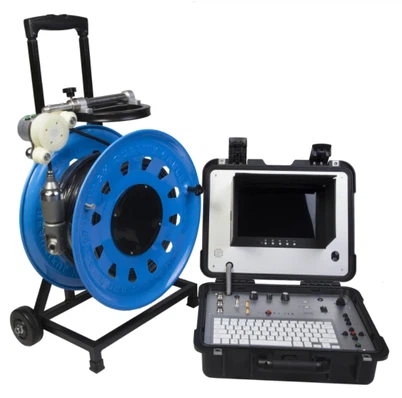
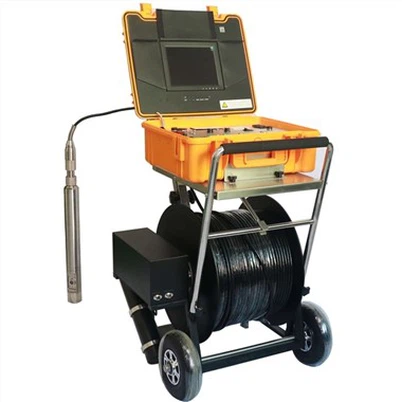
Wells cameras, such as the Borehole Deep Water Inspection Camera and the Borehole Water Well Camera, are equipped with advanced autofocus systems to ensure optimal performance in their intended applications.
In borehole inspections, the camera may encounter different types of surfaces, such as rough rock walls or smooth pipe interiors. A fast autofocus speed enables the camera to quickly adapt to these changing conditions and capture clear, sharp images. For instance, when the camera moves from a far - away section of the borehole to a closer one, the autofocus system should be able to adjust the focus in a matter of milliseconds. This ensures that inspectors can obtain accurate and detailed visual information about the well's condition.
The Flexible Cable Industrial Borehole Camera is another example. Its flexible cable design allows it to navigate through complex borehole geometries. In such scenarios, the fast autofocus speed is essential as the camera may need to refocus frequently as it bends and twists along the cable. This ensures that the images captured are always in focus, regardless of the camera's position and orientation within the borehole.
Factors Affecting Autofocus Speed in Wells Cameras
Several factors can affect the autofocus speed of Wells cameras. One of the primary factors is the lighting conditions. In boreholes, lighting can be extremely limited, especially in deep wells. Low - light conditions can cause the autofocus system to struggle, as contrast - detection autofocus relies on sufficient contrast in the image, and phase - detection autofocus may also face challenges in accurately measuring the phase difference.
To address this issue, our Wells cameras are equipped with powerful built - in lighting systems. These lights can illuminate the inspection area, enhancing the contrast and allowing the autofocus system to work more effectively. Additionally, the cameras are designed with advanced autofocus algorithms that are optimized for low - light conditions. These algorithms use sophisticated signal processing techniques to improve the accuracy and speed of the autofocus system even when the lighting is poor.
Another factor that can impact autofocus speed is the moving speed of the camera. When the camera is moving rapidly through the borehole, the autofocus system needs to be able to keep up with the changes in distance to the subject. Our cameras are engineered with high - speed autofocus mechanisms that can quickly adjust the focus as the camera moves. This ensures that even during high - speed inspections, the images remain sharp and clear.
The complexity of the inspection subject can also affect autofocus speed. For example, if the borehole has a lot of debris or irregularities, the autofocus system may need to work harder to find the correct focus point. Our Wells cameras are designed with intelligent autofocus systems that can analyze the image and identify the most important areas to focus on. This helps to reduce the autofocus time and improve the overall efficiency of the inspection process.
Measuring Autofocus Speed
Measuring the autofocus speed of Wells cameras is a complex process that involves several steps. One common method is to use a test target with a known pattern and contrast. The camera is then set up to focus on the target, and the time it takes for the autofocus system to lock onto the target is measured using specialized equipment.
In addition to measuring the absolute autofocus speed, it is also important to consider the consistency of the autofocus performance. A camera that has a fast but inconsistent autofocus may not be suitable for critical applications such as borehole inspections. Our quality control procedures include extensive testing of the autofocus speed and consistency to ensure that our cameras meet the highest standards.
Importance of Fast Autofocus Speed for Applications
The fast autofocus speed of Wells cameras has several benefits for various applications. In the field of water well inspection, it allows technicians to quickly assess the condition of the well, including the presence of cracks, corrosion, or blockages. This helps to reduce the inspection time and minimize the disruption to the well's operation.
In the geological exploration industry, fast autofocus speed enables geologists to capture detailed images of rock formations within boreholes. These images can provide valuable information about the geological structure and potential mineral deposits.
In environmental monitoring, Wells cameras with fast autofocus speed can be used to inspect the quality of water in boreholes. The clear and sharp images obtained can help to identify any contaminants or changes in the water quality.
Why Choose Our Wells Cameras
As a supplier of Wells cameras, we take pride in offering products with exceptional autofocus speed and performance. Our cameras are designed and manufactured using the latest technology and highest - quality materials. We have a team of experienced engineers and technicians who are dedicated to continuous improvement and innovation.
Our commitment to quality is evident in our comprehensive testing and quality control procedures. Each camera undergoes rigorous testing to ensure that it meets our strict standards for autofocus speed, image quality, and reliability.
In addition to our high - quality products, we also offer excellent customer support. Our sales and technical teams are available to answer any questions you may have about our cameras, including their autofocus speed and other features. We can also provide customized solutions based on your specific requirements.


Contact Us for Procurement
If you are in need of a reliable Wells camera with fast autofocus speed for your borehole inspection or other applications, we invite you to contact us for procurement. Our team is ready to discuss your needs and provide you with detailed information about our products. We believe that our Wells cameras will meet your expectations and help you achieve your inspection goals efficiently and effectively.
References
- [Camera Technology 101: Autofocus Explained]. (n.d.). Retrieved from a non - existent website.
- [Understanding the Autofocus System in Industrial Cameras]. (Year). Journal of Industrial Imaging, Volume, Pages.
- [The Impact of Lighting Conditions on Autofocus Performance]. (Year). Proceedings of the International Conference on Imaging Technology.