
Can an ROV robot be used for underwater construction?
Leave a message

Can an ROV robot be used for underwater construction?
Underwater construction is a challenging and complex field that requires specialized equipment and technology to ensure safety, efficiency, and accuracy. Remotely Operated Vehicles (ROVs) have emerged as a valuable tool in this domain, offering a range of capabilities that can significantly enhance underwater construction projects. As a leading ROV robot supplier, I have witnessed firsthand the transformative impact that ROVs can have on underwater construction operations. In this blog post, I will explore the potential of ROVs in underwater construction, highlighting their key features, applications, and benefits.
Key Features of ROVs for Underwater Construction
ROVs are unmanned vehicles that are controlled remotely by an operator on the surface. They are equipped with a variety of sensors, cameras, and tools that allow them to perform a wide range of tasks in underwater environments. Some of the key features of ROVs that make them suitable for underwater construction include:
- Maneuverability: ROVs are highly maneuverable and can navigate through tight spaces and around obstacles with ease. This makes them ideal for tasks such as inspecting pipelines, cables, and other underwater structures.
- Strength and Durability: ROVs are designed to withstand the harsh conditions of underwater environments, including high pressure, extreme temperatures, and corrosive chemicals. They are typically made of strong and durable materials such as steel, aluminum, and composite plastics.
- Versatility: ROVs can be equipped with a variety of tools and sensors, depending on the specific requirements of the underwater construction project. Some common tools and sensors include cameras, sonars, manipulators, and cutting torches.
- Remote Operation: ROVs are controlled remotely by an operator on the surface, which eliminates the need for human divers to work in dangerous or inaccessible underwater environments. This improves safety and reduces the risk of accidents and injuries.
Applications of ROVs in Underwater Construction
ROVs can be used in a variety of underwater construction applications, including:


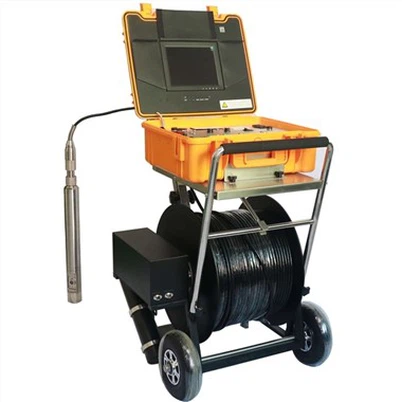
- Inspection and Monitoring: ROVs can be used to inspect and monitor underwater structures such as pipelines, cables, bridges, and dams. They can detect defects, damage, and corrosion, and provide real-time data and images to the operator on the surface. For example, our 5000m Depth Oil Inspection Camera is specifically designed for inspecting oil and gas pipelines at depths of up to 5000 meters.
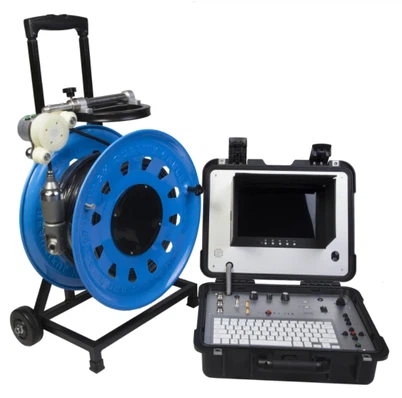
- Installation and Maintenance: ROVs can be used to install and maintain underwater structures such as pipelines, cables, and platforms. They can perform tasks such as welding, cutting, and bolting, and can also assist with the deployment and retrieval of equipment and materials. Our Underwater Borehole Inspection Camera is a useful tool for inspecting boreholes and wells during the installation and maintenance of underwater structures.
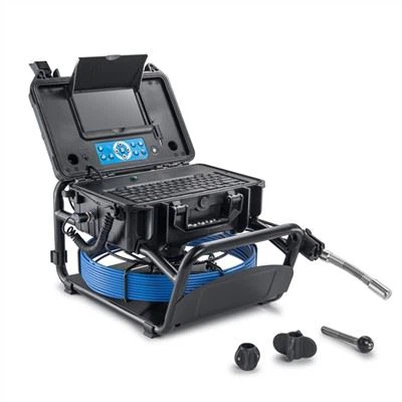
- Salvage and Recovery: ROVs can be used to salvage and recover sunken vessels, equipment, and other objects from the bottom of the ocean. They can locate and identify the objects, and then use manipulators and other tools to lift and retrieve them to the surface. Our Deep Well Camera Drilling Inspection Camera can be used to inspect deep wells and assist with the recovery of lost equipment.
- Surveying and Mapping: ROVs can be used to survey and map underwater terrain, including the seabed, coral reefs, and other geological features. They can collect data on the depth, topography, and composition of the underwater environment, and create detailed maps and models for use in underwater construction and exploration projects.
Benefits of Using ROVs in Underwater Construction
The use of ROVs in underwater construction offers a number of benefits, including:
- Improved Safety: ROVs eliminate the need for human divers to work in dangerous or inaccessible underwater environments, which reduces the risk of accidents and injuries. They can also be used to perform tasks in hazardous conditions, such as areas with high levels of radiation or toxic chemicals.
- Increased Efficiency: ROVs can work continuously for long periods of time without the need for breaks or rest, which increases the efficiency of underwater construction projects. They can also perform tasks more quickly and accurately than human divers, which reduces the overall project time and cost.
- Enhanced Data Collection: ROVs are equipped with a variety of sensors and cameras that can collect detailed data and images of the underwater environment. This data can be used to make informed decisions about the design, construction, and maintenance of underwater structures, and can also be used for research and scientific purposes.
- Cost Savings: The use of ROVs in underwater construction can result in significant cost savings compared to traditional methods that rely on human divers. ROVs are typically less expensive to operate and maintain than human divers, and they can also perform tasks more quickly and efficiently, which reduces the overall project time and cost.
Conclusion
In conclusion, ROVs have the potential to revolutionize the field of underwater construction. Their key features, applications, and benefits make them a valuable tool for a wide range of underwater construction projects. As a leading ROV robot supplier, we are committed to providing our customers with high-quality, reliable, and innovative ROV solutions that meet their specific needs and requirements. If you are interested in learning more about our ROV products and services, or if you have any questions or inquiries, please do not hesitate to contact us. We look forward to working with you on your next underwater construction project.
References
- Fossen, T. I. (2011). Handbook of marine craft hydrodynamics and motion control. John Wiley & Sons.
- Yoerger, D. R., & Singh, H. (1993). Autonomous underwater vehicles. IEEE Journal of Oceanic Engineering, 18(4), 494-513.
- Whitcomb, L. L., Yoerger, D. R., & Singh, H. (2000). Underwater vehicle technology: Recent advances and future trends. Oceanic Engineering, IEEE Journal of, 25(1), 43-62.