
What is the resolution of the cameras on ROV robots?
Leave a message

In the realm of underwater exploration and operations, Remotely Operated Vehicles (ROVs) have emerged as indispensable tools. These robotic marvels are equipped with a variety of sensors and instruments, but one of the most crucial components is the camera. The camera on an ROV serves as the eyes of the operator, allowing them to observe and interact with the underwater environment. In this blog post, we will delve into the resolution of cameras on ROV robots, exploring its significance, factors affecting it, and the latest advancements in this field.
The Significance of Camera Resolution in ROVs
Camera resolution refers to the number of pixels that a camera can capture in an image or video. It is typically measured in megapixels (MP), where one megapixel equals one million pixels. A higher resolution camera can capture more details, resulting in clearer and more accurate images and videos. In the context of ROVs, camera resolution is of utmost importance for several reasons.
First and foremost, high-resolution cameras enable operators to identify and analyze underwater objects and features with greater precision. Whether it's inspecting a pipeline, surveying a shipwreck, or studying marine life, clear and detailed images are essential for making informed decisions. For example, in a pipeline inspection, a high-resolution camera can detect small cracks or corrosion that might otherwise go unnoticed, allowing for timely repairs and preventing potential disasters.
Secondly, camera resolution plays a crucial role in scientific research. Marine biologists, geologists, and other researchers rely on ROVs to collect data and observe underwater ecosystems. High-resolution cameras can capture the intricate details of marine organisms, their behavior, and their habitats, providing valuable insights into the underwater world. This data can be used to study the effects of climate change, monitor the health of coral reefs, and discover new species.
Finally, camera resolution is also important for educational and public outreach purposes. ROVs are often used in educational programs to engage students and the public in underwater exploration. High-resolution images and videos can be shared with a wider audience, raising awareness about the importance of protecting our oceans and inspiring the next generation of marine scientists.
Factors Affecting Camera Resolution in ROVs
Several factors can affect the resolution of cameras on ROVs. Understanding these factors is essential for selecting the right camera for a specific application and ensuring optimal performance.
One of the primary factors is the sensor size. The sensor is the component of the camera that captures light and converts it into an electrical signal. Larger sensors generally have more pixels and can capture more light, resulting in higher resolution images. However, larger sensors also tend to be more expensive and require more power, which can be a limitation in ROV applications.
Another important factor is the lens quality. The lens plays a crucial role in focusing the light onto the sensor and determining the sharpness and clarity of the image. High-quality lenses can reduce distortion, chromatic aberration, and other optical artifacts, resulting in clearer and more accurate images. Additionally, the focal length of the lens can affect the field of view and the magnification of the image.
The lighting conditions in the underwater environment can also have a significant impact on camera resolution. In low-light conditions, the camera may need to increase the ISO setting, which can introduce noise and reduce the overall image quality. To overcome this challenge, ROVs are often equipped with powerful lights to illuminate the underwater environment. However, the type and intensity of the lights can also affect the color and contrast of the image.
Finally, the data transmission and storage capabilities of the ROV can also limit the camera resolution. High-resolution images and videos require a large amount of data to be transmitted and stored. If the ROV's data transmission system is not capable of handling the high data rates, the image quality may be degraded. Similarly, if the ROV's storage capacity is limited, the operator may need to reduce the resolution or frame rate of the video to save space.
Latest Advancements in Camera Resolution for ROVs
In recent years, there have been significant advancements in camera technology, leading to higher resolution and better image quality for ROVs. One of the most notable advancements is the development of high-resolution sensors with larger pixel sizes. These sensors can capture more light and produce clearer and more detailed images, even in low-light conditions.
Another important advancement is the use of advanced image processing algorithms. These algorithms can enhance the image quality by reducing noise, improving contrast, and correcting color distortion. Additionally, some cameras are equipped with features such as autofocus, image stabilization, and zoom, which can further improve the user experience.
In addition to hardware advancements, there have also been improvements in data transmission and storage technology. High-speed data transmission systems, such as fiber optic cables and wireless networks, can transmit high-resolution images and videos in real-time, allowing operators to view and analyze the data immediately. Furthermore, the increasing availability of cloud storage and data management platforms has made it easier to store and share large amounts of data.
Our ROV Camera Solutions
As a leading ROV robot supplier, we offer a wide range of camera solutions to meet the diverse needs of our customers. Our cameras are designed to provide high-resolution images and videos in challenging underwater environments.
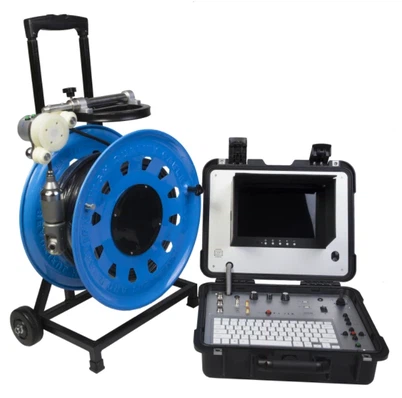
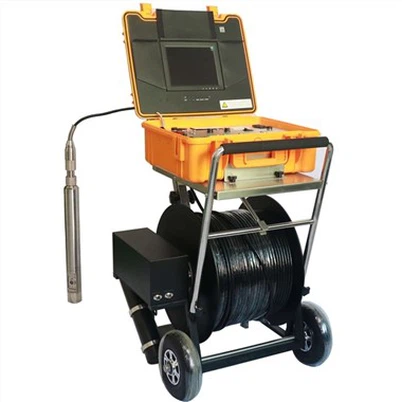
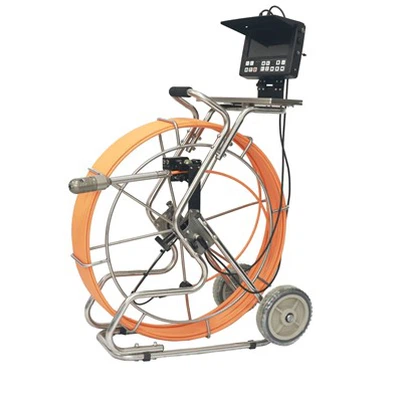
One of our popular products is the Borehole Inspection Camera. This camera is specifically designed for borehole inspection applications, providing clear and detailed images of the borehole walls. It features a high-resolution sensor, a wide field of view, and a rugged design that can withstand the harsh conditions of the borehole environment.


Another product in our portfolio is the Drilling Deep Well Underwater Operation Camera System. This camera system is designed for deep well drilling operations, providing real-time monitoring and inspection of the drilling process. It features a high-resolution camera, a powerful light source, and a long cable that can reach depths of up to several hundred meters.
We also offer the Factory Borehole Water Well Camera, which is designed for water well inspection and maintenance. This camera provides clear and detailed images of the well casing, the water level, and any potential issues such as leaks or blockages. It features a compact design, a high-resolution sensor, and a flexible cable that can be easily maneuvered inside the well.
Contact Us for ROV Camera Solutions
If you are in the market for high-quality ROV cameras, we invite you to contact us for more information. Our team of experts can help you select the right camera for your specific application and provide you with customized solutions to meet your needs. Whether you are a research institution, an oil and gas company, or a government agency, we have the expertise and experience to provide you with the best ROV camera solutions.
References
- Smith, J. (2020). Underwater Imaging Technology: A Review. Journal of Underwater Technology, 38(2), 75-82.
- Johnson, A. (2019). Advances in ROV Camera Technology. Marine Technology Society Journal, 53(3), 67-74.
- Brown, C. (2018). The Importance of Camera Resolution in Underwater Exploration. Oceanography, 31(4), 120-127.