
What sensors do ROV robots typically have?
Leave a message

ROV (Remotely Operated Vehicle) robots are indispensable tools in various underwater operations, from scientific research to industrial inspections. As a leading ROV robot supplier, we understand the critical role that sensors play in the functionality and performance of these remarkable machines. In this blog post, we'll explore the typical sensors found in ROV robots and how they contribute to their effectiveness.
Sonar Sensors
Sonar sensors are a staple in ROV technology. They use sound waves to detect objects and map the underwater environment. There are two main types of sonar sensors commonly used in ROVs: single-beam and multi-beam sonars.
Single-beam sonars emit a single sound wave and measure the time it takes for the wave to bounce back from an object. This information is used to calculate the distance between the ROV and the object. Single-beam sonars are relatively simple and cost-effective, making them suitable for basic depth measurement and obstacle detection.
Multi-beam sonars, on the other hand, emit multiple sound waves in a fan-shaped pattern. This allows them to create a more detailed map of the underwater environment, including the shape and size of objects. Multi-beam sonars are more complex and expensive than single-beam sonars, but they provide much more detailed information, making them ideal for applications such as underwater mapping and surveying.
Camera Sensors
Camera sensors are another essential component of ROV robots. They provide visual feedback to the operator, allowing them to see the underwater environment in real-time. There are several types of camera sensors used in ROVs, including high-definition (HD) cameras, pan and tilt cameras, and low-light cameras.
HD cameras offer high-resolution images and videos, making them ideal for detailed inspections and scientific research. They can capture clear images of underwater structures, marine life, and other objects, providing valuable information to the operator.
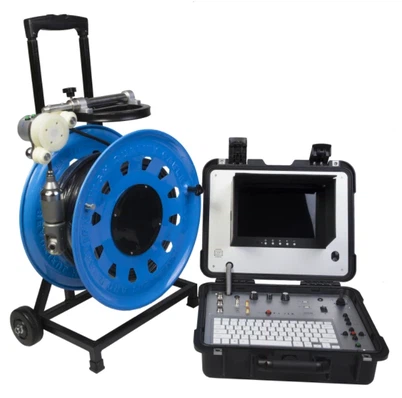
Pan and tilt cameras allow the operator to adjust the direction of the camera, providing a wider field of view and greater flexibility. This is particularly useful for inspecting large areas or objects from different angles. For example, our Underwater Pan and Tilt HD Underwater Camera For Fishing Depth 500m GLF-UDC-V11S Supplier China offers excellent pan and tilt functionality, allowing for precise control and detailed inspections.
Low-light cameras are designed to operate in low-light conditions, such as at great depths or in murky water. They use advanced imaging technology to enhance the visibility of the underwater environment, even in challenging conditions.
Depth Sensors
Depth sensors are used to measure the depth of the ROV in the water. They are essential for maintaining the ROV at a specific depth and for ensuring safe operation. There are several types of depth sensors used in ROVs, including pressure sensors and acoustic sensors.
Pressure sensors measure the pressure of the water at the ROV's location. Since the pressure increases with depth, the pressure sensor can be used to calculate the depth of the ROV. Pressure sensors are relatively simple and reliable, making them a popular choice for depth measurement.
Acoustic sensors use sound waves to measure the distance between the ROV and the water surface. They are more accurate than pressure sensors, especially at greater depths. However, they are also more complex and expensive.
Temperature Sensors
Temperature sensors are used to measure the temperature of the water. This information is important for a variety of reasons, including understanding the behavior of marine life, monitoring the health of underwater structures, and ensuring the proper operation of the ROV.
Temperature sensors can be used to detect changes in water temperature over time, which can indicate the presence of thermal vents or other underwater phenomena. They can also be used to monitor the temperature of the ROV's components, ensuring that they are operating within a safe temperature range.
Compass Sensors
Compass sensors are used to determine the orientation of the ROV in the water. They provide the operator with information about the ROV's heading, allowing them to navigate the underwater environment more effectively.
Compass sensors work by detecting the Earth's magnetic field. They can be used to maintain a specific heading or to follow a pre-defined path. This is particularly useful for applications such as underwater mapping and surveying, where precise navigation is essential.


Altitude Sensors
Altitude sensors are used to measure the distance between the ROV and the seabed. They are important for maintaining a safe distance from the seabed and for ensuring that the ROV does not collide with any objects.
Altitude sensors can use a variety of technologies, including sonar, laser, and infrared. Sonar altitude sensors are the most common type, as they are relatively simple and reliable. They work by emitting a sound wave and measuring the time it takes for the wave to bounce back from the seabed.
Chemical Sensors
Chemical sensors are used to detect the presence of various chemicals in the water. They can be used to monitor water quality, detect pollutants, and study the behavior of marine life.
There are several types of chemical sensors used in ROVs, including pH sensors, dissolved oxygen sensors, and turbidity sensors. pH sensors measure the acidity or alkalinity of the water, while dissolved oxygen sensors measure the amount of oxygen dissolved in the water. Turbidity sensors measure the clarity of the water, which can indicate the presence of suspended particles or pollutants.
Inertial Measurement Units (IMUs)
Inertial Measurement Units (IMUs) are used to measure the ROV's acceleration, angular velocity, and orientation. They provide the operator with information about the ROV's movement and stability, allowing them to control the ROV more effectively.
IMUs typically consist of accelerometers, gyroscopes, and magnetometers. Accelerometers measure the ROV's acceleration in three dimensions, while gyroscopes measure the ROV's angular velocity. Magnetometers measure the Earth's magnetic field, which can be used to determine the ROV's orientation.
Conclusion
In conclusion, sensors are an essential component of ROV robots. They provide the operator with valuable information about the underwater environment, allowing them to navigate, inspect, and perform various tasks more effectively. As a ROV robot supplier, we offer a wide range of sensors to meet the needs of different applications. Whether you're conducting scientific research, performing industrial inspections, or exploring the underwater world, our sensors can help you achieve your goals.
If you're interested in learning more about our ROV robots and the sensors we offer, or if you have any questions about purchasing or using our products, please don't hesitate to contact us. We're here to help you find the right solutions for your underwater needs.
References
- "Underwater Robotics: Technology and Applications" by Charles O. Dunstan
- "Sonar Technology for Underwater Exploration" by John R. Jensenius
- "Camera Systems for Underwater Inspection" by David G. Caldwell