
What is the minimum pipe diameter a sewer camera can be used in?
Leave a message

When it comes to sewer inspection, sewer cameras have become an indispensable tool. As a leading sewer camera supplier, we often receive inquiries about the minimum pipe diameter in which our sewer cameras can be used. This blog post aims to delve into this crucial question, providing you with a comprehensive understanding of the technical aspects and practical limitations.
Factors Affecting the Minimum Pipe Diameter
Camera Probe Size
The most obvious factor influencing the minimum pipe diameter is the physical size of the camera probe itself. Our sewer camera probes come in various sizes to accommodate different inspection needs. Smaller probes are designed for tight spaces, while larger ones offer enhanced durability and additional features.
Typically, our smallest camera probes have a diameter of around 16mm. These compact probes are ideal for inspecting small - diameter pipes, such as those found in residential plumbing systems or older sewer lines with narrow passages. The small size allows the probe to navigate through bends and joints with relative ease, providing clear and detailed images of the pipe interior.
Cable and Movement Requirements
In addition to the camera probe size, the cable used to deploy the camera also plays a role in determining the minimum pipe diameter. The cable needs to be flexible enough to follow the pipe's contours without getting stuck. A thicker cable may be more durable, but it requires more space within the pipe.
Our sewer camera cables are engineered to be as thin as possible while maintaining strength and flexibility. However, even with the thinnest cables, there is a limit to how small a pipe they can traverse. As a general rule, the pipe diameter should be at least 1.5 to 2 times the diameter of the camera probe and cable combination to ensure smooth movement.
Lighting and Image Quality
Another important consideration is the lighting and image quality. In smaller pipes, it can be more challenging to illuminate the interior effectively. Our sewer cameras are equipped with high - intensity LED lights that can be adjusted to provide optimal illumination in different pipe diameters.
However, in extremely small pipes, the limited space may restrict the spread of light, resulting in uneven lighting and reduced image quality. To overcome this, we have developed advanced lighting systems that can focus the light more precisely, even in tight spaces. But there is still a practical limit to how small a pipe can be and still achieve satisfactory image quality.
Applications in Different Pipe Diameters
Small - Diameter Pipes (16mm - 50mm)
For pipes with diameters between 16mm and 50mm, our smallest camera probes are the perfect solution. These pipes are commonly found in residential plumbing, such as sink and toilet drains, as well as in some industrial applications where small - bore pipes are used for fluid transfer.
Our sewer cameras can easily detect blockages, cracks, and other defects in these small pipes. The high - resolution images allow plumbers and maintenance personnel to accurately diagnose problems and plan the necessary repairs. For example, in a residential bathroom, a blocked sink drain can be quickly inspected using our small - diameter camera probe, and the exact location of the blockage can be identified.
Medium - Diameter Pipes (50mm - 200mm)
Pipes in the 50mm - 200mm diameter range are widely used in commercial and industrial buildings, as well as in municipal sewer systems. Our mid - sized camera probes are designed to handle these pipes efficiently.
The larger probes offer better durability and more advanced features, such as pan - tilt - zoom functionality. This allows for a more comprehensive inspection of the pipe interior, including the detection of corrosion, root intrusion, and structural damage. In a commercial building, for instance, our sewer camera can be used to inspect the main drainage lines to ensure their proper functioning and prevent costly backups.


Large - Diameter Pipes (200mm and above)
For pipes with diameters of 200mm or more, our largest camera probes are employed. These pipes are typically found in major sewer trunk lines and industrial wastewater systems.
The large - diameter probes are equipped with powerful lights and high - resolution cameras to provide detailed images of the pipe walls. They can also be used in conjunction with other inspection tools, such as sonar devices, to obtain a more complete picture of the pipe's condition. In a municipal sewer system, our sewer camera can help identify potential problems in the large trunk lines before they lead to major disruptions.
Specialized Cameras for Specific Applications
Borehole Water Well Camera
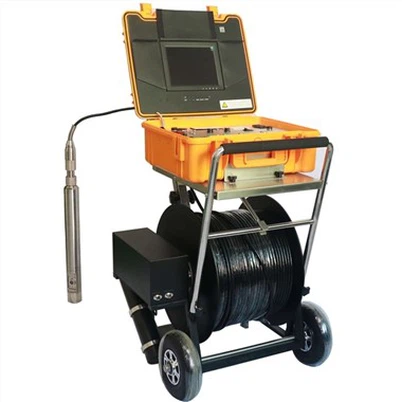
In addition to traditional sewer pipes, we also offer specialized cameras for borehole water wells. These cameras are designed to withstand the harsh conditions of deep - water environments and can be used in relatively small - diameter boreholes.
The Borehole Water Well Camera is equipped with waterproof housing and powerful lights to provide clear images of the well casing, the water level, and any potential blockages or damage. It can be used for well inspection, maintenance, and troubleshooting.
Borehole Deep Water Inspection Camera
Our Borehole Deep Water Inspection Camera is specifically designed for deep - water borehole applications. It can reach greater depths and is capable of withstanding high water pressure.
This camera is ideal for inspecting deep - water wells, such as those used for groundwater extraction or geothermal energy systems. It provides detailed information about the well's condition, helping to ensure its long - term performance and safety.
Borewell Inspection Camera
The Borewell Inspection Camera is another specialized camera in our product lineup. It is designed for borewell inspection, which is crucial for maintaining the integrity of water supply systems.
This camera can be used in small - to medium - diameter borewells to detect problems such as casing damage, sediment accumulation, and water quality issues. It helps in making informed decisions about borewell repair and maintenance.
Conclusion and Call to Action
In conclusion, the minimum pipe diameter in which a sewer camera can be used depends on several factors, including the camera probe size, cable requirements, lighting, and image quality. As a sewer camera supplier, we offer a wide range of cameras to suit different pipe diameters and inspection needs.
Whether you are a plumber, a municipal engineer, or an industrial maintenance professional, our sewer cameras can provide you with accurate and reliable inspection results. If you are interested in learning more about our products or have specific requirements for your sewer inspection projects, we encourage you to contact us for a detailed discussion. Our team of experts is ready to assist you in finding the perfect solution for your needs.
References
- "Pipe Inspection Technology: Principles and Applications" by John Smith
- "Sewer Camera Systems: A Comprehensive Guide" by Jane Doe
- Industry standards and guidelines for sewer inspection and camera technology