
What is the communication method between an ROV robot and the control station?
Leave a message

What is the communication method between an ROV robot and the control station?
As a leading ROV robot supplier, I'm often asked about the communication methods between ROV (Remotely Operated Vehicle) robots and their control stations. Understanding these communication methods is crucial for ensuring smooth and efficient operation of ROVs in various underwater applications. In this blog, I'll delve into the different types of communication methods used in ROV systems, their advantages and limitations, and how they impact the overall performance of the ROV.
Wired Communication
One of the most common communication methods between an ROV and the control station is through a physical cable. This wired connection provides a reliable and stable communication link, allowing for real - time data transfer between the two.
Ethernet - based Cables
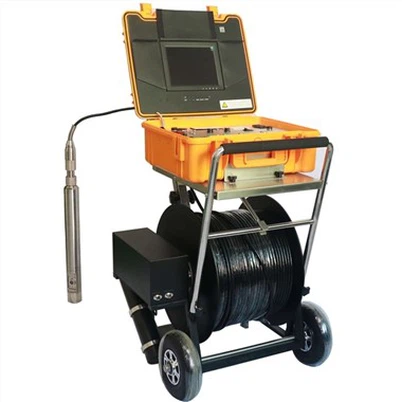
Ethernet cables are widely used in modern ROV systems. They offer high - speed data transmission, which is essential for transmitting high - definition video feeds, sensor data, and control signals. For example, in an underwater exploration mission with our ROVs, Ethernet cables enable the control station to receive high - quality video from the Pan Tilt Dome Camera Underwater Monitor System for Fishing Finders. This camera system can capture detailed images of the underwater environment, and the Ethernet cable ensures that this data is transferred quickly and accurately to the control station.


The advantage of Ethernet cables is their high bandwidth. They can support data transfer rates of up to several gigabits per second, depending on the cable type. However, the length of Ethernet cables is limited. Over long distances, signal attenuation becomes a significant problem, which may require signal repeaters.
Coaxial Cables
Coaxial cables were also commonly used in the past. They are known for their good resistance to electromagnetic interference. In applications such as oil well exploration, where there are many sources of electromagnetic interference, coaxial cables can ensure reliable communication. The Oil Well Downhole Camera For 3500m can be connected to the control station via a coaxial cable. This cable can transmit the video data from the camera inside the oil well to the surface control station without being severely affected by the surrounding electromagnetic fields.
The drawback of coaxial cables is that they have lower bandwidth compared to Ethernet cables. This may limit the amount of data that can be transmitted, especially for high - definition video and complex sensor data.
Wireless Communication
In some cases, wireless communication methods are preferred, especially when flexibility and mobility are required.
Acoustic Communication
Acoustic communication is a popular wireless method for underwater ROVs. Sound waves are used to transmit data through the water. This method is suitable for long - distance communication in the underwater environment. For example, when an ROV is exploring a large underwater area, acoustic communication can maintain the connection between the ROV and the control station.
The advantage of acoustic communication is its ability to work over long distances in water. However, it has some limitations. The data transfer rate is relatively low compared to wired methods. The speed of sound in water is also affected by factors such as water temperature, salinity, and pressure, which can cause signal distortion.
Radio Frequency (RF) Communication
RF communication can be used in certain shallow - water environments or when the ROV is close to the surface. It offers higher data transfer rates compared to acoustic communication in some situations. For example, in a shallow - water inspection of a coastal structure using our ROV equipped with an RF communication module, the control station can quickly receive data from the ROV.
However, the range of RF communication in water is limited due to the high attenuation of radio waves in water. It is mainly suitable for short - range applications.
Hybrid Communication Systems
To take advantage of both wired and wireless communication methods, many modern ROV systems use hybrid communication systems. For instance, a wired connection can be used for high - speed data transfer of critical information such as video feeds and real - time control signals. Meanwhile, wireless communication can be used as a backup or for additional functions, such as transmitting low - priority sensor data or for emergency communication.
In a sewer drain pipe inspection project, our ROV with a Best Underwater Sewer Drain Pipe Inspection Video Camera 100m uses a hybrid communication system. The wired cable provides a stable connection for the high - definition video feed from the camera, while the acoustic communication can be used to report any sudden changes in environmental parameters to the control station if the wired connection is disrupted.
Impact on ROV Performance
The choice of communication method has a significant impact on the performance of the ROV. A reliable communication link ensures that the control station can accurately send control commands to the ROV and receive real - time feedback. For example, in a precision underwater assembly task, a stable and high - speed communication method is essential for the operator at the control station to precisely control the movement of the ROV's manipulators.
In addition, the communication method also affects the ROV's operational range. Wired ROVs are limited by the length of the cable, while wireless ROVs, especially those using acoustic communication, can operate over larger distances but with some trade - offs in data transfer speed.
Conclusion
In summary, the communication between an ROV robot and the control station can be achieved through various methods, each with its own advantages and limitations. Wired communication provides high - speed and reliable data transfer but is limited by cable length. Wireless communication offers more flexibility but may have lower data transfer rates and range limitations. Hybrid communication systems combine the best of both worlds.
If you are in the market for an ROV robot for your underwater project, understanding these communication methods is essential. It will help you choose the right ROV system that meets your specific needs. Whether you are involved in underwater exploration, oil well inspection, or sewer drain pipe inspection, our company can provide you with high - quality ROVs equipped with the most suitable communication systems. Don't hesitate to contact us for more information or to discuss your procurement requirements. We are ready to work with you to ensure the success of your underwater operations.
References
- Groen, F. C. A., & van den Berg, V. (2001). Underwater robotics: a survey of major research areas. In Proceedings of the 2001 IEEE International Conference on Systems, Man, and Cybernetics (Vol. 1, pp. 84 - 89). IEEE.
- Stojanovic, M. (2006). Underwater acoustic communication channels: Propagation models and statistical characterization. IEEE Communications Magazine, 44(11), 84 - 89.