
How does an ROV robot help in marine archaeology?
Leave a message

Marine archaeology is a fascinating field that uncovers the secrets of our past hidden beneath the ocean's surface. Over the years, technological advancements have played a crucial role in enhancing the efficiency and effectiveness of marine archaeological expeditions. One such technology that has revolutionized the field is the Remotely Operated Vehicle (ROV) robot. As a leading ROV robot supplier, I have witnessed firsthand how these remarkable machines have transformed marine archaeology. In this blog, I will explore the various ways in which ROV robots assist in marine archaeology.
Exploration and Mapping
One of the primary roles of ROV robots in marine archaeology is exploration and mapping. The ocean floor is vast and largely unexplored, and ROVs provide a cost - effective and safe way to survey large areas. Equipped with high - resolution cameras, sonar systems, and other sensors, ROVs can capture detailed images and data of the seabed.
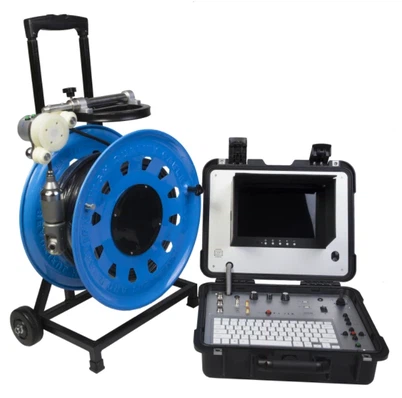
The cameras on ROVs can provide clear visuals of the underwater environment, allowing archaeologists to identify potential archaeological sites. For example, the 360 Degree Water Well Inspection Camera that we supply offers a comprehensive view of the underwater area. This 360 - degree view is invaluable in detecting small artifacts or structural remains that might otherwise be missed.
Sonar systems on ROVs are used to create detailed maps of the ocean floor. These maps can show the topography of the seabed, including any anomalies that could indicate the presence of an archaeological site. By analyzing these maps, archaeologists can plan their excavation sites more effectively. The Drilling Deep Well Underwater Operation Camera System is also an excellent tool for deep - sea exploration. It can withstand high pressures and provide clear images even in challenging underwater conditions, helping archaeologists to explore deeper and more remote areas.


Artifact Recovery
ROV robots are also essential for artifact recovery in marine archaeology. Once an archaeological site has been identified, ROVs can be used to carefully retrieve artifacts from the seabed. Our ROVs are equipped with robotic arms that can be precisely controlled from the surface. These arms can gently pick up delicate artifacts without causing damage.
The 100m Underwater Vertical Observation Borehole AHD Waterproof Inspection Camera can be used to guide the robotic arm during the recovery process. It provides real - time visuals of the artifact, allowing the operator to make accurate movements. This is especially important when dealing with fragile or valuable artifacts, as any damage during the recovery process could result in the loss of important historical information.
Preservation and Documentation
Preservation and documentation are crucial aspects of marine archaeology. ROVs play a significant role in both of these areas. The high - resolution cameras on ROVs can capture detailed images and videos of the archaeological site and artifacts. These visual records are essential for documenting the site's condition and the artifacts' features.
In addition to visual documentation, ROVs can also collect data on the underwater environment, such as water temperature, salinity, and pH levels. This data is important for understanding the preservation conditions of the artifacts and the site. By monitoring these environmental factors, archaeologists can develop strategies to preserve the artifacts and the site for future generations.
Safety and Efficiency
ROV robots offer significant safety benefits in marine archaeology. Instead of sending human divers into potentially dangerous underwater environments, ROVs can be used to perform tasks such as exploration, mapping, and artifact recovery. This reduces the risk of injury or death to divers, especially in deep - sea or hazardous conditions.
Moreover, ROVs are highly efficient. They can operate continuously for long periods, covering large areas in a relatively short time. This allows archaeologists to conduct more comprehensive surveys and recover more artifacts in a shorter period. As a result, the overall cost of marine archaeological expeditions can be reduced.
Case Studies
To illustrate the effectiveness of ROV robots in marine archaeology, let's look at some real - world case studies. In a recent expedition to a shipwreck off the coast of Greece, our ROVs were used to explore the site. The ROVs' high - resolution cameras captured detailed images of the shipwreck, revealing the layout of the vessel and the location of various artifacts. The robotic arms on the ROVs were then used to carefully retrieve several artifacts, including pottery and coins.
In another case, an ROV was used to explore a submerged ancient city in the Mediterranean Sea. The sonar system on the ROV created a detailed map of the city, showing the layout of the buildings and streets. The cameras on the ROV provided clear visuals of the structures, allowing archaeologists to study the architecture and culture of the ancient city.
Conclusion
In conclusion, ROV robots have become an indispensable tool in marine archaeology. They offer a range of benefits, including exploration and mapping, artifact recovery, preservation and documentation, and improved safety and efficiency. As a leading ROV robot supplier, we are committed to providing high - quality ROVs that meet the needs of marine archaeologists.
If you are involved in marine archaeology or any underwater exploration project, and you are interested in our ROV robots, we encourage you to contact us for a detailed discussion. Our team of experts is ready to assist you in choosing the right ROV for your specific requirements. We look forward to working with you to uncover the secrets of the underwater world.
References
- Ballard, R. D. (1987). The Discovery of the Titanic. National Geographic, 172(4), 468 - 499.
- Green, J. P. (2010). Marine Archaeology: A Very Short Introduction. Oxford University Press.
- Muckelroy, K. (1978). Archaeology of the Sea. Thames & Hudson.