
How do ROV robots interact with underwater structures?
Leave a message

Underwater exploration and infrastructure maintenance are challenging tasks that require specialized technology. Remotely Operated Vehicles (ROVs) have emerged as indispensable tools in these domains, enabling us to interact with underwater structures in ways that were once impossible. As a proud supplier of ROV robots, I am excited to delve into the intricacies of how these remarkable machines interact with underwater structures.
The Basics of ROV Robots
ROVs are unmanned submersible vehicles controlled from the surface by a human operator. They come in various shapes and sizes, each designed to perform specific tasks in different underwater environments. These vehicles are equipped with a range of sensors, cameras, and manipulator arms that allow them to collect data, perform inspections, and carry out repairs on underwater structures.
One of the key advantages of ROVs is their ability to access areas that are difficult or dangerous for human divers to reach. They can operate at great depths, in harsh conditions, and in areas with limited visibility. This makes them ideal for applications such as oil and gas exploration, underwater construction, scientific research, and marine archaeology.
Sensors and Navigation
To interact effectively with underwater structures, ROVs rely on a variety of sensors to gather information about their surroundings. These sensors include sonar, cameras, and depth sensors, which provide the operator with real-time data on the location, shape, and condition of the structure.
Sonar systems are used to create detailed maps of the underwater environment, allowing the operator to navigate the ROV around obstacles and locate the target structure. Cameras provide visual information, enabling the operator to inspect the structure for damage, corrosion, or other issues. Depth sensors help the operator maintain a stable altitude and position relative to the structure.
In addition to these sensors, ROVs are also equipped with navigation systems that allow them to move accurately and precisely in the water. These systems use a combination of GPS, inertial measurement units, and acoustic positioning to determine the ROV's location and orientation. This enables the operator to control the ROV's movement with a high degree of accuracy, even in challenging conditions.
Manipulator Arms and Tools
Once the ROV has reached the target structure, it can use its manipulator arms and tools to interact with the structure directly. Manipulator arms are robotic arms that are attached to the ROV and can be controlled by the operator to perform a variety of tasks. These tasks include grasping objects, turning valves, and performing repairs.
The manipulator arms on ROVs are typically equipped with a variety of tools, such as cutting torches, welding equipment, and cleaning brushes. These tools can be used to repair damage to the structure, remove debris, or perform other maintenance tasks. The operator can control the movement of the manipulator arms and tools using a joystick or other control device, allowing them to perform precise and complex tasks.
Applications of ROVs in Underwater Structure Interaction
ROVs are used in a wide range of applications to interact with underwater structures. Some of the most common applications include:
-
Oil and Gas Exploration: ROVs are used to inspect and maintain underwater pipelines, platforms, and other infrastructure in the oil and gas industry. They can be used to detect leaks, perform repairs, and monitor the condition of the structures over time.
-
Underwater Construction: ROVs are used to assist in the construction of underwater structures, such as bridges, tunnels, and offshore wind farms. They can be used to install and connect pipes, cables, and other components, as well as to perform inspections and quality control checks.
-
Scientific Research: ROVs are used in scientific research to study the underwater environment, including marine life, geology, and oceanography. They can be used to collect samples, take measurements, and perform experiments in areas that are difficult or impossible for human divers to reach.
-
Marine Archaeology: ROVs are used in marine archaeology to explore and document underwater archaeological sites. They can be used to locate and photograph artifacts, map the site, and collect data on the history and culture of the area.
Our ROV Products and Solutions
As a leading supplier of ROV robots, we offer a wide range of products and solutions to meet the needs of our customers. Our ROVs are designed to be reliable, easy to use, and cost-effective, making them ideal for a variety of applications.
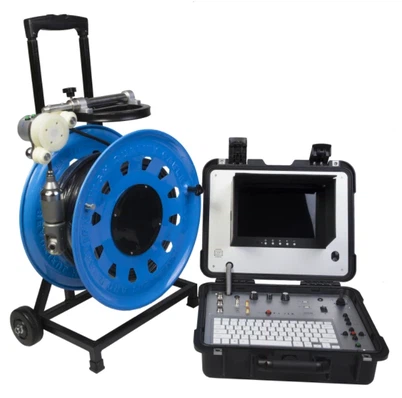
One of our most popular products is the Factory Borehole Water Well Camera. This camera is designed to be used in boreholes and water wells to inspect the condition of the well casing and the surrounding rock formation. It is equipped with a high-resolution camera and a powerful LED light, allowing the operator to see clearly in low-light conditions.
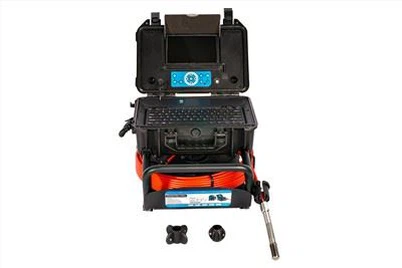
Another product that we offer is the Underwater dual view borescope inspection camera. This camera is designed to be used in underwater environments to inspect the interior of pipes, tanks, and other structures. It is equipped with a dual-view camera head, which allows the operator to see both the front and the side of the structure at the same time.
Finally, we also offer the Well video 8 inch HD dual camera rotating probe deep well camera drilling inspection camera. This camera is designed to be used in deep wells to inspect the condition of the well casing and the surrounding rock formation. It is equipped with an 8-inch HD dual camera rotating probe, which allows the operator to see in all directions around the well.
Conclusion
In conclusion, ROV robots are powerful tools that enable us to interact with underwater structures in ways that were once impossible. They are equipped with a range of sensors, cameras, and manipulator arms that allow them to collect data, perform inspections, and carry out repairs on underwater structures. As a supplier of ROV robots, we are committed to providing our customers with the highest quality products and solutions to meet their needs.


If you are interested in learning more about our ROV products and solutions, or if you have any questions about how ROV robots interact with underwater structures, please do not hesitate to contact us. We would be happy to discuss your requirements and provide you with a customized solution.
References
- Fossen, T. I. (2011). Handbook of Marine Craft Hydrodynamics and Motion Control. John Wiley & Sons.
- Yoerger, D. R., et al. (2007). Autonomous Underwater Vehicles. Springer Science & Business Media.
- Whitcomb, L. L., Yoerger, D. R., & Singh, S. (2000). The Application of Remotely Operated Vehicles to Underwater Intervention. IEEE Journal of Oceanic Engineering, 25(2), 137-150.