
What are the common problems with ROV robots?
Leave a message

As an ROV (Remotely Operated Vehicle) robot supplier, I've had my fair share of experiences with these amazing machines. They're used in a ton of different industries, from underwater exploration to industrial inspections. But like any piece of tech, ROV robots come with their own set of common problems. In this blog, I'll share some of the issues I've seen and how they can be tackled.
1. Communication Issues
One of the most frequent problems with ROV robots is communication glitches. These robots rely on a stable connection between the operator on the surface and the vehicle underwater. If there's interference or a weak signal, it can cause all sorts of headaches.
For instance, radio frequency interference can disrupt the communication link. This can happen when there are other electronic devices operating in the same frequency range. Saltwater can also affect the signal, as it's a conductor and can absorb or scatter radio waves.
To deal with this, we often recommend using a fiber optic cable for communication. It's more reliable and less prone to interference compared to traditional radio or electrical cables. Another solution is to use frequency-hopping spread spectrum (FHSS) technology, which helps the ROV switch between different frequencies to avoid interference.
2. Power Problems
Power is another major issue. ROV robots need a lot of energy to operate, especially if they're equipped with high-powered cameras, lights, and other accessories. Battery life can be a real challenge, especially for longer missions.


Sometimes, the battery might not hold a charge properly, or it might drain too quickly. This could be due to a faulty battery, a power-hungry component, or a problem with the charging system.
To address this, we suggest using high-capacity batteries and having a backup power supply. Regular maintenance of the battery and the power system is also crucial. We also offer power management systems that can optimize the energy consumption of the ROV, ensuring that it lasts as long as possible.
3. Camera and Sensor Malfunctions
The cameras and sensors on an ROV are its eyes and ears. If they malfunction, it can seriously affect the robot's ability to perform its tasks.
Cameras can get dirty or damaged, especially in harsh underwater environments. The lenses might fog up, or the image quality might degrade over time. Sensors, on the other hand, can give inaccurate readings due to calibration issues or damage.
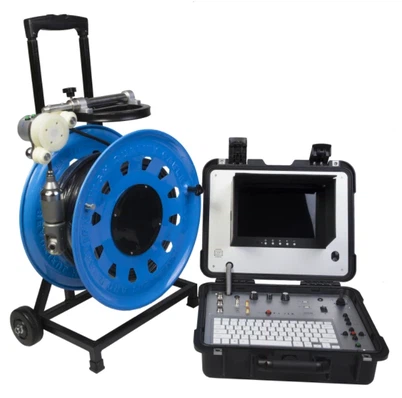
We have some great solutions for these problems. For example, we offer a Waterproof Camera System For Deep Well that's designed to withstand the rigors of underwater use. It has a high-resolution camera and a waterproof housing to protect it from the elements. We also provide regular calibration services for sensors to ensure accurate readings.
4. Mobility and Maneuverability
ROV robots need to be able to move around easily in the water. However, they can face challenges when it comes to mobility and maneuverability.
The design of the ROV can affect its ability to move smoothly. For example, if the thrusters are not properly aligned or if the body of the robot is too heavy, it can make it difficult to control. Strong currents can also pose a problem, as they can push the ROV off course.
To improve mobility, we design our ROVs with advanced thruster systems that provide better control and stability. We also take into account the hydrodynamics of the robot to reduce drag and improve efficiency. Additionally, we offer training programs for operators to help them handle the ROV in different conditions.
5. Mechanical Failures
Like any mechanical device, ROV robots can experience mechanical failures. This can include problems with the joints, motors, or other moving parts.
Wear and tear over time can cause parts to break or malfunction. Corrosion can also be an issue, especially in saltwater environments.
Regular maintenance is key to preventing mechanical failures. We recommend a schedule of inspections and replacements of worn-out parts. We also use high-quality materials and components in our ROVs to reduce the risk of failure.
6. Software and Control System Issues
The software and control system of an ROV are critical for its operation. If there are bugs or glitches in the software, it can lead to erratic behavior or even complete failure of the robot.
Software updates are important to fix bugs and improve performance. However, sometimes the updates can cause compatibility issues with other components of the ROV.
We have a dedicated team of software engineers who work on developing and maintaining the software for our ROVs. We also provide regular software updates to our customers to ensure that their robots are running smoothly.
7. Environmental Challenges
ROV robots operate in some of the most challenging environments on Earth. They have to deal with extreme temperatures, high pressures, and corrosive substances.
For example, in deep-sea environments, the pressure can be so high that it can crush the ROV if it's not properly designed. Cold temperatures can also affect the performance of the batteries and other components.
We design our ROVs to withstand these environmental challenges. We use materials that are resistant to corrosion and can handle high pressures. We also conduct extensive testing in simulated environments to ensure that our ROVs can perform reliably in the real world.
Conclusion
ROV robots are amazing pieces of technology, but they're not without their problems. As a supplier, we're constantly working to improve the design and performance of our ROVs to address these issues. If you're in the market for an ROV robot, or if you're experiencing problems with your existing one, don't hesitate to reach out. We're here to help you find the best solutions for your needs. Whether you're looking for a Borehole Inspection Camera With DVR Unit or a 360 Degree Water Well Inspection Camera, we've got you covered. Contact us today to discuss your requirements and start a purchase negotiation.
References
- Underwater Robotics Handbook
- Journal of Underwater Technology
- ROV Industry Reports