
What are the sonar capabilities of ROV robots?
Leave a message

As a supplier of ROV (Remotely Operated Vehicle) robots, I am frequently asked about the sonar capabilities of these remarkable machines. Sonar, an acronym for Sound Navigation and Ranging, is a technology that uses sound propagation to navigate, communicate with, or detect objects on or under the surface of the water. In the context of ROV robots, sonar plays a crucial role in enabling these vehicles to operate effectively in underwater environments.
How Sonar Works in ROV Robots
Sonar systems in ROV robots typically consist of a transmitter, a receiver, and a signal processing unit. The transmitter emits a sound wave, usually in the form of a pulse, into the water. When this sound wave encounters an object, a portion of it is reflected back towards the ROV. The receiver then picks up this reflected signal, and the signal processing unit analyzes it to determine the distance, direction, and sometimes the size and shape of the object.
There are two main types of sonar used in ROV robots: active sonar and passive sonar. Active sonar systems emit their own sound waves and then listen for the echoes. This type of sonar is useful for detecting and ranging objects in the water. Passive sonar, on the other hand, only listens for sounds emitted by other sources, such as the noise made by a ship's engines or the movements of marine life. Passive sonar is often used for monitoring and surveillance purposes.
Applications of Sonar in ROV Operations
The sonar capabilities of ROV robots have a wide range of applications in various industries. One of the most common uses is in underwater exploration and mapping. ROVs equipped with sonar can create detailed maps of the seafloor, including the location of underwater structures, such as reefs, shipwrecks, and pipelines. This information is invaluable for scientific research, oil and gas exploration, and marine conservation efforts.
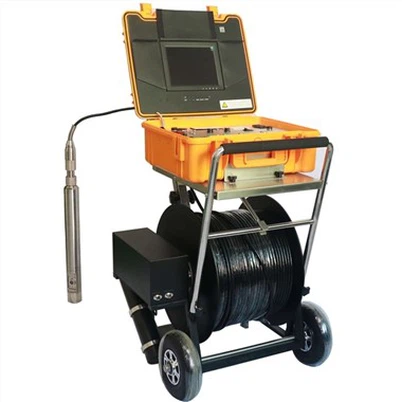
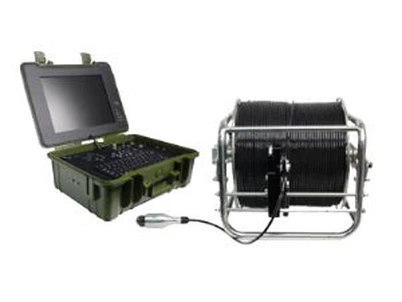
In the field of offshore oil and gas, ROVs with sonar are used for inspection and maintenance tasks. Sonar can detect damage to pipelines, platforms, and other underwater infrastructure, allowing operators to identify and address potential problems before they become serious. For example, Deep Well Camera Drilling Inspection Camera can be used in conjunction with sonar to provide a comprehensive view of the wellbore, ensuring the safety and efficiency of oil and gas operations.
Another important application is in search and rescue operations. ROVs equipped with sonar can quickly scan large areas of water to locate missing persons, sunken vessels, or other objects of interest. The ability to detect objects in low visibility conditions makes sonar an essential tool in these types of operations.
Advanced Sonar Technologies for ROVs
Over the years, there have been significant advancements in sonar technology for ROV robots. One of the most notable developments is the use of multibeam sonar systems. These systems emit multiple sound beams simultaneously, allowing for a wider coverage area and more detailed mapping. Multibeam sonar can provide high-resolution images of the seafloor, which are useful for a variety of applications, including habitat mapping and archaeological surveys.
Another emerging technology is synthetic aperture sonar (SAS). SAS uses signal processing techniques to create a virtual aperture that is much larger than the physical size of the sonar transducer. This results in higher resolution images and better detection capabilities, especially for small or distant objects. SAS is particularly useful in military and security applications, where the ability to detect and identify underwater threats is critical.


Integration with Other Sensors
Sonar is often integrated with other sensors on ROV robots to provide a more comprehensive view of the underwater environment. For example, cameras can be used to provide visual confirmation of objects detected by sonar. Oil Well Downhole Camera For 3500m can be used in combination with sonar to inspect the interior of oil wells, providing both acoustic and visual information.
In addition to cameras, ROVs may also be equipped with other sensors, such as depth sensors, temperature sensors, and chemical sensors. These sensors can provide valuable information about the physical and chemical properties of the water, which can be useful for environmental monitoring and scientific research.
Challenges and Limitations
While sonar is a powerful tool for ROV robots, it also has some challenges and limitations. One of the main challenges is the presence of background noise in the water. This noise can interfere with the sonar signal, making it difficult to detect and identify objects. To overcome this problem, sonar systems often use sophisticated signal processing algorithms to filter out the noise.
Another limitation is the limited range of sonar. The range of a sonar system depends on several factors, including the frequency of the sound wave, the power of the transmitter, and the properties of the water. In general, higher frequency sound waves have a shorter range but provide better resolution, while lower frequency sound waves have a longer range but lower resolution.
Conclusion
The sonar capabilities of ROV robots are essential for their operation in underwater environments. From exploration and mapping to inspection and maintenance, sonar plays a crucial role in enabling these vehicles to perform a wide range of tasks. With the continuous advancement of sonar technology, ROVs are becoming more capable and versatile, opening up new opportunities in various industries.
If you are interested in learning more about the sonar capabilities of our ROV robots or are considering a purchase for your specific application, we invite you to contact us for a detailed discussion. Our team of experts is ready to provide you with the information and support you need to make an informed decision.
References
- F. L. Degertekin and B. T. Khuri-Yakub, "Micromachined Ultrasonic Transducers: Technology and Potential Applications," Proceedings of the IEEE, vol. 92, no. 1, pp. 29-40, Jan. 2004.
- M. C. Collins and J. W. Harlan, "Underwater Acoustics: A Review of Recent Developments," Annual Review of Fluid Mechanics, vol. 36, pp. 149-179, 2004.
- J. A. Smith, "Principles of Sonar," Naval Undersea Warfare Center Division Newport, Technical Report NUWC-NPT-94-001, 1994.