
What are the remote - control distances of ROV robots?
Leave a message

Hey there! As a supplier of ROV (Remotely Operated Vehicle) robots, I often get asked about the remote - control distances of these amazing machines. So, I thought I'd sit down and write this blog to share some insights with you.
First off, let's understand what ROV robots are. They're basically underwater vehicles that are controlled from the surface. These bad boys are used in a whole bunch of industries, like oil and gas, marine research, and underwater construction. They're equipped with cameras and sensors to carry out tasks like inspections, data collection, and even some light - duty repair work.
Now, the remote - control distance of an ROV robot isn't set in stone. It can vary quite a bit depending on several factors. One of the main factors is the type of communication system used. There are two main types: wired and wireless.
Wired ROVs
Wired ROVs are the most common type. They're connected to the surface control unit via a tether. This tether serves two important purposes. First, it provides power to the ROV, and second, it transmits data between the ROV and the operator on the surface.
The length of the tether directly determines the remote - control distance of a wired ROV. In general, for smaller, consumer - grade ROVs, the tether length can be anywhere from 10 to 50 meters. These are great for things like hobbyist exploration in shallow waters, like lakes or small ponds.
For more professional - grade ROVs used in industries such as oil and gas exploration or deep - sea research, the tether length can be much longer. Some of these ROVs can have tethers that are hundreds or even thousands of meters long. For example, in deep - sea oil well inspections, ROVs with tethers up to 3000 meters are not uncommon. These long - tethered ROVs are designed to reach great depths and perform detailed inspections of underwater infrastructure.
The advantage of wired ROVs is that the data transmission is very reliable. Since the connection is physical, there's less chance of interference compared to wireless systems. However, the long tethers can also be a bit of a hassle. They need to be carefully managed to avoid tangling, and they add weight to the system, which can limit the mobility of the ROV to some extent.
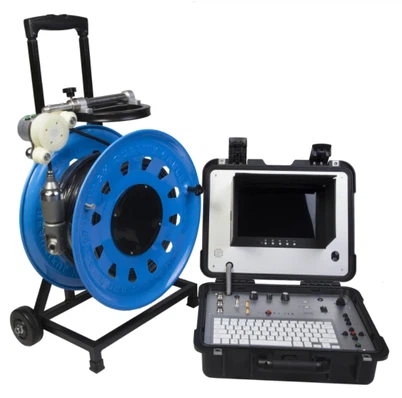
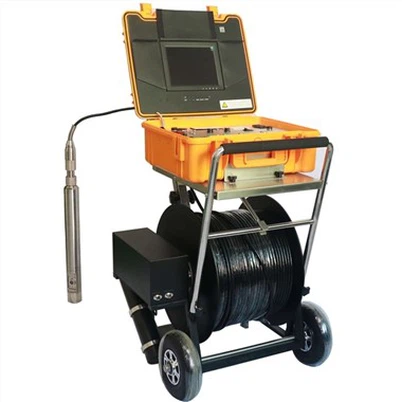
If you're interested in a wired ROV for well inspection, we offer the Well Inspection Dual View Camera System. It comes with a cable that can reach 200 - 500 meters, making it perfect for various well inspection tasks.
Wireless ROVs
Wireless ROVs, on the other hand, use radio waves or acoustic signals to communicate with the surface control unit. These are a bit more high - tech and offer greater mobility since there's no tether holding them back.
However, the remote - control distance of wireless ROVs is more limited compared to wired ones. Radio - based wireless ROVs usually have a range of up to a few hundred meters. This is because radio waves don't travel very well through water. Water is a good absorber of radio frequencies, which limits their range.


Acoustic - based wireless ROVs are a bit better in terms of distance. Acoustic signals can travel much farther through water compared to radio waves. Some advanced acoustic - based wireless ROVs can have a range of up to 1000 meters or more. But even these have their limitations. The quality of the communication can be affected by factors like water temperature, salinity, and the presence of underwater noise sources.
Wireless ROVs are great for applications where mobility is key, like quick surveys of large areas or in situations where it's difficult to manage a long tether. For example, in some marine research projects where the ROV needs to follow marine animals, a wireless ROV can be a better choice.
We also have some great wireless - compatible inspection cameras, like the Drilling Inspection Camera Waterproof 30 Bar. It's a high - quality camera that can be used with both wired and wireless setups, depending on your needs.
Other Factors Affecting Remote - Control Distance
Apart from the communication system, there are other factors that can affect the remote - control distance of an ROV robot.
One of these is the power supply. ROVs need a certain amount of power to operate, and the power requirements can increase with the distance. For long - distance ROVs, a more powerful power supply is needed to ensure that the ROV can function properly. If the power supply is inadequate, the ROV may not be able to reach its maximum potential distance.
The environment also plays a big role. In rough seas or areas with strong currents, the ROV may have a harder time maintaining a stable connection and moving to its intended destination. The presence of obstacles, like rocks or underwater structures, can also interfere with the communication signals, reducing the effective remote - control distance.
Another factor is the payload of the ROV. If the ROV is carrying a heavy payload, like a large sensor or a tool for repair work, it will require more power to move. This can also limit the distance it can travel, especially if the power supply is limited.
Applications and Distance Requirements
Different applications have different requirements when it comes to remote - control distance.
In the oil and gas industry, ROVs are used for well inspections, pipeline maintenance, and subsea equipment installation. For well inspections, ROVs need to be able to reach the bottom of the well, which can be several thousand meters deep. That's why long - tethered wired ROVs are commonly used in this industry. Our Oil Well Downhole Inspection Camera is specifically designed for these types of applications, with a suitable cable length to reach deep into the well.
In marine research, the requirements can vary. For shallow - water research, like studying coral reefs, a short - range ROV may be sufficient. But for deep - sea research, like exploring hydrothermal vents, a long - range ROV is needed. Marine biologists may also use wireless ROVs to follow marine animals without disturbing them, so the mobility and range of the ROV are important in this case.
In underwater construction, ROVs are used for tasks like laying cables and installing structures. The remote - control distance needs to be long enough to cover the area of the construction site. Wired ROVs are often used here because of the reliability of the data transmission, which is crucial for precise construction work.
Conclusion
So, as you can see, the remote - control distance of ROV robots can vary widely depending on the type of communication system, power supply, environment, and application. Whether you need a short - range ROV for a hobbyist project or a long - range ROV for industrial applications, we've got you covered.
If you're interested in purchasing an ROV robot or have any questions about the remote - control distances and which ROV is right for your needs, don't hesitate to get in touch. We're here to help you find the perfect solution for your underwater tasks.
References
- "Underwater Robotics: Technology and Applications" by some well - known author in the field.
- Industry reports on ROV usage in oil and gas, marine research, and construction.