
What are the buoyancy control methods of ROV robots?
Leave a message

Hey there! As a supplier of ROV (Remotely Operated Vehicle) robots, I've got a ton of knowledge about these cool underwater machines. One of the most crucial aspects of ROV operation is buoyancy control. In this blog, I'm gonna break down the different buoyancy control methods of ROV robots, so you can understand how they work and which might be best for your needs.
Why Buoyancy Control Matters
First off, let's talk about why buoyancy control is so important for ROVs. When an ROV is underwater, it needs to maintain a stable position and be able to move up and down efficiently. Proper buoyancy control helps with that. If an ROV is too heavy, it'll sink like a rock, and if it's too light, it'll float to the surface. Neither of these scenarios is good for getting the job done, whether it's underwater exploration, inspection, or any other task.
Passive Buoyancy Control
One of the simplest methods is passive buoyancy control. This involves using materials with specific buoyant properties to achieve the desired balance. For example, some ROVs are built with syntactic foam. This foam is made up of tiny hollow spheres in a resin matrix. It's lightweight and has a high buoyancy-to-weight ratio. By strategically placing syntactic foam on the ROV, we can make it neutrally buoyant, meaning it'll stay at a certain depth without using extra energy to maintain its position.
Another common material for passive buoyancy is plastic. Some plastics have a low density, which makes them float. We can use plastic components in the ROV's design to add buoyancy. The advantage of passive buoyancy control is that it's relatively low-cost and doesn't require any power to operate. However, it's not very flexible. Once the ROV is built with a certain amount of passive buoyancy, it's hard to adjust it on the fly.
Active Buoyancy Control
Now, let's move on to active buoyancy control methods. These are more advanced and allow for greater flexibility in adjusting the ROV's buoyancy.
Variable Ballast Systems
One popular active method is the use of variable ballast systems. These systems work by changing the amount of water or other fluid inside the ROV. There are a few different ways to do this. One approach is to use a piston or a bladder. When the piston moves or the bladder expands, it takes in water, increasing the ROV's weight and making it sink. Conversely, when the piston moves in the opposite direction or the bladder contracts, it expels water, reducing the weight and making the ROV rise.
Another type of variable ballast system uses a pump to move water in and out of the ROV. This is a bit more complex but can be very precise. The advantage of variable ballast systems is that they allow the ROV to change its buoyancy quickly and accurately. This is especially useful when the ROV needs to move between different depths or when it's carrying out tasks that require it to be at a specific depth for a long time.
Hydrostatic Buoyancy Control
Hydrostatic buoyancy control is another active method. This involves using the pressure difference between the water at different depths to adjust the ROV's buoyancy. Some ROVs have a chamber that can be filled or emptied of water based on the hydrostatic pressure. As the ROV descends, the increased pressure can be used to push water into the chamber, increasing the weight. When the ROV needs to rise, the pressure can be released, and the water can be expelled.
This method is quite energy-efficient because it uses the natural pressure of the water. However, it requires a well-designed system to work properly, and it might not be as precise as variable ballast systems in some cases.
Gas-Based Buoyancy Control
Some ROVs use gas to control their buoyancy. For example, compressed air can be used to inflate a balloon or a bladder inside the ROV. When the balloon or bladder is inflated, it adds buoyancy, making the ROV rise. When the air is released, the ROV sinks.
The advantage of gas-based buoyancy control is that it can provide a large amount of buoyancy change quickly. However, it also has some drawbacks. Compressed air systems require a power source to operate the compressor, and there's a risk of gas leakage, which can be dangerous and affect the ROV's performance.
Choosing the Right Buoyancy Control Method
So, how do you choose the right buoyancy control method for your ROV? It depends on several factors. If you're on a tight budget and don't need to change the ROV's depth very often, passive buoyancy control might be the way to go. It's simple and cost-effective.
On the other hand, if you need more flexibility and precision, active buoyancy control methods are better. Variable ballast systems are great for tasks that require frequent depth changes, while hydrostatic buoyancy control can be a good option for energy-efficient long-term operations.
Our ROVs and Buoyancy Control
At our company, we offer a range of ROVs with different buoyancy control methods. Whether you're looking for a simple ROV with passive buoyancy for basic inspection tasks or a more advanced one with active buoyancy control for complex underwater operations, we've got you covered.

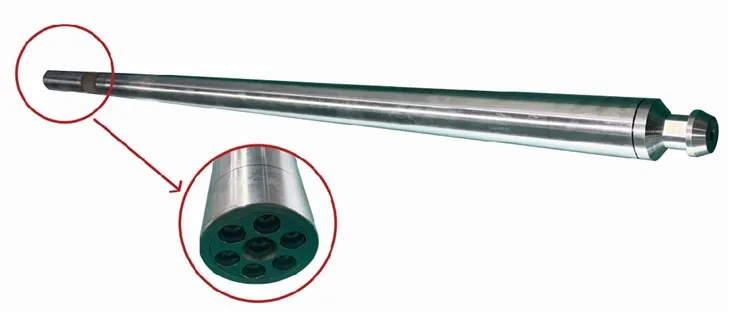
For example, our Borehole Inspection Camera 200 Meters is designed with a combination of passive and active buoyancy control. The passive buoyancy helps it stay stable at a certain depth, while the active system allows for small adjustments when needed. This makes it ideal for borehole inspections where precise positioning is important.
If you need to go deeper, our Oil Gas Borehole Camera For 5000m uses a sophisticated variable ballast system. This allows it to handle the high pressures at great depths and adjust its buoyancy accurately.
And our Underwater Borehole Inspection Camera is another great option with reliable buoyancy control. It's suitable for a variety of underwater inspection tasks.
Contact Us for More Information
If you're interested in our ROVs or have any questions about buoyancy control, don't hesitate to get in touch. We're always happy to discuss your specific needs and help you choose the right ROV for your project. Whether you're in the oil and gas industry, scientific research, or any other field that requires underwater exploration, we can provide you with the best solutions.
References
- Smith, J. (2020). "Underwater Robotics: Principles and Applications."
- Johnson, A. (2019). "Buoyancy Control in Remotely Operated Vehicles."