
How do ROV robots interact with other underwater equipment?
Leave a message

As a supplier of ROV (Remotely Operated Vehicle) robots, I've witnessed firsthand the remarkable synergy between these sophisticated machines and other underwater equipment. The interaction between ROV robots and their underwater counterparts is a complex yet fascinating aspect of modern marine technology, enabling a wide range of applications from scientific research to industrial operations.
1. Complementary Sensing and Data Collection
One of the primary ways ROV robots interact with other underwater equipment is through complementary sensing and data collection. ROVs are often equipped with a variety of sensors, such as sonars, cameras, and environmental sensors, which allow them to gather data about the underwater environment. However, these sensors can be further enhanced by integrating with other specialized underwater equipment.
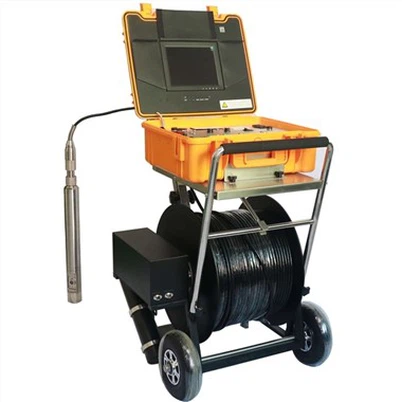
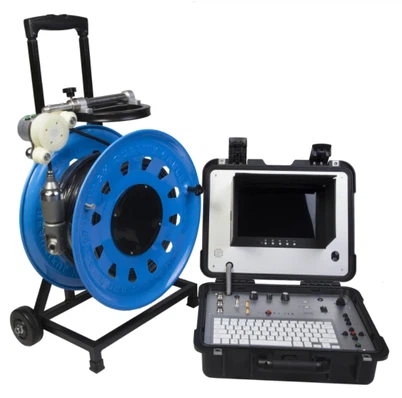
For example, an ROV might be paired with a Hot Sale Borehole Camera 360deg. This high - resolution camera can provide detailed visual information about the interior of boreholes or other confined underwater spaces. The ROV can be used to position the camera precisely, ensuring that it captures the most relevant data. The ROV's control system can also be integrated with the camera's data transmission system, allowing real - time monitoring and analysis of the captured images on the surface.
Similarly, an Oil Well Downhole Inspection Camera can be used in conjunction with an ROV for oil well inspection. The ROV can navigate through the wellbore, carrying the camera to different depths and locations. The camera can then capture images of the well's internal structure, detecting any signs of damage, corrosion, or blockages. The data collected by the camera can be combined with the ROV's other sensor data, such as depth and orientation information, to provide a comprehensive understanding of the well's condition.
2. Manipulation and Deployment of Underwater Equipment
ROV robots are also capable of manipulating and deploying other underwater equipment. Their robotic arms and grippers allow them to perform tasks such as installing sensors, retrieving samples, and connecting or disconnecting cables.
In scientific research, an ROV might be used to deploy a Drilling Deep Well Underwater Operation Camera System for deep - sea drilling operations. The ROV can carefully position the camera system near the drilling site, ensuring that it has a clear view of the drilling process. It can also assist in the installation of the camera system, connecting the necessary power and data cables. Once the camera system is in place, the ROV can monitor its operation and make any necessary adjustments.
In industrial applications, ROVs can be used to maintain and repair underwater infrastructure. For example, they can use their robotic arms to replace damaged sensors or valves on an offshore oil platform. The ROV can first locate the faulty equipment using its sensors and then use its grippers to remove and replace the component. This reduces the need for human divers, who are exposed to significant risks in the underwater environment.
3. Communication and Coordination
Effective communication and coordination between ROV robots and other underwater equipment are crucial for successful operations. Most modern ROVs are equipped with advanced communication systems that allow them to exchange data with other devices.
Underwater acoustic communication is one of the most common methods used for communication between ROVs and other equipment. Acoustic signals can travel long distances through water, enabling real - time communication even in deep - sea environments. ROVs can use acoustic modems to send and receive data, such as control commands, sensor readings, and video images.
In addition to acoustic communication, some ROVs also support optical communication, which offers higher data transfer rates. Optical fibers can be used to connect the ROV to other equipment, allowing for high - speed transmission of large amounts of data. This is particularly useful for applications that require real - time video streaming or high - resolution sensor data.
ROVs can also be programmed to coordinate their actions with other underwater equipment. For example, multiple ROVs can work together to perform a complex task, such as surveying a large underwater area. Each ROV can be assigned a specific area to cover, and they can communicate with each other to ensure that there is no overlap or omission in the data collection.
4. Power Sharing and Energy Management
Underwater operations often require a significant amount of power, and ROV robots can play a role in power sharing and energy management. Some ROVs are equipped with power generation systems, such as fuel cells or batteries, which can be used to supply power to other underwater equipment.
For example, an ROV with a high - capacity battery can be used to power a sensor network deployed on the seabed. The ROV can dock with the sensor nodes and transfer power to them, extending their operational lifespan. In some cases, the ROV can also collect data from the sensor nodes while it is supplying power, reducing the need for separate data collection missions.
Energy management is also an important aspect of the interaction between ROVs and other equipment. ROVs can be programmed to optimize their power consumption based on the energy requirements of the other equipment they are interacting with. For example, if an ROV is carrying a power - hungry camera system, it can adjust its own speed and maneuvering to conserve energy while still ensuring that the camera system operates effectively.
5. Safety and Redundancy
When ROV robots interact with other underwater equipment, safety and redundancy are of utmost importance. Underwater operations are inherently risky, and any malfunction or failure can have serious consequences.
ROVs are often designed with multiple levels of redundancy to ensure their reliability. For example, they may have backup power systems, communication systems, and control systems. In the event of a failure in one system, the ROV can switch to the backup system and continue its operation.
Similarly, the interaction between ROVs and other equipment should be designed with safety in mind. For example, the connection between an ROV and a sensor node should be secure to prevent accidental disconnection. The ROV's control system should also be able to detect any abnormal behavior in the other equipment and take appropriate action, such as shutting down the equipment or returning to the surface.
Conclusion
The interaction between ROV robots and other underwater equipment is a multi - faceted and essential aspect of modern underwater technology. Through complementary sensing, manipulation, communication, power sharing, and safety measures, ROVs can enhance the capabilities of other underwater equipment and enable a wide range of applications.


As a supplier of ROV robots, I am committed to providing high - quality products that can effectively interact with various underwater equipment. Our ROVs are designed with the latest technology and features to ensure seamless integration and optimal performance. If you are interested in learning more about our ROV robots or exploring how they can interact with your underwater equipment, I encourage you to contact us for a detailed discussion. We look forward to the opportunity to work with you and contribute to the success of your underwater operations.
References
- "Underwater Robotics: Technology and Applications" by Richard M. Murray, John J. Leonard, and Henrik I. Christensen.
- "Handbook of Underwater Acoustics" by Finn B. Jensen, William A. Kuperman, Michael B. Porter, and Henrik Schmidt.
- "Marine Technology and Engineering" by Peter R. Davies and John A. Burcher.