
How fast can an ROV robot move?
Leave a message

Hey there! As a supplier of ROV (Remotely Operated Vehicle) robots, I often get asked one question more than any other: "How fast can an ROV robot move?" Well, buckle up, because I'm about to take you on a deep - dive into the world of ROV speeds.
Understanding the Basics of ROV Movement
First things first, let's talk about what affects an ROV's speed. Unlike your everyday cars or boats, ROVs operate in a completely different environment - underwater. The water creates a lot of resistance, or drag, which can slow them down. And it's not just the water; the design of the ROV itself plays a huge role.
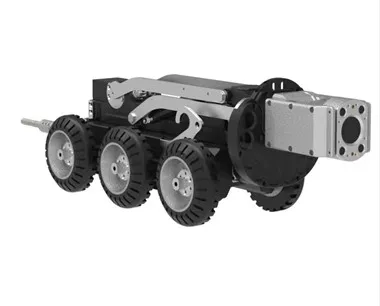
An ROV with a streamlined body is like a fish in the water. It can cut through the liquid with less effort, allowing it to move faster. On the other hand, an ROV with a bulky or irregular shape will face more drag and move slower. Another factor is the power of the ROV's thrusters. These are like the engines of the ROV. The stronger the thrusters, the more force they can generate to push the ROV forward.
Typical Speed Ranges of ROVs
Now, let's get to the numbers. ROVs come in all shapes and sizes, and their speeds can vary widely. Generally, smaller ROVs that are used for things like pool inspections or small - scale underwater surveys might have a top speed of around 1 - 2 knots. A knot is a unit of speed used in nautical and aviation contexts, and it's equal to about 1.15 miles per hour. So, these little guys can move at a speed of roughly 1.15 - 2.3 miles per hour.
For medium - sized ROVs that are used for tasks like pipeline inspections or scientific research in coastal areas, their top speed can range from 2 - 4 knots, or about 2.3 - 4.6 miles per hour. These ROVs are a bit more powerful and have better - designed bodies to handle the underwater drag.
Then there are the big boys. Large - scale ROVs that are used for deep - sea exploration or oil and gas industry operations can reach speeds of up to 4 - 6 knots, which is about 4.6 - 6.9 miles per hour. These ROVs are built like tanks, with powerful thrusters and advanced hydrodynamic designs to help them move efficiently in the deep, cold waters.
Factors That Can Increase or Decrease Speed
There are a bunch of things that can either speed up or slow down an ROV. Water conditions are a major one. If the water is calm, the ROV will face less resistance and can move faster. But if there are strong currents, waves, or even turbulence, it can be like trying to swim against a river. The ROV will have to work harder to maintain its speed, and in some cases, it might even get pushed backward.
The payload of the ROV also matters. If the ROV is carrying a lot of equipment, like cameras, sensors, or sampling tools, it will be heavier. And just like how it's harder to run with a heavy backpack, an ROV will move slower when it's carrying a heavy load.
Another thing is the depth at which the ROV is operating. The deeper the water, the higher the pressure. This increased pressure can affect the performance of the thrusters and the overall movement of the ROV. Sometimes, an ROV might have to reduce its speed to compensate for the high - pressure environment.
The Importance of Speed in Different Applications
The speed of an ROV is crucial depending on its application. For example, in the oil and gas industry, time is money. When an ROV is used to inspect underwater pipelines, a faster - moving ROV can cover more ground in less time. This means that the inspection can be completed quicker, reducing the overall cost of the operation.
In scientific research, speed can also be important. When studying marine life, a faster ROV can keep up with fast - moving animals like dolphins or tuna. It can also cover a larger area of the ocean floor in a shorter period, allowing scientists to gather more data.


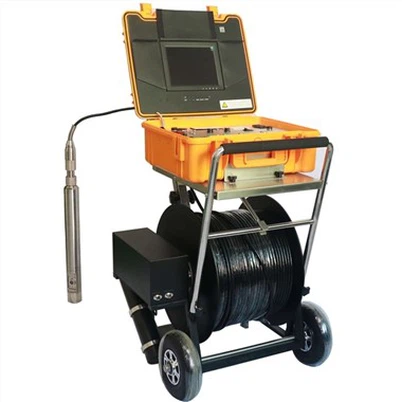
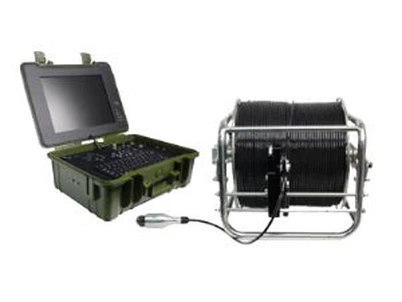
On the other hand, there are applications where speed isn't the most important thing. For instance, when using an ROV for well inspections, precision is key. You need the ROV to move slowly and steadily so that it can get clear images of the well walls. That's where our Well Inspection Dual View Camera System comes in handy. It's designed to work with ROVs at a controlled speed to ensure accurate inspections.
Our ROVs and Their Speed Capabilities
As a supplier, we offer a range of ROVs with different speed capabilities. Our smaller ROVs are great for quick and easy inspections. They might not be the fastest, but they're nimble and can get into tight spaces. Our medium - sized ROVs strike a good balance between speed and payload capacity. They're perfect for most general - purpose underwater tasks.
And our large - scale ROVs are the powerhouses. They're built to handle the toughest conditions and can move at impressive speeds for their size. Whether you need to explore the deep sea or conduct large - scale industrial operations, our ROVs have got you covered.
If you're looking for a specialized ROV for borehole inspections, we also have some great options. Check out our Borehole Inspection Camera 200 Meters and Hot Sale Borehole Inspection Camera. These cameras can be integrated with our ROVs to provide high - quality inspection results.
Conclusion and Call to Action
So, there you have it! The speed of an ROV depends on a variety of factors, and it can vary widely depending on the type and application of the ROV. Whether you need a fast - moving ROV for large - scale operations or a slow - and - steady one for precise inspections, we've got the right solution for you.
If you're interested in learning more about our ROVs or want to discuss your specific needs, don't hesitate to reach out. We're always happy to have a chat and help you find the perfect ROV for your project. Let's work together to make your underwater operations a success!
References
- "Underwater Robotics: Technology and Applications" by some well - known author in the field.
- Various industry reports on ROV performance and usage.