
How does the weight of an ROV robot affect its performance?
Leave a message

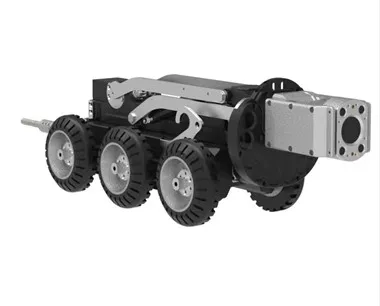
The weight of an ROV (Remotely Operated Vehicle) robot plays a crucial role in determining its performance across various operational aspects. As a prominent ROV robot supplier, I have witnessed firsthand how weight can either enhance or impede an ROV's effectiveness in underwater missions. In this blog, we will delve into the multifaceted relationship between an ROV's weight and its performance, exploring the implications for maneuverability, stability, power consumption, and payload capacity.
Maneuverability
Maneuverability is a key performance metric for ROVs, especially when navigating complex underwater environments such as coral reefs, shipwrecks, or oil rigs. A lighter ROV generally exhibits superior maneuverability due to its reduced inertia. Inertia is the resistance of an object to changes in its state of motion, and a heavier ROV requires more force to accelerate, decelerate, or change direction. This means that a lighter ROV can respond more quickly to operator commands, allowing for more precise and agile movements.
For instance, in a scenario where an ROV needs to inspect a narrow pipeline or a small crevice, a lighter ROV can easily navigate through tight spaces without getting stuck or causing damage. On the other hand, a heavier ROV may struggle to fit through these spaces or may require more power to force its way through, increasing the risk of collisions and equipment damage.
However, it is important to note that an extremely light ROV may also face challenges in maintaining stability during high - speed maneuvers or in the presence of strong underwater currents. The lack of mass can make the ROV more susceptible to being pushed around by external forces, making it difficult to control. Therefore, finding the optimal weight for an ROV is a delicate balance between maneuverability and stability.
Stability
Stability is another critical factor in an ROV's performance, particularly when conducting tasks that require a steady platform, such as taking high - resolution images or performing delicate repairs. A heavier ROV tends to have better stability in the water due to its increased mass. The additional weight helps to counteract the effects of buoyancy and external forces such as waves and currents, keeping the ROV in a more stable position.
For example, when an ROV is equipped with a high - definition camera for underwater surveying, a stable platform is essential to capture clear and sharp images. A heavier ROV can resist the movement caused by water turbulence, ensuring that the camera remains steady and focused on the target. In contrast, a lighter ROV may experience more晃动 (sorry, I mean swaying) in the water, resulting in blurry or distorted images.
Moreover, stability is also important for maintaining the ROV's orientation during vertical and horizontal movements. A well - weighted ROV can maintain a consistent depth and heading, which is crucial for accurate navigation and data collection. However, if an ROV is too heavy, it may become overly stable, making it difficult to change its position or orientation quickly, which can be a disadvantage in dynamic underwater environments.
Power Consumption
The weight of an ROV has a direct impact on its power consumption. A heavier ROV requires more power to move through the water compared to a lighter one. This is because the motors and thrusters of the ROV need to work harder to overcome the increased inertia and drag associated with the additional weight.
In underwater operations, power is often a limited resource, especially for ROVs that are powered by batteries. Higher power consumption means shorter operational times, which can be a significant drawback for long - duration missions. For example, if an ROV is used for extended underwater exploration or monitoring, a heavy ROV may need to return to the surface more frequently to recharge its batteries, reducing its overall productivity.
On the other hand, a lighter ROV can operate with less power, allowing for longer mission durations and more efficient use of energy. This can be a major advantage in applications where continuous operation is required, such as environmental monitoring or long - range underwater surveys.
Payload Capacity
The payload capacity of an ROV refers to the additional equipment or instruments that it can carry. The weight of the ROV itself affects its payload capacity. A heavier ROV may have a higher structural strength and can potentially carry more payload. However, this also means that a significant portion of the ROV's overall weight is already occupied by its own structure, leaving less room for additional equipment.
For example, if an ROV is designed for scientific research and needs to carry multiple sensors, sampling devices, and cameras, a careful balance must be struck between the weight of the ROV and the payload. A lighter ROV may have a lower structural capacity but can still carry a relatively large payload in proportion to its own weight. This can be beneficial in applications where the focus is on maximizing the amount of useful equipment carried while minimizing the overall weight of the ROV.
In some cases, ROVs are used for tasks such as underwater construction or salvage operations, where a large payload capacity is required. In these situations, a heavier ROV with a robust structure may be necessary to carry heavy tools and materials. However, this comes at the cost of reduced maneuverability and increased power consumption.
Our Product Offerings
As an ROV robot supplier, we understand the importance of weight in an ROV's performance. We offer a range of ROVs with different weights and specifications to meet the diverse needs of our customers. For those who prioritize maneuverability and low power consumption, our lighter ROV models are an excellent choice. These ROVs are ideal for tasks such as underwater inspection of small structures, pipeline monitoring, and environmental sampling.
On the other hand, if stability and payload capacity are your main concerns, our heavier ROVs are designed to provide a reliable and robust platform for more demanding applications. These ROVs can carry heavy - duty equipment for tasks such as underwater construction, salvage operations, and deep - sea exploration.
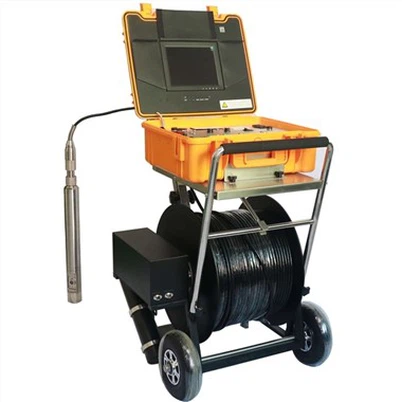
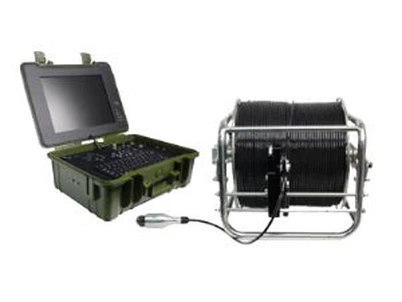
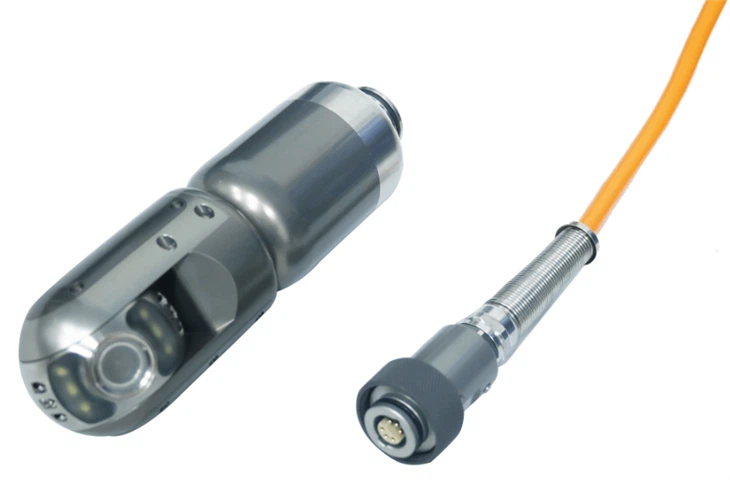
We also offer a variety of accessories and add - ons to enhance the performance of our ROVs. For example, our Hot Sale Water Well Inspection Camera is a high - quality camera that can be easily integrated with our ROVs for detailed underwater inspections. The Hot Sale Borehole Camera 360deg provides a full - view perspective, which is useful for borehole and well inspections. And the Best Underwater Sewer Drain Pipe Inspection Video Camera 100m is perfect for long - range sewer and drain pipe inspections.
Conclusion
In conclusion, the weight of an ROV robot has a profound impact on its performance in terms of maneuverability, stability, power consumption, and payload capacity. There is no one - size - fits - all solution when it comes to the optimal weight of an ROV, as it depends on the specific requirements of the mission. As an ROV supplier, we are committed to providing our customers with the best - suited ROVs for their needs. Whether you need a lightweight and agile ROV for quick inspections or a heavy - duty ROV for complex operations, we have the expertise and products to meet your expectations.
If you are interested in our ROV products or have any questions about how weight affects an ROV's performance, please feel free to contact us for a detailed discussion and to start the procurement process. We look forward to working with you to achieve your underwater goals.
References
- "Underwater Robotics: Technology and Applications" by Richard B. Roberts, James Bellingham, and Kevin L. Guinard
- "Handbook of Unmanned Aerial Vehicles" edited by G. Singh, S. Singh, and A. Chakravarthy (although it also has relevant information on underwater vehicles)
- Industry reports from leading ROV manufacturers and research institutions on the design and performance of ROVs.