
How do ROV robots handle high - pressure environments?
Leave a message

Underwater exploration and operations in high - pressure environments present a unique set of challenges. Remotely Operated Vehicles (ROV) robots have emerged as essential tools in these scenarios, enabling us to access and perform tasks in the deep sea. As a seasoned ROV robot supplier, I'd like to delve into how these remarkable machines handle high - pressure environments.
Understanding High - Pressure Environments in the Deep Sea
Before we discuss how ROV robots cope with high - pressure environments, it's crucial to understand the nature of these conditions. The deep sea is a harsh environment where pressure increases significantly with depth. For every 10 meters of depth in seawater, the pressure increases by approximately 1 atmosphere. At a depth of 1000 meters, the pressure is 100 times greater than at sea level.
These extreme pressures can have a profound impact on equipment. They can cause mechanical components to deform, electronics to malfunction, and seals to fail. Without proper design and construction, ROV robots would quickly succumb to the crushing forces of the deep sea.
Pressure - Resistant Design
One of the primary ways ROV robots handle high - pressure environments is through their pressure - resistant design. The hull of an ROV is the first line of defense against the external pressure. It is typically made from materials with high strength - to - weight ratios, such as titanium or aluminum alloy.
Titanium is especially popular due to its excellent corrosion resistance and high strength. It can withstand extreme pressures without significant deformation. For example, our ROV models designed for deep - sea exploration are equipped with titanium hulls that can endure pressures equivalent to depths of several thousand meters.
In addition to the hull material, the shape of the ROV also plays a crucial role. A spherical or cylindrical shape is often used because these shapes distribute pressure evenly across the surface. This reduces the stress concentration at any single point, minimizing the risk of structural failure.
Sealing Technology
Effective sealing is paramount for ROV robots operating in high - pressure environments. Seals prevent water from entering the ROV's internal compartments, protecting the electronics and mechanical components.
We use advanced sealing technologies, such as O - rings and gaskets made from synthetic rubber compounds. These materials are chosen for their resilience and ability to maintain a tight seal under high pressure. Regular inspections and maintenance of seals are also carried out to ensure their integrity.
However, even the best seals can face challenges in the deep sea. To address this, we also incorporate redundant sealing systems in our ROVs. If one seal fails, the secondary seal can prevent water ingress, providing an additional layer of protection.
Electronics and Pressure Compensation
The electronics inside an ROV are highly sensitive to pressure. High pressure can cause short - circuits, damage to printed circuit boards, and other malfunctions. To protect the electronics, we use pressure - compensating techniques.
One common method is to use a pressure - compensating oil bath. The electronics are immersed in a fluid - filled chamber. As the external pressure increases, the oil inside the chamber is compressed, equalizing the pressure inside and outside the chamber. This reduces the stress on the electronics and helps prevent damage.
Another approach is to design the electronics with additional mechanical support. Components are potted in epoxy resin, which provides physical protection and helps distribute the pressure evenly across the circuit board.
Role of Cameras in High - Pressure Environments
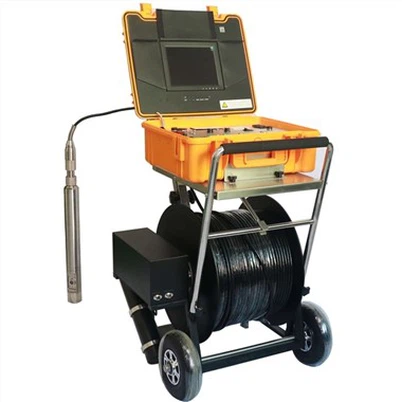
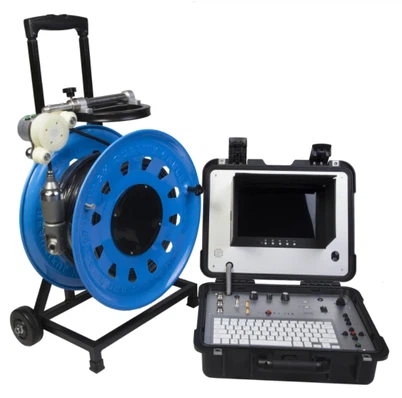
Cameras are an essential part of ROV robots, allowing operators to visualize the underwater environment. We offer a range of cameras suitable for high - pressure operations, such as the Borewell Inspection Camera. This camera is designed to withstand high pressures and provides clear images even in the darkest depths.
The 5000m Depth Oil Inspection Camera is another excellent example. It is specifically engineered for use at extreme depths, where the pressure is extremely high. The camera's housing is made from a high - strength material that can resist the crushing forces of the deep sea.
The Borehole Inspection Camera With DVR Unit is also a popular choice. It combines the functionality of a high - pressure camera with a recording device, allowing operators to capture and review the footage later.
Testing and Certification
Before our ROV robots are deployed in high - pressure environments, they undergo rigorous testing. We use specialized testing equipment to simulate the extreme pressures found in the deep sea. The ROVs are subjected to pressure tests for extended periods to ensure their structural integrity and the proper functioning of all components.
In addition to in - house testing, our ROVs also comply with international standards and certifications. These certifications provide assurance to our customers that our products meet the highest quality and safety requirements.
Maintenance and Upkeep
Even with the best design and construction, ROV robots require regular maintenance to ensure their continued performance in high - pressure environments. After each mission, the ROV is thoroughly inspected for any signs of damage or wear. Seals are checked and replaced if necessary, and the electronics are tested for functionality.
We also offer maintenance training to our customers. This allows them to carry out basic maintenance tasks on their own, reducing downtime and ensuring that the ROVs are always ready for the next mission.
Applications in High - Pressure Environments
Our ROV robots have a wide range of applications in high - pressure environments. They are used in scientific research for exploring the deep - sea ecosystem, collecting samples, and studying underwater geology. In the oil and gas industry, ROVs are used for pipeline inspection, subsea infrastructure maintenance, and wellhead operations.
In the field of underwater archaeology, our ROVs help in the discovery and exploration of ancient shipwrecks and underwater ruins. The ability of our ROVs to operate in high - pressure environments makes them invaluable tools in these challenging applications.


Conclusion
ROV robots are remarkable machines that have revolutionized underwater exploration and operations in high - pressure environments. Through their pressure - resistant design, advanced sealing technology, pressure - compensated electronics, and specialized cameras, they can withstand the extreme forces of the deep sea.
As a leading ROV robot supplier, we are committed to providing high - quality products and services to our customers. Our ROVs are designed and tested to meet the most demanding requirements, ensuring reliable performance in high - pressure environments.
If you are in need of ROV robots for your underwater operations, we invite you to contact us for a detailed discussion. Our team of experts is ready to assist you in selecting the right ROV for your specific needs and to provide comprehensive support throughout the procurement process.
References
- Fossen, T. I. (2011). Handbook of Marine Craft Hydrodynamics and Motion Control. John Wiley & Sons.
- Singh, S., Smith, R., & Whitcomb, L. (2004). Underwater Robots: Motion and Force Control of Vehicle - Manipulator Systems. Springer Science & Business Media.
- Yoerger, D. R., & Slotine, J. J. (1985). Modeling and control of underwater vehicles. IEEE Journal of Oceanic Engineering, 10(3), 210 - 221.