
How do ROV robots avoid collisions underwater?
Leave a message

Hey there! As a supplier of ROV (Remotely Operated Vehicle) robots, I've got a ton to share about how these amazing machines avoid collisions underwater. It's a topic that's super important for anyone using ROVs, whether it's for scientific research, industrial inspections, or just some cool underwater exploration.
First off, let's talk about why collision avoidance is such a big deal. Underwater environments are full of all sorts of obstacles. You've got rocks, coral reefs, shipwrecks, and even other marine creatures. Hitting one of these can not only damage the ROV but also disrupt the mission. For example, if you're using an ROV for an oil pipeline inspection, a collision could cause delays and cost a fortune in repairs.
One of the key technologies that ROVs use for collision avoidance is sonar. Sonar works by sending out sound waves and then measuring the time it takes for those waves to bounce back. It's kind of like how bats use echolocation to navigate in the dark. There are different types of sonar that ROVs can use. For instance, forward-looking sonar is great for detecting obstacles in front of the ROV. It gives the operator a clear picture of what's up ahead, so they can steer the ROV around any potential hazards.
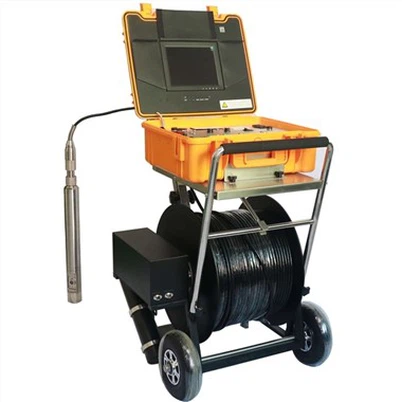
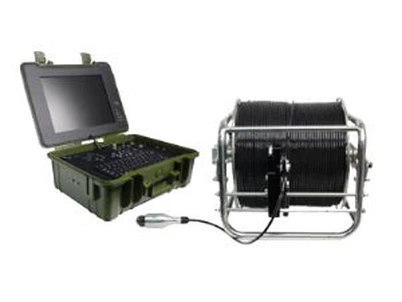
Another type is side-scan sonar. This is useful for getting a broader view of the underwater environment. It can detect objects on the sides of the ROV, which is important when you're moving through narrow passages or areas with a lot of debris. Sonar is especially useful in murky waters where visibility is poor. Even when the water is too cloudy for a Waterproof Camera System For Deep Well to see clearly, sonar can still provide valuable information about the surrounding environment.


But sonar isn't the only tool in the ROV's collision-avoidance toolkit. Cameras also play a crucial role. High-quality cameras on ROVs can provide real-time visual feedback to the operator. They can see exactly what the ROV is approaching and make adjustments accordingly. For deep well inspections, a Hot Sale Water Well Inspection Camera can be a game-changer. It allows the operator to get a close-up look at the well walls and any potential obstacles inside.
Some ROVs are also equipped with laser scanners. These work by emitting lasers and measuring the reflection to create a 3D map of the surrounding area. Laser scanners are really accurate and can detect even small objects that might be missed by sonar or cameras. They're especially useful in precision tasks, like inspecting underwater structures or archaeological sites.
In addition to these sensors, ROVs often have software that helps with collision avoidance. This software can analyze the data from the sensors and provide warnings to the operator. For example, if the sonar detects an object getting too close, the software can send an alert to the operator's control console. Some advanced ROVs even have autonomous collision-avoidance capabilities. They can make decisions on their own to avoid obstacles, which is really handy in situations where the operator might not be able to react quickly enough.
Now, let's talk about how we at our company approach collision avoidance in our ROVs. We use a combination of the latest sensor technologies and smart software to ensure the safety of our ROVs. Our engineers are constantly working on improving these systems to make them more reliable and effective. We also offer training to our customers on how to use these collision-avoidance features properly.
For example, when we sell an ROV for underwater borehole inspections, we make sure the customer knows how to use the Underwater Borehole Inspection Camera and other sensors to avoid collisions. We understand that every underwater environment is different, so we customize our solutions to meet the specific needs of each customer.
If you're in the market for an ROV and want to learn more about how our robots avoid collisions underwater, don't hesitate to reach out. We'd be more than happy to have a chat with you about your requirements and show you how our ROVs can help you achieve your goals safely and efficiently. Whether you're a scientist looking to explore the deep sea or an industry professional needing to inspect underwater infrastructure, we've got the right ROV for you.
In conclusion, collision avoidance is a critical aspect of ROV operation. With the right combination of sensors, software, and operator training, ROVs can navigate safely through even the most challenging underwater environments. So, if you're interested in purchasing an ROV, give us a call or send us an email. We're here to help you make the most of your underwater adventures.
References
- "Underwater Robotics: Technology and Applications" by some experts in the field.
- Various research papers on sonar and camera technologies for underwater vehicles.