
How do I ensure the stability of a pipe camera's signal?
Leave a message

As a pipe camera supplier, ensuring the stability of a pipe camera's signal is of utmost importance. A stable signal is crucial for accurate inspections, efficient operations, and customer satisfaction. In this blog post, I will share some key strategies and considerations that I, as a supplier, take into account to guarantee the stability of pipe camera signals.
1. Quality of Camera Components
The foundation of a stable signal lies in the quality of the camera components. We carefully select high - quality image sensors, cables, and transmitters. The image sensor is the heart of the pipe camera, and a high - end sensor can capture clear images with less noise. This reduces the amount of data that needs to be transmitted, minimizing the chances of signal interference.
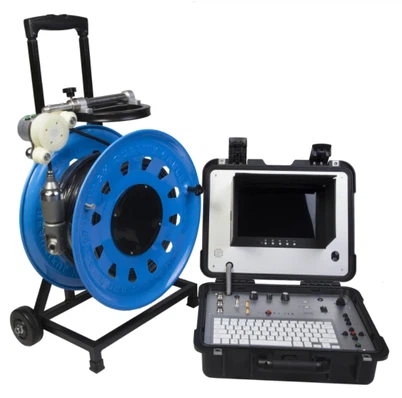
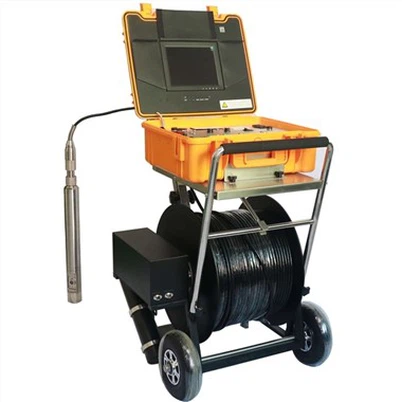
For example, our Borehole Inspection Camera is equipped with a state - of the - art image sensor that can operate in low - light conditions. The sensor has high sensitivity and a wide dynamic range, which not only provides clear images but also ensures that the signal generated from the captured data is consistent.
The cables used in our pipe cameras are also of superior quality. They are designed to resist damage from abrasion, chemicals, and moisture. A damaged cable can lead to signal loss or interference. Our cables have proper shielding to protect the signal from external electromagnetic interference. We conduct rigorous testing on these cables to ensure their durability and signal - carrying capacity.
2. Signal Transmission Technology
We employ advanced signal transmission technologies to ensure stability. One of the most common methods is digital signal transmission. Digital signals are more resistant to interference compared to analog signals. They can be easily compressed and error - corrected, which helps in maintaining the integrity of the data during transmission.
Our Borehole Water Well Camera uses a digital transmission system. The camera converts the captured images into digital data and then transmits it through a dedicated channel. This digital data is less likely to be affected by noise or signal degradation.
In addition to digital transmission, we also use frequency - hopping spread - spectrum (FHSS) technology in some of our high - end models. FHSS technology allows the signal to hop between different frequencies in a pre - defined pattern. This makes it difficult for external interference sources to disrupt the signal, as they would need to interfere with multiple frequencies simultaneously.
3. Power Management
Proper power management is essential for a stable signal. An unstable power supply can cause fluctuations in the camera's performance, leading to signal instability. We design our pipe cameras with efficient power management systems.
Our cameras are equipped with voltage regulators that ensure a constant power supply to all components. This helps in maintaining the stability of the image sensor, the transmitter, and other critical parts. We also use high - capacity batteries or reliable power sources. For long - term inspections, we offer options for external power supplies to ensure continuous operation without any power - related signal issues.
4. Environmental Considerations
The environment in which the pipe camera operates can have a significant impact on the signal stability. We take into account various environmental factors and design our cameras accordingly.
In harsh industrial environments, there may be high levels of electromagnetic interference from machinery, motors, and other electrical equipment. Our cameras are shielded to protect the signal from these sources. We use materials that can block electromagnetic waves and isolate the internal components of the camera.
When operating in wet or underwater conditions, such as in sewer pipes or boreholes, the camera needs to be waterproof. Our Underwater dual view borescope inspection camera is designed to be fully waterproof. It has a sealed housing that protects the internal components from water damage. This ensures that the signal transmission is not affected by water infiltration.
5. Regular Maintenance and Calibration
To ensure long - term signal stability, regular maintenance and calibration are necessary. We provide our customers with detailed maintenance guides and offer calibration services.


Regular cleaning of the camera lens is essential to ensure clear image capture. A dirty lens can cause image distortion and signal degradation. We recommend that customers clean the lens after each use to maintain optimal performance.
Calibration of the camera's sensors and transmitters is also crucial. Over time, the performance of these components may drift, leading to signal inaccuracies. We offer calibration services at regular intervals to ensure that the camera is operating at its best.
6. Signal Monitoring and Feedback
We incorporate signal monitoring features in our pipe cameras. These features allow users to monitor the strength and quality of the signal in real - time. If there is any sign of signal degradation, the user can take immediate action.
For example, our cameras may have a signal strength indicator on the display unit. If the signal strength drops below a certain level, the user can check for potential interference sources, such as a damaged cable or a nearby electromagnetic device.
We also collect feedback from our customers regarding signal performance. This feedback helps us in continuously improving our products. We analyze the data and make necessary adjustments to our design, technology, or manufacturing processes to enhance signal stability.
7. Training and Support
We understand that proper usage of the pipe camera is also important for signal stability. That's why we provide comprehensive training to our customers. Our training programs cover topics such as camera operation, signal troubleshooting, and maintenance.
We also offer 24/7 technical support. If customers encounter any signal - related issues, they can contact our support team, and we will assist them in resolving the problem as quickly as possible.
In conclusion, ensuring the stability of a pipe camera's signal is a multi - faceted process. It involves using high - quality components, advanced transmission technologies, proper power management, considering environmental factors, regular maintenance, signal monitoring, and providing training and support. As a pipe camera supplier, we are committed to delivering products that offer reliable and stable signal performance.
If you are interested in our pipe cameras and would like to discuss your specific requirements, please feel free to reach out to us. We are more than happy to engage in procurement discussions and help you find the best solution for your inspection needs.
References
- "Digital Signal Processing for Communications" by Proakis, John G.
- "Electromagnetic Compatibility Engineering" by Henry W. Ott.
- "Power Electronics: Converters, Applications, and Design" by Ned Mohan.