
How are ROV robots controlled?
Leave a message

ROV robots, or Remotely Operated Vehicles, have revolutionized various industries, from underwater exploration to infrastructure inspection. As a leading ROV robot supplier, I am often asked about how these remarkable machines are controlled. In this blog post, I will delve into the intricacies of ROV robot control systems, exploring the technologies, methods, and factors that enable operators to navigate and manipulate these devices effectively.
Basic Components of ROV Control Systems
At the heart of any ROV control system are several key components that work in harmony to provide operators with the ability to command their vehicles. These include:
- Control Console: The control console serves as the operator's interface with the ROV. It typically consists of joysticks, buttons, and displays that allow the operator to send commands to the vehicle and receive feedback on its status. The joysticks are used to control the ROV's movement in various directions, such as forward, backward, up, down, and sideways. Buttons can be used to activate specific functions, such as turning on lights, operating manipulator arms, or taking pictures and videos.
- Communication Link: A reliable communication link is essential for transmitting commands from the control console to the ROV and receiving data from the vehicle. This link is typically established through a tether, which is a cable that connects the ROV to the surface control unit. The tether contains electrical conductors for power and data transmission, as well as strength members to support the weight of the ROV and withstand the forces of the water. In some cases, wireless communication technologies may also be used, although these are less common due to the challenges of transmitting signals through water.
- On - board Electronics: The ROV is equipped with a variety of on - board electronics that receive commands from the surface and control the vehicle's various systems. These include motor controllers, which regulate the speed and direction of the ROV's thrusters; sensors, such as depth sensors, gyroscopes, and compasses, which provide information about the vehicle's position and orientation; and cameras and lights, which allow the operator to see the underwater environment.
Manual Control of ROV Robots
Manual control is the most common method of operating ROV robots. In this mode, the operator uses the joysticks on the control console to directly control the movement of the ROV. The operator can adjust the speed and direction of the thrusters to navigate the vehicle through the water, avoiding obstacles and reaching the desired destination.
For example, if the operator wants the ROV to move forward, they will push the forward joystick forward, which sends a signal to the motor controllers to increase the speed of the forward - facing thrusters. Similarly, if the operator wants to turn the ROV to the left, they will move the joystick to the left, causing the left - side thrusters to slow down and the right - side thrusters to speed up.
Manual control also allows the operator to operate the ROV's auxiliary equipment, such as the manipulator arms. The operator can use buttons on the control console to open and close the grippers, rotate the arms, and perform other tasks. This is particularly useful for tasks such as collecting samples, repairing underwater structures, or installing equipment.
Autonomous Control of ROV Robots
In addition to manual control, many modern ROV robots are also capable of autonomous operation. Autonomous control systems use a combination of sensors, algorithms, and pre - programmed instructions to allow the ROV to perform tasks without direct operator input.
One common application of autonomous control is in surveying and mapping operations. The ROV can be programmed to follow a pre - defined path, collecting data from its sensors and cameras as it moves. This data can then be used to create detailed maps of the underwater environment, such as bathymetric maps or maps of underwater structures.
Autonomous control can also be used for tasks such as obstacle avoidance. The ROV's sensors, such as sonar and laser scanners, can detect obstacles in its path. The on - board computer then uses algorithms to calculate a new path to avoid the obstacle and adjust the thrusters accordingly.
Semi - Autonomous Control of ROV Robots
Semi - autonomous control combines elements of both manual and autonomous control. In this mode, the operator provides high - level commands to the ROV, such as a target location or a task to be performed. The ROV then uses its autonomous capabilities to execute the task, while the operator can monitor the process and intervene if necessary.
For example, the operator may command the ROV to move to a specific location on the seabed. The ROV's navigation system will then calculate a path to the target location and use its thrusters to navigate there. The operator can watch the ROV's progress on the control console display and take over manual control if the ROV encounters an unexpected obstacle or if the autonomous system fails to perform as expected.
Factors Affecting ROV Control
Several factors can affect the control of ROV robots, including:
- Water Conditions: The properties of the water, such as its temperature, salinity, and current, can have a significant impact on the ROV's performance. Strong currents can make it difficult to control the ROV's movement, while changes in water density can affect the vehicle's buoyancy.
- Depth: As the ROV descends to greater depths, the pressure increases, which can affect the performance of the on - board electronics and the integrity of the tether. The operator may need to adjust the control parameters to compensate for these changes.
- Payload: The weight and size of the payload carried by the ROV can also affect its control. A heavy payload may require more power from the thrusters to move the vehicle, and it can also change the ROV's center of gravity, making it more difficult to balance and control.
Our ROV Robot Offerings
As a ROV robot supplier, we offer a wide range of high - quality ROVs and related equipment. Our products are designed to meet the needs of various industries, including oil and gas, marine research, and infrastructure inspection.
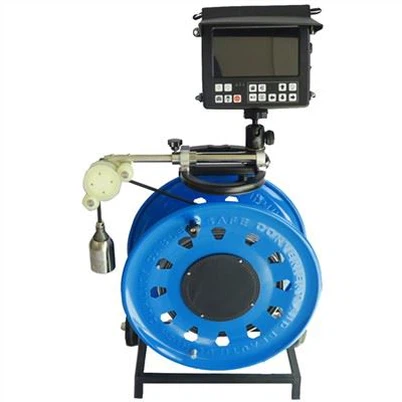
For example, we have the Hot Sale Borehole Camera 360deg, which provides a 360 - degree view of the borehole environment. This camera is ideal for inspecting boreholes, water pipes, and other underground structures.
Our 100m Water Pipe Inspection Camera Pan Tilt Drilling Pipelines Camera is another popular product. It can be used to inspect water pipes up to 100 meters in length, and its pan - tilt function allows for a detailed examination of the pipeline interior.


We also offer the Factory Borehole Water Well Camera, which is specifically designed for borehole water well inspection. This camera provides clear images and videos of the well interior, helping to identify any potential issues such as leaks or blockages.
Contact Us for Procurement
If you are interested in purchasing ROV robots or related equipment, please feel free to contact us. Our team of experts is ready to assist you in selecting the right products for your specific needs. We can also provide technical support, training, and after - sales service to ensure that you get the most out of your investment.
References
- Fossen, T. I. (2011). Handbook of Marine Craft Hydrodynamics and Motion Control. John Wiley & Sons.
- Whitcomb, L. L., Yoerger, D. R., Singh, H., & Howland, J. (2000). Autonomous Underwater Vehicle Navigation and Control in Unstructured Environments. Proceedings of the IEEE, 88(8), 1253 - 1274.
- Yoerger, D. R., & Slotine, J. J. E. (1985). Model - based control of an underwater vehicle. IEEE Journal of Oceanic Engineering, 10(3), 219 - 228.