
Can ROV robots be used for underwater iceberg inspection?
Leave a message

Underwater icebergs present a unique and challenging environment for inspection and research. As a leading ROV (Remotely Operated Vehicle) robot supplier, I've often been asked whether our ROV robots can be effectively used for underwater iceberg inspection. In this blog post, I'll explore the feasibility, advantages, and challenges of using ROV robots in this specific application.
The Need for Underwater Iceberg Inspection
Icebergs play a crucial role in the Earth's climate system. They influence ocean circulation, affect local weather patterns, and provide habitats for various marine species. However, they also pose significant risks to maritime activities, including shipping and offshore oil and gas operations. Understanding the structure, size, and movement of underwater icebergs is essential for ensuring the safety of these operations and for conducting scientific research on climate change.
Traditional methods of iceberg inspection, such as aerial surveys and sonar imaging from ships, have limitations. Aerial surveys can only provide information about the visible part of the iceberg above the waterline, while sonar imaging from ships may not provide detailed information about the underwater structure of the iceberg. ROV robots, on the other hand, can be deployed underwater to directly inspect the iceberg, providing high-resolution images and data about its shape, size, and composition.
Advantages of Using ROV Robots for Underwater Iceberg Inspection
High - Resolution Imaging
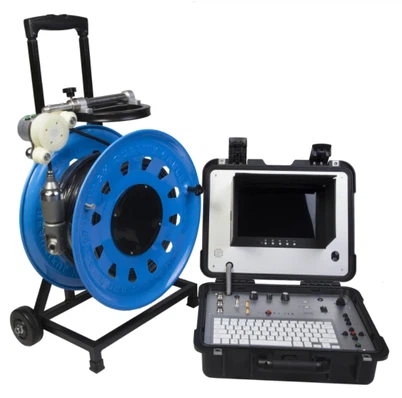
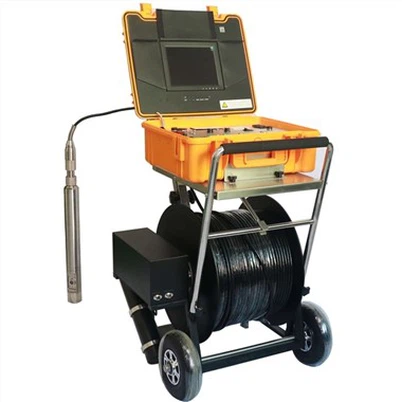
Our ROV robots are equipped with advanced imaging systems, such as the Well video 8 inch HD dual camera rotating probe deep well camera drilling inspection camera. These cameras can capture high - resolution images and videos of the underwater iceberg, allowing researchers and operators to identify cracks, fissures, and other structural features. The dual - camera setup and the ability to rotate the probe provide a comprehensive view of the iceberg from different angles.
Precision Maneuvering
ROV robots can be precisely maneuvered in the underwater environment. They are designed with multiple thrusters that allow for accurate control of movement in all directions, including forward, backward, up, down, left, and right. This precision is crucial when inspecting an iceberg, as it enables the ROV to navigate around the iceberg, access hard - to - reach areas, and maintain a stable position for data collection.
Real - Time Data Transmission
Our ROVs are capable of real - time data transmission. The images and data collected by the ROV are sent back to the surface control station immediately, allowing operators to make informed decisions on the spot. This is particularly important in the dynamic underwater environment, where conditions can change rapidly.
Durability and Resistance
Underwater iceberg inspection requires equipment that can withstand extreme cold temperatures and high - pressure environments. Our ROV robots are built with durable materials and are designed to operate in harsh conditions. They are also equipped with anti - icing systems to prevent the cameras and other sensors from freezing, ensuring reliable performance during the inspection.
Challenges of Using ROV Robots for Underwater Iceberg Inspection
Harsh Environmental Conditions
The underwater environment around icebergs is extremely harsh. The water temperature can be near freezing, and there may be strong ocean currents and ice floes. These conditions can pose challenges to the operation of the ROV. The cold temperatures can affect the battery life and the performance of the electronic components, while the strong currents and ice floes can damage the ROV or make it difficult to maneuver.
Navigation and Communication
Navigating an ROV in the vicinity of an iceberg can be challenging. The iceberg's irregular shape and the presence of ice debris can interfere with the ROV's navigation sensors. Additionally, communication between the ROV and the surface control station can be disrupted by the iceberg, which may block the radio signals or cause signal interference.
Iceberg Movement
Icebergs are constantly moving due to ocean currents and winds. This movement can make it difficult to keep the ROV in a stable position relative to the iceberg. Operators need to continuously adjust the ROV's position to ensure that it stays close to the iceberg for inspection.
Overcoming the Challenges
Environmental Adaptation
To overcome the challenges posed by the harsh environmental conditions, our ROVs are designed with insulated components and heated systems to protect the electronics from the cold. The batteries are also designed to operate at low temperatures, and the thrusters are powerful enough to withstand the strong ocean currents.
Advanced Navigation and Communication Systems
We use advanced navigation systems, such as inertial measurement units (IMUs) and Doppler velocity logs (DVLs), to accurately determine the ROV's position and movement. These systems are less affected by the iceberg's presence compared to traditional navigation sensors. For communication, we use a combination of wired and wireless communication technologies to ensure reliable data transmission.
Adaptive Control Strategies
Our ROVs are equipped with adaptive control algorithms that can adjust the ROV's movement in real - time based on the iceberg's movement. These algorithms use data from the navigation sensors and the cameras to predict the iceberg's movement and adjust the ROV's position accordingly.
Case Studies
There have been several successful applications of ROV robots for underwater iceberg inspection. In one case, an ROV was used to inspect an iceberg near an offshore oil platform. The ROV was able to identify a large crack in the underwater part of the iceberg, which could have posed a significant risk to the platform. Based on the ROV's data, the operators were able to take preventive measures to avoid a potential collision.
In another case, a research team used an ROV to study the structure and composition of an iceberg in the Antarctic. The high - resolution images and data collected by the ROV provided valuable insights into the formation and evolution of icebergs, contributing to our understanding of the Earth's climate system.
Conclusion
In conclusion, ROV robots can be effectively used for underwater iceberg inspection. Despite the challenges posed by the harsh environmental conditions, the advantages of high - resolution imaging, precision maneuvering, real - time data transmission, and durability make ROVs a valuable tool for this application. Our company, as an ROV robot supplier, is committed to continuously improving the design and performance of our ROVs to better meet the needs of underwater iceberg inspection.


If you are interested in using our ROV robots for underwater iceberg inspection or other underwater applications, we invite you to contact us for a detailed discussion. Our team of experts will be happy to provide you with more information about our products and services and help you find the best solution for your specific needs.
References
- "Underwater Robotics: Technology and Applications" by Richard A. Yoerger
- "Iceberg Dynamics and Modeling" by Peter Wadhams
- "Remote Sensing of Icebergs" by Robert Bindschadler