
Can an ROV robot be used in areas with strong underwater currents?
Leave a message

Can an ROV robot be used in areas with strong underwater currents? That's a question I often get asked as a supplier of ROV robots. And let me tell you, it's not a straightforward answer.
First off, let's talk about what an ROV robot is. ROV stands for Remotely Operated Vehicle. These are nifty little machines that are controlled from the surface, allowing us to explore and work in underwater environments without having to send a human diver down. They're equipped with cameras, lights, and sometimes even tools, making them super useful for all sorts of tasks like underwater inspections, research, and salvage operations.
Now, when it comes to using an ROV in areas with strong underwater currents, there are a few things to consider. The main challenge is that strong currents can push the ROV around, making it difficult to control and keep it in the right position. This can be a real pain, especially if you're trying to do something precise like inspect a pipeline or collect a sample.
But that doesn't mean it's impossible. In fact, with the right ROV and some clever engineering, it's definitely doable. One of the key factors is the design of the ROV itself. A well-designed ROV will have a streamlined shape and powerful thrusters that can help it fight against the current. Some ROVs even have special features like dynamic positioning systems that can automatically keep the ROV in place, even in rough conditions.


Another important consideration is the type of mission you're planning. If you're just doing a quick survey of an area, you might be able to get away with using an ROV in moderately strong currents. But if you're doing something more complex, like a detailed inspection or a long-term monitoring project, you'll probably want to wait for calmer conditions or use a more advanced ROV.
At our company, we've developed a range of ROVs that are specifically designed to handle strong underwater currents. Our ROVs are equipped with high-performance thrusters and advanced control systems that allow us to maintain precise control even in challenging conditions. We've also done a lot of testing in real-world environments to make sure our ROVs can perform reliably in the field.
For example, we recently used one of our ROVs to inspect a pipeline in an area with strong tidal currents. The current was so strong that it was pushing the ROV around, but our team was able to use the ROV's advanced control system to keep it on track and complete the inspection. The client was really impressed with the results, and we were able to deliver the data they needed to make informed decisions about the pipeline's condition.
But it's not just about the technology. We also provide our customers with comprehensive training and support to make sure they know how to use our ROVs effectively in strong currents. Our team of experts is always on hand to answer questions and provide advice, and we offer ongoing maintenance and repair services to keep our ROVs in top condition.
So, to answer the question, yes, an ROV robot can be used in areas with strong underwater currents. But it's important to choose the right ROV for the job and to have a team of experienced operators who know how to handle the challenges of working in these conditions.
If you're interested in learning more about our ROVs and how they can be used in areas with strong underwater currents, please don't hesitate to [reach out to us for a consultation]. We'd be happy to discuss your specific needs and help you find the right solution for your project.
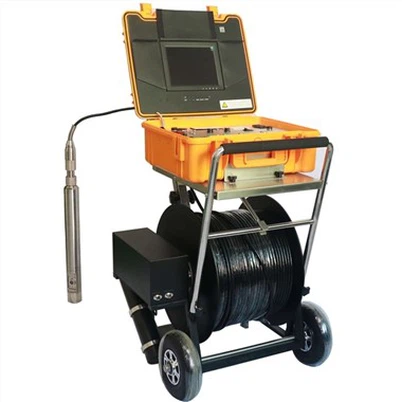
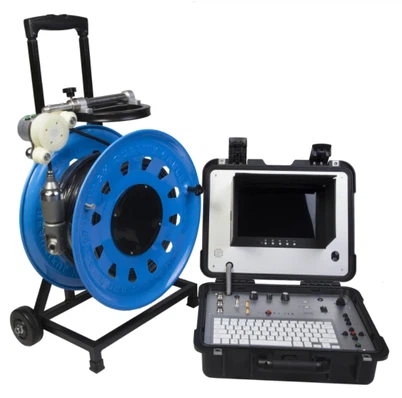
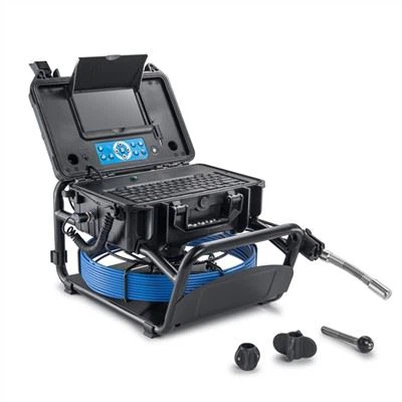
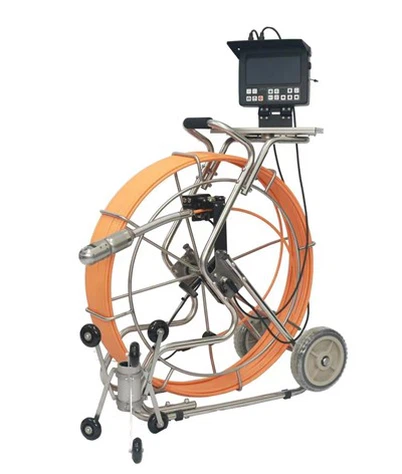
And if you're looking for some additional equipment to complement your ROV, we also offer a range of underwater cameras. Check out our Borehole Inspection Camera With DVR Unit, Deep Water Well Inspection Camera Underground Underwater Inspection Camera, and 100m Underwater Vertical Observation Borehole AHD Waterproof Inspection Camera. These cameras are designed to provide high-quality images and video in even the most challenging underwater environments.
References
- "Underwater Robotics: Technology and Applications" by Robert E. McGhee
- "Remotely Operated Vehicles: Design and Development" by John R. Downing
- Various industry reports and research papers on underwater ROV technology and operations