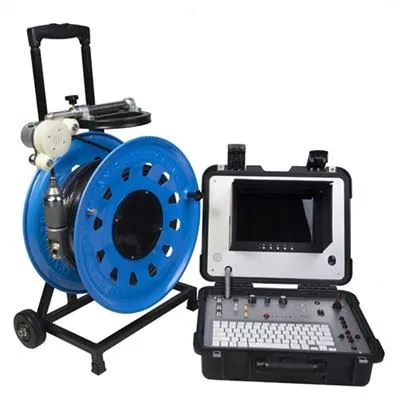

What power sources do ROV robots use?
Leave a message

Hey there! I'm a supplier of ROV (Remotely Operated Vehicle) robots, and I often get asked about the power sources these nifty machines use. So, I thought I'd write this blog to share some insights on that topic.
Battery Power
One of the most common power sources for ROV robots is batteries. Batteries are super convenient because they offer a self - contained power solution. You don't need a long cable running from the surface to supply power constantly. This makes the ROV more maneuverable, especially when it comes to exploring tight spaces.
There are different types of batteries used. Lithium - ion batteries are quite popular. They have a high energy density, which means they can store a large amount of energy in a relatively small and light package. This is crucial for ROVs as they need to be as lightweight as possible to move efficiently underwater. For example, a small - scale ROV used for Borehole Pipe Inspection Camera might rely on lithium - ion batteries. These batteries can power the ROV for a decent amount of time, allowing the camera to capture clear images of the inside of the pipes.
However, the downside of battery - powered ROVs is that their operating time is limited by the battery capacity. Once the battery runs out, the ROV has to be brought back to the surface for recharging. And depending on the battery type and size, recharging can take a while.
Power Cables
Another common power option is using power cables. With a power cable, the ROV is connected to a power source on the surface. This could be a generator on a boat or a power supply at a fixed location on the shore.
The big advantage of power cables is that they provide a continuous supply of power. The ROV can operate for as long as the surface power source is running. This is great for long - term missions, like deep - sea exploration or large - scale underwater inspections. For instance, a 5000m Depth Oil Inspection Camera attached to an ROV would likely use a power cable. It needs to stay underwater for extended periods to thoroughly inspect oil pipelines at great depths.
But power cables also have their drawbacks. They add to the complexity of the ROV system. The cable needs to be managed carefully to prevent tangling, which can be a real headache, especially in areas with strong underwater currents. Also, the length of the cable limits the ROV's range. The longer the cable, the more power loss there is, which can affect the ROV's performance.


Fuel Cells
Fuel cells are an emerging power source for ROV robots. They work by converting chemical energy from a fuel, like hydrogen, into electrical energy. Fuel cells have a high energy density, similar to lithium - ion batteries, but they can provide power for much longer periods.
The advantage of fuel cells is that they are more environmentally friendly compared to some other power sources. They produce very little pollution, mainly just water as a by - product when using hydrogen as fuel. For an ROV used for long - distance underwater surveys or scientific research, a fuel cell could be a great option. It allows the ROV to cover more ground without having to return to the surface frequently for recharging or refueling.
However, fuel cells are still relatively expensive and not as widely available as batteries or power cable systems. There are also some technical challenges in storing and handling the fuel, especially in an underwater environment.
Solar Power
In some cases, solar power can be used to supplement the power of ROV robots. This is especially useful for ROVs that operate in shallow waters where sunlight can penetrate. Solar panels can be attached to the ROV's body, and they convert sunlight into electrical energy.
Solar power is a renewable and clean energy source. It can help extend the battery life of a battery - powered ROV or reduce the load on a power cable system. For example, an Underwater Pan and Tilt HD Underwater Camera For Fishing Depth 500m GLF - UDC - V11S Supplier China on an ROV in shallow fishing areas could benefit from solar - powered assistance. The solar panels could charge the ROV's battery during the day, allowing for more extended use during fishing trips.
But the effectiveness of solar power depends on the amount of sunlight available. In cloudy weather or at greater depths where sunlight is scarce, solar power becomes less reliable.
Choosing the Right Power Source
As an ROV supplier, I know that choosing the right power source depends on several factors. The mission of the ROV is a big one. If it's a short - term, quick inspection in a confined space, a battery - powered ROV might be the best choice. But for long - term, deep - sea operations, a power cable or fuel cell system could be more suitable.
The operating environment also matters. In areas with strong currents, a power cable system needs to be carefully designed to avoid tangling. And in areas with abundant sunlight, solar power could be a great addition to the power mix.
Cost is another consideration. Batteries are generally the most affordable option, but fuel cells and some high - end power cable systems can be quite expensive. However, the long - term benefits, like extended operating time and better performance, might justify the higher cost in some cases.
Let's Talk Business
If you're in the market for an ROV robot and want to discuss the best power source for your specific needs, I'd love to have a chat. Whether it's for a simple pipe inspection or a complex deep - sea exploration project, I can help you find the perfect ROV with the right power solution. Just drop me a line and we can start the conversation.
References
- "Underwater Robotics: Technology and Applications" by some well - known authors in the field.
- Various industry reports on ROV power systems and their development trends.