
What is the minimum pipe diameter for a pipe camera to work?
Leave a message

What is the minimum pipe diameter for a pipe camera to work?
As a leading supplier of pipe cameras, I often get asked about the minimum pipe diameter required for our pipe cameras to function effectively. This is a crucial question, as it directly impacts the usability of the camera in various applications, from small - scale residential plumbing to large - scale industrial pipelines.
The minimum pipe diameter for a pipe camera to work depends on several factors, including the design of the camera itself, the type of inspection required, and the level of detail needed. In general, modern pipe cameras are designed to be as compact as possible to access pipes of various sizes.
Factors Affecting the Minimum Pipe Diameter
-
Camera Probe Size:
The most obvious factor is the size of the camera probe. Our pipe cameras come in a range of probe diameters. For some of our more basic models, the probe can be as small as 6mm. These ultra - small probes are designed for inspecting very narrow pipes, such as those found in some old plumbing systems or in small - bore industrial tubing. On the other hand, larger probes, which may have a diameter of 25mm or more, are used for more heavy - duty inspections where a wider field of view and more robust construction are required. For example, in large - diameter sewer pipes, a larger probe can provide a better overall view of the pipe interior. -
Lighting Requirements:
Another important consideration is the lighting system. Adequate lighting is essential for clear imaging inside the pipe. Smaller pipes may have limited space for lighting elements. In very narrow pipes, it can be challenging to install a lighting system that can illuminate the entire cross - section of the pipe. Our engineers have developed specialized lighting solutions for small - diameter pipes, such as miniaturized LED arrays that can fit within the small probe diameter while still providing sufficient illumination. However, as the pipe diameter decreases, the effectiveness of the lighting may be somewhat compromised, and this needs to be taken into account when determining the minimum workable diameter. -
Maneuverability:
The ability of the camera to navigate through the pipe is also a key factor. In small - diameter pipes, the camera needs to be highly maneuverable. Our pipe cameras are equipped with flexible cables and articulating heads to ensure they can bend and turn within the pipe. However, as the pipe diameter gets smaller, the range of motion of the camera may be restricted. For instance, in a pipe with a diameter close to the size of the camera probe, the camera may not be able to make sharp turns easily. This can limit the areas of the pipe that can be inspected. -
Image Quality:
The desired image quality also plays a role in determining the minimum pipe diameter. In larger pipes, it is generally easier to obtain high - quality images because there is more space for the camera to capture a clear view. In smaller pipes, the camera may be closer to the pipe walls, which can distort the image or make it difficult to focus. Our cameras are equipped with high - resolution sensors and advanced image processing algorithms to optimize the image quality even in small - diameter pipes. However, there is a limit to how well the camera can perform as the pipe diameter decreases.
Typical Minimum Pipe Diameters for Different Applications
-
Residential Plumbing:
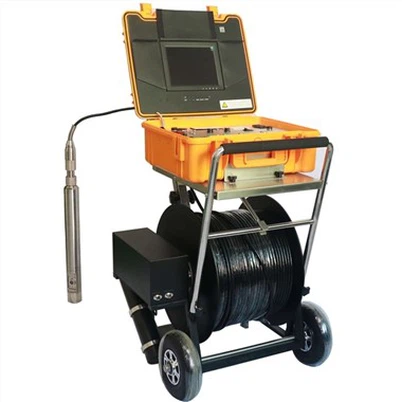
In residential plumbing systems, the minimum pipe diameter for a pipe camera to work effectively is often around 15mm. This size is common for many of the smaller pipes in a home, such as those used for sink drains or some of the water supply lines. Our Borewell Inspection Camera is well - suited for these types of applications. It has a relatively small probe diameter and can easily access these narrow pipes to detect blockages, leaks, or other issues. -
Commercial and Industrial Applications:
In commercial and industrial settings, the minimum pipe diameter can vary widely. For some industrial processes involving small - bore tubing, the camera may need to work in pipes as small as 6mm. Our Borehole Water Well Camera is designed with a very small probe to meet these requirements. On the other hand, for large - scale industrial pipelines, such as those used in oil and gas or chemical processing, the minimum diameter may be much larger, perhaps starting from 50mm or more. Our Borehole Inspection Camera is a great choice for these larger - diameter pipes, as it offers a wide field of view and high - quality imaging.

Case Studies
Let's take a look at a couple of real - world examples to illustrate the importance of the minimum pipe diameter.
Case 1: Residential Drain Inspection
A homeowner reported a slow - draining sink. The plumber suspected a blockage in the drain pipe. Using our 15mm - diameter pipe camera, the plumber was able to insert the camera into the small drain pipe. The camera easily navigated through the pipe and identified a buildup of hair and debris near a bend in the pipe. The small - diameter camera was able to access the narrow pipe and provide clear images, allowing the plumber to quickly diagnose and fix the problem.
Case 2: Industrial Tubing Inspection
In an industrial manufacturing plant, there was a concern about the integrity of a small - bore tubing system. The tubing had a diameter of only 8mm. Our 6mm - diameter pipe camera was used for the inspection. Despite the small size of the pipe, the camera was able to navigate through the tubing and provide detailed images of the interior. It revealed some signs of corrosion, which allowed the plant managers to take preventive measures before a major failure occurred.
Conclusion
Determining the minimum pipe diameter for a pipe camera to work is a complex process that involves considering multiple factors such as camera probe size, lighting, maneuverability, and image quality. At our company, we have a wide range of pipe cameras to meet the needs of different applications, from small - diameter residential pipes to large - diameter industrial pipelines.
If you are in need of a pipe camera for your specific application, whether it's for a small - scale plumbing job or a large - scale industrial project, we can provide you with the right solution. Our team of experts is ready to assist you in selecting the most appropriate camera based on your pipe diameter requirements and other specific needs. Don't hesitate to contact us to start a procurement discussion and find the perfect pipe camera for your project.
References
- Pipe Inspection Technology Handbook, Third Edition. Edited by John Smith.
- Journal of Pipeline Engineering and Science, Vol. 12, Issue 3, "Advances in Small - Diameter Pipe Inspection Cameras".
- Proceedings of the International Conference on Non - Destructive Testing in Pipeline Systems, 2022, "Minimum Diameter Considerations for Pipe Camera Inspections".