
What is the image quality of a pipe camera?
Leave a message

Hey there! As a pipe camera supplier, I often get asked about the image quality of pipe cameras. It's a crucial factor, no doubt about it. After all, if you're using a pipe camera to inspect pipes, you need clear and detailed images to accurately assess the situation.
First off, let's talk about what affects the image quality of a pipe camera. There are several key elements that play a role here.
Resolution
Resolution is one of the most important aspects. It refers to the number of pixels that make up an image. The higher the resolution, the more detailed the image will be. For pipe cameras, common resolutions range from standard definition (SD) to high definition (HD) and even 4K in some advanced models.
SD cameras usually have a resolution of around 720 x 480 pixels. While they can still provide a decent view of the inside of a pipe, they may lack the sharpness and clarity needed for detailed inspections. HD cameras, on the other hand, offer a much higher resolution, typically 1920 x 1080 pixels. This results in clearer images with more defined edges and better color reproduction. And if you go for a 4K camera, you're looking at a resolution of 3840 x 2160 pixels, which provides incredibly detailed and crisp images.


Lighting
Lighting is another critical factor. Without proper lighting, even the highest - resolution camera won't be able to capture clear images. Pipe cameras typically use built - in LED lights. The quality of these lights, their brightness, and how they are distributed around the camera lens can greatly impact the image quality.
Some cameras have adjustable lighting, which allows you to increase or decrease the brightness depending on the conditions inside the pipe. For example, if the pipe is very dark, you can crank up the lights to get a better view. On the other hand, if there's some ambient light or the pipe is reflective, you may need to reduce the brightness to avoid overexposure.
Lens Quality
The quality of the camera lens also matters a great deal. A good lens will have a wide field of view, which is important for getting a comprehensive look at the inside of the pipe. It should also be able to focus clearly at different distances. Some lenses are designed to be distortion - free, which means the images won't appear warped or stretched.
A high - quality lens can capture more light and produce sharper images. It can also handle different levels of contrast well, so you can see both the bright and dark areas inside the pipe clearly.
Image Processing
Modern pipe cameras often come with advanced image - processing technology. This technology can enhance the image in various ways. For example, it can improve the color accuracy, reduce noise, and sharpen the edges of objects in the image.
Some cameras can also perform real - time image enhancement, which means you get a clear and optimized image as soon as it's captured. This is especially useful when you're doing an on - site inspection and need to make quick decisions based on the images.
Now, let me tell you about some of the pipe cameras we offer. We have a great selection of cameras with different image qualities to suit various needs.
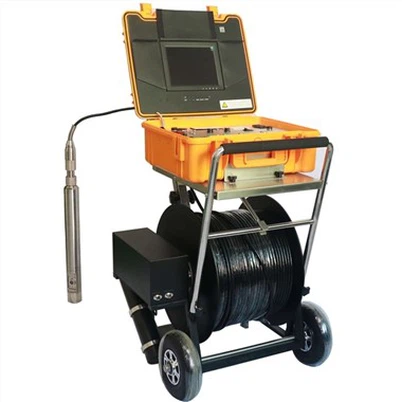
The Borehole Deep Water Inspection Camera is a top - notch option for deep - water and borehole inspections. It has a high - resolution camera sensor and powerful LED lights. The lens is designed to provide a wide field of view, and the image - processing technology ensures that you get clear and detailed images even in challenging underwater conditions.
Our Underwater dual view borescope inspection camera is another excellent choice. It offers a dual - view feature, which means you can see two different perspectives at the same time. This is great for getting a more complete understanding of the pipe's condition. The camera has adjustable lighting and a high - quality lens that can capture sharp images with accurate colors.
If you're looking for a flexible option, the Flexible Cable Industrial Borehole Camera is the way to go. The flexible cable allows you to navigate through curved and hard - to - reach pipes easily. It also has a good resolution and reliable lighting system, so you can get clear images no matter where you're inspecting.
When it comes to choosing the right pipe camera for your needs, it's important to consider the image quality requirements of your specific application. If you're doing a simple inspection of a small - diameter pipe, a lower - resolution camera may be sufficient. But if you're dealing with large pipes, complex pipe systems, or need to detect small defects, a high - resolution camera with advanced features is a must.
In conclusion, the image quality of a pipe camera is determined by multiple factors including resolution, lighting, lens quality, and image - processing technology. At our company, we offer a range of pipe cameras with different image qualities to meet the diverse needs of our customers. Whether you're a professional plumber, an engineer, or someone involved in infrastructure inspection, we have the right camera for you.
If you're interested in learning more about our pipe cameras or want to discuss your specific requirements, don't hesitate to reach out. We're here to help you find the best solution for your pipe - inspection needs.
References
- Camera Technology Handbook: A Guide to Understanding Image Sensors, Lenses, and Lighting.
- Pipe Inspection Industry Reports on the Importance of Image Quality.