
How long can an ROV robot operate continuously?
Leave a message

When it comes to the underwater exploration and inspection tasks, Remotely Operated Vehicles (ROVs) have emerged as invaluable tools. As a leading ROV robot supplier, I often receive inquiries from customers about the continuous operation time of our ROV robots. In this blog, I will delve into the factors that affect the continuous operation time of an ROV robot and provide some insights on how long they can typically operate.
Factors Affecting Continuous Operation Time of ROV Robots
The continuous operation time of an ROV robot is influenced by a multitude of factors. Understanding these factors is crucial for customers to make informed decisions when choosing an ROV for their specific applications.
Power Source
One of the most significant factors is the power source of the ROV. Most ROVs are powered by batteries or are connected to a surface power supply via a tether.
- Battery - Powered ROVs: Battery - powered ROVs offer greater mobility and flexibility, especially in situations where a long tether is not practical. However, the capacity of the batteries directly limits the continuous operation time. The type of battery used also plays a role. For example, lithium - ion batteries generally have a higher energy density compared to lead - acid batteries, which means they can store more energy per unit weight. This allows ROVs equipped with lithium - ion batteries to operate for a longer period. On average, a small - to - medium - sized battery - powered ROV can operate continuously for 1 to 4 hours, depending on the battery capacity and the power consumption of the ROV's components.
- Tethered ROVs: Tethered ROVs are connected to a surface power supply, which theoretically provides an unlimited power source. However, the practical continuous operation time of tethered ROVs is still limited by other factors such as the durability of the tether, the heat generated by the ROV's components, and the operator's fatigue. In ideal conditions, a tethered ROV can operate continuously for several hours to even days, especially in large - scale industrial inspections or scientific research projects.
Power Consumption of Components
The power consumption of the ROV's components also has a major impact on its continuous operation time.
- Propulsion System: The propulsion system is one of the most power - hungry components of an ROV. The number and type of thrusters, as well as the speed at which the ROV needs to move, determine the power consumption of the propulsion system. For example, an ROV with four high - power thrusters will consume more power than an ROV with two low - power thrusters. Additionally, if the ROV needs to operate in strong currents or against other external forces, the propulsion system will require more power, reducing the continuous operation time.
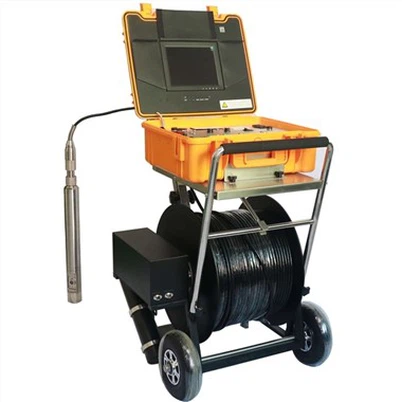
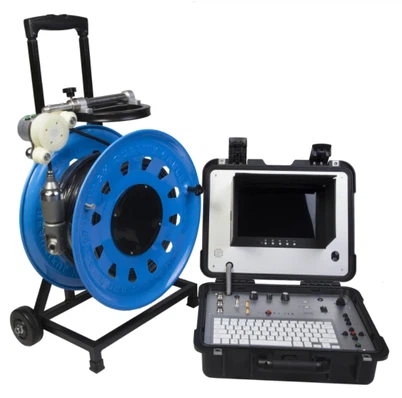
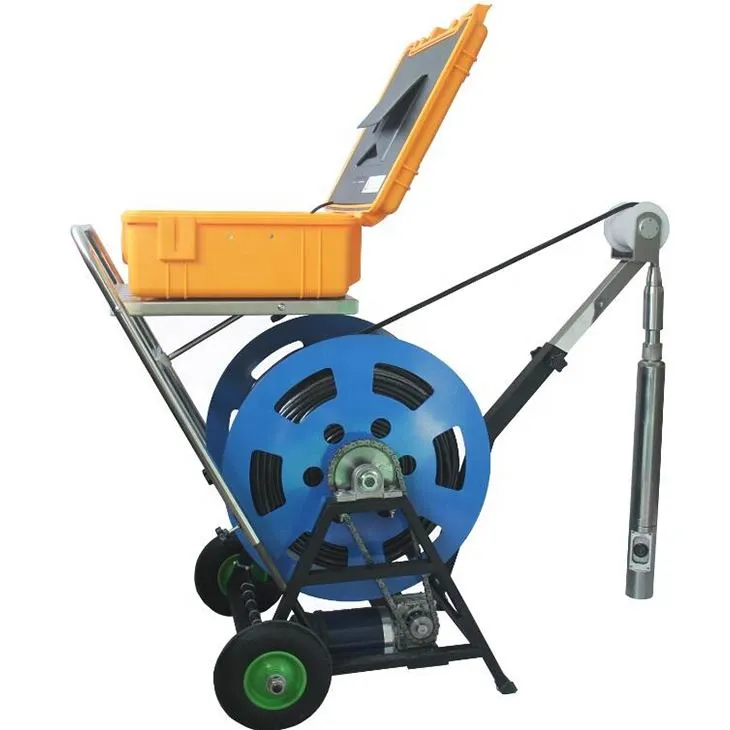
- Sensors and Cameras: Sensors and cameras are essential for the ROV to perform its tasks, such as inspection, mapping, and data collection. High - resolution cameras and advanced sensors often consume more power. For instance, a Borehole Pipe Inspection Camera with high - definition video capabilities and advanced lighting systems will consume more power compared to a basic camera. Similarly, sensors like sonars and depth sensors also contribute to the overall power consumption.
Environmental Conditions
The environmental conditions in which the ROV operates can also affect its continuous operation time.
- Water Temperature: Cold water can reduce the performance of batteries and other electronic components, leading to a shorter continuous operation time. In extremely cold water, the chemical reactions inside the batteries slow down, reducing their capacity and output voltage. On the other hand, warm water can cause overheating of the ROV's components, which may require the ROV to reduce its power consumption or shut down temporarily to prevent damage.
- Water Depth and Pressure: As the water depth increases, the pressure on the ROV also increases. This can put additional stress on the ROV's components, especially the seals and the hull. In some cases, the increased pressure may cause leaks or damage to the electronic components, reducing the continuous operation time.
Typical Continuous Operation Times of Different Types of ROVs
Mini ROVs
Mini ROVs are small, lightweight, and easy to operate. They are often used for shallow - water inspections, such as inspecting small pipes, aquariums, or shallow underwater structures. These ROVs are usually battery - powered and have a relatively short continuous operation time. On average, a mini ROV can operate continuously for about 1 to 2 hours. This is mainly due to their small battery capacity and the fact that they are often equipped with basic sensors and cameras, which still consume a certain amount of power.
Medium - Sized ROVs
Medium - sized ROVs are more versatile and can be used for a wider range of applications, including underwater pipeline inspections, fish farm monitoring, and scientific research in shallow to medium - depth waters. These ROVs can be either battery - powered or tethered. Battery - powered medium - sized ROVs can typically operate continuously for 2 to 4 hours, while tethered medium - sized ROVs can operate for several hours, depending on the specific application and the conditions. For example, a medium - sized ROV equipped with a 100m Underwater Vertical Observation Borehole AHD Waterproof Inspection Camera may have a continuous operation time of 3 to 5 hours if it is tethered and operating in relatively calm waters.
Large - Scale Industrial ROVs
Large - scale industrial ROVs are designed for heavy - duty applications, such as deep - sea oil and gas exploration, underwater construction, and large - scale pipeline inspections. These ROVs are usually tethered to a surface power supply and are equipped with powerful propulsion systems, high - end sensors, and cameras. They can operate continuously for long periods, sometimes up to 24 hours or more. For example, an industrial ROV used for deep - sea pipeline inspections may be equipped with a Well Inspection Dual View Camera System and operate continuously for 12 to 24 hours to cover a large area of the pipeline.

Extending the Continuous Operation Time of ROV Robots
There are several ways to extend the continuous operation time of ROV robots.
Battery Management
For battery - powered ROVs, proper battery management is crucial. This includes using high - quality batteries with a large capacity, charging the batteries fully before each use, and avoiding over - discharging the batteries. Additionally, some ROVs are designed with the ability to swap batteries quickly, allowing for continuous operation by simply replacing the depleted batteries with fully charged ones.
Power Optimization
Optimizing the power consumption of the ROV's components can also extend the continuous operation time. This can be achieved by using energy - efficient components, such as low - power thrusters and sensors, and by adjusting the operation mode of the ROV according to the specific task. For example, if the ROV is not moving, the propulsion system can be turned off to save power.
Maintenance and Monitoring
Regular maintenance and monitoring of the ROV are essential to ensure its optimal performance and to detect any potential issues that may affect the continuous operation time. This includes checking the condition of the batteries, the tether (if applicable), the sensors, and the propulsion system. By identifying and fixing problems early, the ROV can operate more efficiently and for a longer period.
Conclusion
The continuous operation time of an ROV robot depends on various factors, including the power source, power consumption of components, and environmental conditions. As a supplier, we offer a wide range of ROVs with different continuous operation times to meet the diverse needs of our customers. Whether you need a mini ROV for a short - term inspection or a large - scale industrial ROV for a long - term project, we can provide you with the right solution.
If you are interested in purchasing an ROV robot or have any questions about the continuous operation time and other features, please feel free to contact us for further discussion. We are committed to providing you with the best products and services to meet your underwater exploration and inspection needs.
References
- Fossen, T. I. (2011). Handbook of Marine Craft Hydrodynamics and Motion Control. John Wiley & Sons.
- Singh, S., & Smith, R. (2007). Underwater Robotics: Science, Design, and Fabrication. CRC Press.