
How does a sewer camera perform in pipes with scale build - up?
Leave a message

Scale build-up in pipes is a common issue that can lead to reduced flow capacity, increased pressure, and even pipe blockages. As a sewer camera supplier, understanding how our cameras perform in pipes with scale build-up is crucial for providing accurate inspections and reliable solutions to our customers. In this blog post, we will explore the challenges posed by scale build-up in pipes and how our sewer cameras are designed to overcome them.
Challenges of Scale Build-up in Pipes
Scale build-up occurs when minerals and other substances in the water precipitate out and form a hard, crusty layer on the inner walls of pipes. This can happen in a variety of pipes, including sewer pipes, water supply pipes, and industrial pipes. The scale can vary in thickness and composition, depending on the type of water and the minerals present.
One of the main challenges of scale build-up in pipes is that it can reduce the diameter of the pipe, which can restrict the flow of water or sewage. This can lead to slower drainage, backups, and even flooding in severe cases. Scale build-up can also cause corrosion and damage to the pipe walls, which can further weaken the pipe and increase the risk of leaks and breaks.
Another challenge of scale build-up is that it can make it difficult to inspect the pipes using traditional methods. The scale can obscure the view of the pipe walls, making it hard to detect cracks, leaks, or other defects. This can lead to inaccurate inspections and missed problems, which can result in costly repairs and downtime.


How Sewer Cameras Work
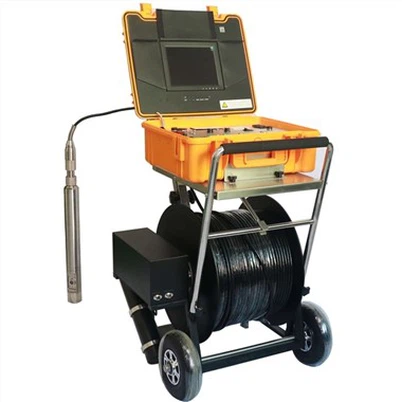
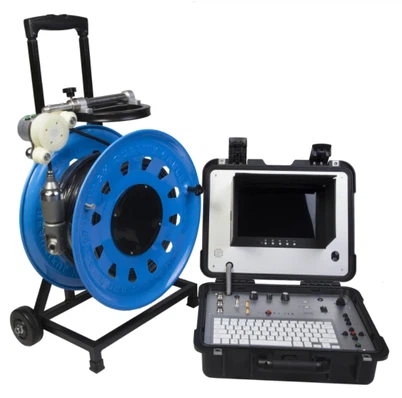
Sewer cameras are specialized devices that are designed to inspect the inside of pipes. They typically consist of a camera head attached to a flexible cable, which is inserted into the pipe through an access point. The camera head is equipped with lights and a lens, which allows it to capture high-resolution images and videos of the pipe walls.
The camera head is connected to a monitor or recording device, which displays the images and videos in real-time. This allows the inspector to view the inside of the pipe and identify any problems or defects. The camera can also be used to measure the diameter of the pipe, the thickness of the scale, and the location of any blockages or obstructions.
Performance of Sewer Cameras in Pipes with Scale Build-up
Our sewer cameras are designed to perform well in pipes with scale build-up. They are equipped with high-resolution cameras and powerful lights, which allow them to capture clear images and videos even in low-light conditions. The cameras are also designed to be flexible and maneuverable, which allows them to navigate through pipes with bends, curves, and other obstacles.
One of the key features of our sewer cameras is their ability to penetrate through the scale and provide a clear view of the pipe walls. The cameras are equipped with advanced imaging technology, which allows them to detect and analyze the scale build-up. This information can be used to determine the thickness and composition of the scale, as well as the location and severity of any blockages or obstructions.
Another feature of our sewer cameras is their ability to provide accurate measurements of the pipe diameter and the thickness of the scale. The cameras are equipped with built-in measuring tools, which allow the inspector to measure the dimensions of the pipe and the scale with precision. This information can be used to determine the best course of action for removing the scale and restoring the flow of water or sewage.
Benefits of Using Sewer Cameras in Pipes with Scale Build-up
Using sewer cameras to inspect pipes with scale build-up offers several benefits. First, it allows for accurate and detailed inspections of the pipes, which can help to identify any problems or defects before they become major issues. This can save time and money by preventing costly repairs and downtime.
Second, using sewer cameras can help to reduce the risk of damage to the pipes during the inspection process. Traditional inspection methods, such as using a snake or a drain auger, can be rough on the pipes and can cause damage to the walls. Sewer cameras, on the other hand, are non-invasive and do not require any physical contact with the pipes.
Third, using sewer cameras can provide valuable information about the condition of the pipes, which can help to make informed decisions about maintenance and repair. The images and videos captured by the cameras can be used to create detailed reports and documentation, which can be shared with the customer or the maintenance team.
Conclusion
Scale build-up in pipes is a common issue that can cause a variety of problems, including reduced flow capacity, increased pressure, and pipe blockages. As a sewer camera supplier, we understand the challenges posed by scale build-up in pipes and have designed our cameras to overcome them. Our sewer cameras are equipped with high-resolution cameras, powerful lights, and advanced imaging technology, which allow them to provide accurate and detailed inspections of pipes with scale build-up.
If you are experiencing problems with scale build-up in your pipes, or if you need to inspect your pipes for any other reason, we encourage you to contact us to learn more about our sewer cameras and how they can help. Our team of experts can provide you with more information about our products and services, as well as answer any questions you may have. We look forward to hearing from you and helping you to solve your pipe inspection needs.
If you are interested in exploring more camera options, you can check out our Borehole Water Well Camera, Factory Borehole Water Well Camera, and Borehole Inspection Camera. These cameras are also designed to provide high-quality inspections in various environments.
References
- [1] Smith, J. (2020). Pipe Inspection Technologies: A Review. Journal of Pipeline Systems Engineering and Practice, 11(2), 04020006.
- [2] Johnson, R. (2019). The Impact of Scale Build-up on Pipe Performance. Plumbing and Mechanical, 123(4), 34-38.
- [3] Brown, A. (2018). Sewer Camera Technology: Advancements and Applications. Water and Wastewater International, 33(3), 22-27.