
How do ROV robots perform in areas with high levels of sediment?
Leave a message

In the realm of underwater exploration and industrial operations, Remotely Operated Vehicles (ROVs) have emerged as indispensable tools. These sophisticated machines are designed to navigate the challenging and often harsh environments beneath the water's surface. One of the most demanding scenarios that ROVs encounter is operating in areas with high levels of sediment. As a leading ROV robot supplier, we have witnessed firsthand the capabilities and challenges that these vehicles face in such conditions.
The Impact of High Sediment Levels on ROV Operations
High sediment areas, such as river deltas, construction sites, and some oil and gas fields, present unique obstacles for ROVs. Sediment can significantly reduce visibility, clog mechanical components, and interfere with sensor readings. These factors can compromise the ROV's ability to perform its intended tasks effectively.
Visibility is perhaps the most immediate challenge. Sediment particles suspended in the water scatter and absorb light, creating a murky environment where it can be difficult for operators to see what the ROV is doing. This lack of visibility can make it challenging to navigate, identify objects of interest, and perform precise tasks such as inspection or maintenance.


Mechanical components are also at risk in high sediment environments. Sediment can enter the ROV's joints, bearings, and other moving parts, causing increased friction and wear. Over time, this can lead to mechanical failure and costly repairs. Additionally, sediment can clog the ROV's thrusters, reducing its maneuverability and making it more difficult to control.
Sensor readings can be affected by sediment as well. Sonar, for example, relies on sound waves to detect objects in the water. Sediment particles can scatter and absorb these sound waves, making it difficult for the sonar to accurately detect and locate objects. Other sensors, such as cameras and depth sensors, can also be affected by sediment, leading to inaccurate readings and reduced performance.
How ROVs are Designed to Overcome Sediment Challenges
Despite these challenges, modern ROVs are equipped with a variety of features and technologies designed to operate effectively in high sediment environments.
One of the most important features is the use of high-resolution cameras and lighting systems. These cameras are designed to provide clear images even in low-light and high-sediment conditions. They often use advanced imaging technologies, such as high dynamic range (HDR) and low-light enhancement, to improve visibility. Additionally, powerful lighting systems are used to illuminate the area around the ROV, further improving visibility.
Another important feature is the use of sediment-resistant materials and coatings. These materials are designed to prevent sediment from adhering to the ROV's surface and entering its mechanical components. For example, some ROVs are coated with a special polymer that repels sediment, while others use stainless steel or other corrosion-resistant materials for their mechanical components.
To address the issue of sediment clogging the thrusters, many ROVs are equipped with self-cleaning thrusters. These thrusters are designed to automatically remove sediment that has accumulated on their blades, ensuring that they continue to operate efficiently. Additionally, some ROVs use variable-pitch thrusters, which can adjust the angle of their blades to improve performance in high sediment conditions.
In addition to these features, ROVs are often equipped with advanced sensors and navigation systems to help them operate in high sediment environments. Sonar systems, for example, can be used to detect objects in the water even when visibility is poor. These systems use sound waves to create a map of the surrounding environment, allowing the ROV to navigate safely and avoid obstacles. Other sensors, such as depth sensors and inertial measurement units (IMUs), can also be used to provide accurate information about the ROV's position and orientation.
Case Studies: ROVs in High Sediment Environments
To illustrate the performance of ROVs in high sediment environments, let's look at a few case studies.
Oil and Gas Industry
In the oil and gas industry, ROVs are often used to inspect and maintain underwater infrastructure, such as pipelines and wellheads. These operations often take place in areas with high levels of sediment, such as near the seabed or in areas where drilling activities have disturbed the sediment.
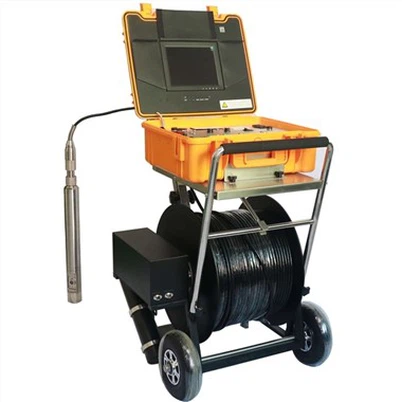
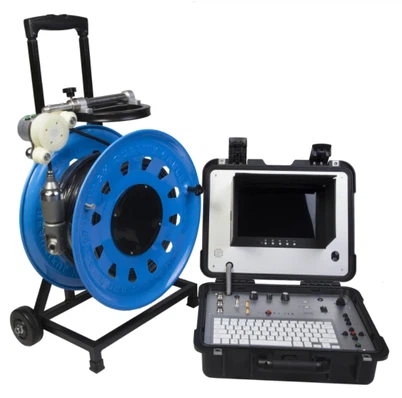
One example is the use of ROVs to inspect oil well downhole. Oil Well Downhole Camera For 3500m are specifically designed to operate in the harsh environment of an oil well, where sediment and other debris can be present. These cameras are equipped with high-resolution imaging systems and powerful lighting to provide clear images of the wellbore. They are also designed to be resistant to the high pressures and temperatures found in the well.
Another example is the use of ROVs to inspect underwater pipelines. Underwater Borehole Inspection Camera are used to detect leaks, corrosion, and other damage to the pipeline. These cameras are often mounted on the ROV and can be used to provide real-time images of the pipeline's interior. In high sediment environments, the ROV's cameras and lighting systems are used to improve visibility and ensure that the inspection is accurate and thorough.
Construction Industry
In the construction industry, ROVs are often used to inspect and monitor underwater structures, such as bridges, dams, and piers. These operations often take place in areas with high levels of sediment, such as rivers and estuaries.
One example is the use of ROVs to inspect the foundations of a bridge. Oil Well Downhole Inspection Camera can be used to detect cracks, erosion, and other damage to the bridge's foundations. The ROV's cameras and lighting systems are used to provide clear images of the foundations, even in high sediment conditions. Additionally, the ROV's sensors can be used to measure the thickness of the sediment and the depth of the water, providing valuable information for the construction team.
Conclusion
In conclusion, ROVs are capable of performing effectively in areas with high levels of sediment. Despite the challenges posed by sediment, modern ROVs are equipped with a variety of features and technologies designed to overcome these challenges. High-resolution cameras and lighting systems, sediment-resistant materials and coatings, self-cleaning thrusters, and advanced sensors and navigation systems all contribute to the ROV's ability to operate in high sediment environments.
As a leading ROV robot supplier, we are committed to providing our customers with the highest quality ROVs and support services. Our ROVs are designed to meet the specific needs of our customers, whether they are operating in the oil and gas industry, the construction industry, or any other underwater application. If you are interested in learning more about our ROVs and how they can help you overcome the challenges of high sediment environments, please contact us to discuss your requirements and explore potential procurement opportunities.
References
- "Underwater Robotics: Technology and Applications" by Joseph B. Singh and Robert E. McGhee
- "Remotely Operated Vehicles: Design and Development" by John R. Dowling and David A. Pugh
- "Sonar Signal Processing for Underwater Imaging" by Mark A. Richards and John A. Scheer