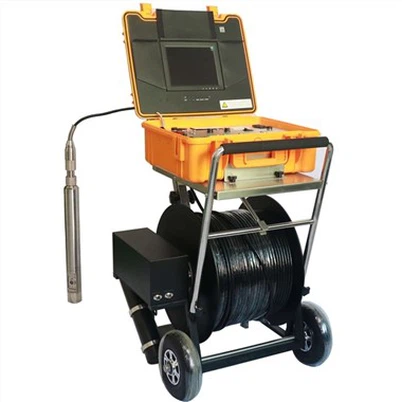

How are ROV robots controlled remotely?
Leave a message

Remote Operated Vehicles (ROVs) are marvels of modern engineering, playing a crucial role in various underwater applications, from scientific research to industrial inspections. As a leading ROV robot supplier, I've witnessed firsthand the incredible capabilities of these machines and the sophisticated methods used to control them remotely. In this blog post, I'll delve into the fascinating world of ROV control systems, exploring the technologies and techniques that enable operators to navigate and manipulate these underwater wonders from a distance.
Understanding the Basics of ROV Control
At the heart of every ROV is a control system that allows operators to send commands and receive feedback from the vehicle. This system typically consists of a surface control unit (SCU) and a tether that connects the SCU to the ROV. The SCU serves as the operator's interface with the ROV, providing controls for steering, propulsion, and other functions. The tether, on the other hand, transmits power and data between the SCU and the ROV, allowing the operator to monitor the vehicle's status and adjust its behavior as needed.
Communication Technologies
One of the key challenges in controlling an ROV remotely is establishing a reliable communication link between the SCU and the vehicle. This is typically achieved using a combination of wired and wireless technologies, depending on the specific requirements of the application.
Wired Communication
Wired communication is the most common method used to control ROVs, as it provides a stable and secure connection between the SCU and the vehicle. The tether used in wired communication systems typically consists of a bundle of electrical cables and optical fibers that transmit power, data, and control signals between the SCU and the ROV. The electrical cables provide power to the ROV's motors and other components, while the optical fibers are used to transmit high-speed data, such as video and sensor readings, back to the SCU.
Wireless Communication
In some applications, wireless communication may be preferred over wired communication, as it allows for greater flexibility and mobility. Wireless communication systems typically use radio waves or acoustic signals to transmit data between the SCU and the ROV. Radio waves are commonly used for short-range communication, while acoustic signals are used for longer-range communication in underwater environments. However, wireless communication systems are generally less reliable than wired systems, as they are more susceptible to interference and signal loss.
Control Techniques
Once a communication link has been established between the SCU and the ROV, the operator can use a variety of control techniques to navigate and manipulate the vehicle. These techniques can be broadly classified into two categories: manual control and autonomous control.
Manual Control
Manual control is the most common method used to operate ROVs, as it allows the operator to have direct control over the vehicle's movements. In manual control mode, the operator uses a joystick or other input device to send commands to the ROV's motors and other components, allowing them to steer the vehicle, adjust its depth, and perform other tasks. Manual control is typically used in applications where precise control and real-time decision-making are required, such as underwater inspections and maintenance.
Autonomous Control
Autonomous control is a more advanced control technique that allows the ROV to operate without direct human intervention. In autonomous control mode, the ROV is programmed to follow a pre-defined mission plan, using sensors and algorithms to navigate and perform tasks automatically. Autonomous control is typically used in applications where repetitive tasks need to be performed over a large area, such as underwater mapping and surveying.
Sensor Systems
In addition to communication and control technologies, ROVs are also equipped with a variety of sensor systems that provide the operator with information about the vehicle's surroundings and status. These sensors can include cameras, sonars, depth sensors, and other types of sensors, depending on the specific requirements of the application.
Cameras
Cameras are one of the most important sensor systems on an ROV, as they provide the operator with a visual feed of the vehicle's surroundings. ROV cameras can be used for a variety of purposes, including underwater inspections, mapping, and surveying. There are several types of cameras available for ROVs, including high-definition video cameras, still cameras, and thermal cameras.
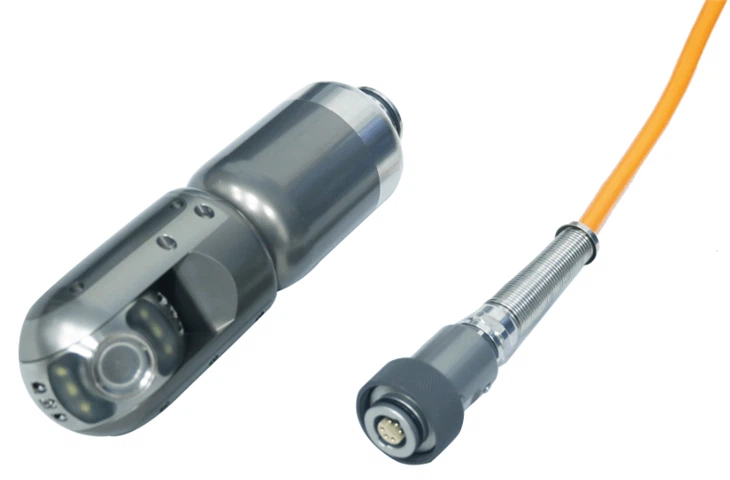

For example, our Hot Sale Water Well Inspection Camera is a high-quality camera designed specifically for underwater inspections. It features a high-resolution image sensor and a wide-angle lens, allowing operators to capture clear and detailed images of the underwater environment.
Sonars
Sonars are another important sensor system on an ROV, as they provide the operator with information about the distance and location of objects in the water. Sonars work by emitting sound waves and measuring the time it takes for the waves to bounce back from objects in the water. This information can be used to create a map of the underwater environment and to detect the presence of objects, such as pipelines, wrecks, and marine life.
Depth Sensors
Depth sensors are used to measure the depth of the ROV in the water. This information is important for maintaining the vehicle's stability and for ensuring that it operates within its safe operating limits. Depth sensors can be based on a variety of technologies, including pressure sensors, acoustic sensors, and optical sensors.
Challenges and Solutions
Controlling an ROV remotely is not without its challenges. Some of the key challenges include signal interference, limited communication range, and the need for precise control in challenging underwater environments. However, advances in technology have helped to overcome many of these challenges, making it possible to operate ROVs more effectively and efficiently.
Signal Interference
Signal interference is a common problem in underwater communication systems, as the water can absorb and scatter radio waves and acoustic signals. To overcome this problem, ROVs are typically equipped with advanced signal processing algorithms and antennas that can filter out interference and improve the quality of the communication link.
Limited Communication Range
The communication range of an ROV is limited by the length of the tether and the strength of the communication signal. To extend the communication range, some ROVs are equipped with repeaters or relays that can amplify and retransmit the communication signal. In addition, wireless communication systems can be used to provide greater flexibility and mobility, although they are generally less reliable than wired systems.
Precise Control in Challenging Environments
Controlling an ROV in challenging underwater environments, such as strong currents and low visibility, can be difficult. To overcome this problem, ROVs are typically equipped with advanced control algorithms and sensors that can compensate for the effects of the environment and provide more precise control. In addition, operators can use training and experience to develop the skills and techniques needed to operate the ROV effectively in challenging conditions.
Conclusion
In conclusion, controlling an ROV remotely is a complex and challenging task that requires a combination of advanced technologies and skilled operators. As a leading ROV robot supplier, we are committed to providing our customers with the latest technologies and solutions to help them overcome these challenges and achieve their underwater goals. Whether you're looking for a high-quality 100m Water Pipe Inspection Camera Pan Tilt Drilling Pipelines Camera or a Borehole Inspection Camera 200 Meters, we have the expertise and experience to provide you with the best possible solution.
If you're interested in learning more about our ROV products and services, or if you have any questions or comments, please don't hesitate to contact us. We look forward to hearing from you and helping you with your underwater needs.
References
- Fossen, T. I. (2011). Handbook of Marine Craft Hydrodynamics and Motion Control. John Wiley & Sons.
- Whitcomb, L. L., Yoerger, D. R., & Singh, H. (2000). Underwater vehicle technology: Recent advances and future trends. Proceedings of the IEEE, 88(8), 1216-1234.
- Webster, J. G. (Ed.). (1999). The Electrical Engineering Handbook. CRC Press.