
What objects can an ROV robot salvage underwater?
Leave a message

As a leading ROV (Remotely Operated Vehicle) robot supplier, I've witnessed firsthand the remarkable capabilities of these underwater marvels. ROVs are versatile tools that can be used for a wide range of underwater tasks, including salvage operations. In this blog post, I'll explore the various objects that an ROV robot can salvage underwater, highlighting the technology behind these operations and the benefits they offer.
Understanding ROVs and Their Capabilities
ROVs are unmanned submersibles that are controlled remotely by an operator on the surface. They are equipped with a variety of sensors, cameras, and manipulator arms that allow them to navigate underwater environments, collect data, and perform tasks. ROVs come in different sizes and configurations, depending on their intended use. Some are designed for shallow-water operations, while others can reach depths of thousands of meters.
One of the key advantages of using an ROV for salvage operations is its ability to access areas that are difficult or dangerous for human divers to reach. ROVs can operate in extreme conditions, such as strong currents, low visibility, and high pressures, without putting human lives at risk. They can also stay underwater for extended periods of time, allowing them to conduct thorough searches and salvage operations.
Objects That Can Be Salvaged by ROVs
ROVs can salvage a wide range of objects from the underwater environment. Here are some of the most common types of objects that can be salvaged using an ROV:
1. Shipwrecks and Their Contents
Shipwrecks are a rich source of historical artifacts and valuable cargo. ROVs can be used to explore shipwrecks, map their layout, and salvage artifacts and cargo. They can also be used to assess the structural integrity of the wreck and determine the best way to salvage it.
For example, ROVs have been used to salvage treasures from famous shipwrecks such as the Titanic and the Spanish galleons. These operations require careful planning and execution, as the artifacts and cargo are often fragile and need to be handled with care.
2. Aircraft and Their Components
In the event of an aircraft crash into the water, ROVs can be used to locate and salvage the aircraft and its components. They can be used to search for the wreckage, map its location, and recover important components such as the flight data recorder and the cockpit voice recorder.
ROVs can also be used to assess the damage to the aircraft and determine the cause of the crash. This information can be used to improve aviation safety and prevent similar accidents from happening in the future.
3. Lost Equipment and Tools
Underwater construction sites, oil and gas platforms, and scientific research stations often lose equipment and tools in the water. ROVs can be used to locate and salvage these lost items, saving time and money for the operators.
For example, ROVs can be used to retrieve lost drilling equipment, cameras, and sensors from the seabed. They can also be used to repair and maintain underwater infrastructure, such as pipelines and cables.
4. Marine Debris
Marine debris, such as plastic bottles, fishing nets, and abandoned vessels, is a major environmental problem. ROVs can be used to locate and remove marine debris from the underwater environment, helping to protect marine life and ecosystems.
Some ROVs are specifically designed for marine debris removal, equipped with special tools and sensors to detect and collect debris. These ROVs can be used in coastal areas, rivers, and lakes to clean up the water and prevent further pollution.
5. Archaeological Artefacts
ROVs are increasingly being used in underwater archaeology to discover and salvage archaeological artefacts. They can be used to explore ancient shipwrecks, sunken cities, and other underwater archaeological sites.
ROVs can be equipped with high-resolution cameras and sonar systems to map the archaeological site and identify artefacts. They can also be used to collect samples and artefacts for further analysis and preservation.
Technology Behind ROV Salvage Operations
ROV salvage operations rely on a combination of advanced technologies to locate, identify, and retrieve objects from the underwater environment. Here are some of the key technologies used in ROV salvage operations:
1. Sonar Systems
Sonar systems are used to map the underwater environment and detect objects. They work by emitting sound waves and measuring the time it takes for the waves to bounce back from objects in the water. Sonar systems can provide detailed information about the shape, size, and location of objects, even in low visibility conditions.
2. Cameras
Cameras are an essential tool for ROV salvage operations. They can be used to provide real-time video footage of the underwater environment, allowing the operator to see what the ROV is doing. High-resolution cameras can also be used to capture detailed images of objects for further analysis.
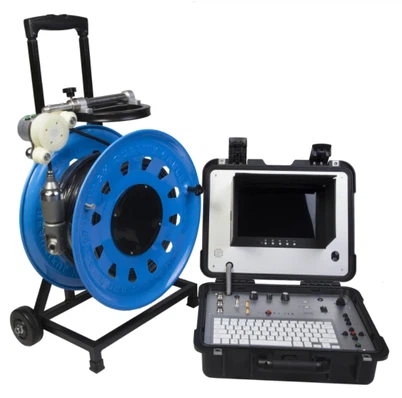
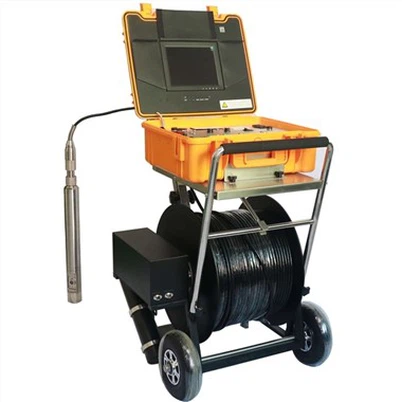
Some of our cameras, such as the Hot Sale Borehole Camera 360deg, the Drilling Inspection Camera Waterproof 30 Bar, and the 100m Underwater Vertical Observation Borehole AHD Waterproof Inspection Camera, are specifically designed for underwater use and can provide clear and detailed images even in challenging conditions.
3. Manipulator Arms
Manipulator arms are used to grasp and manipulate objects underwater. They can be used to pick up artefacts, equipment, and debris, and to perform other tasks such as cutting and welding. Manipulator arms come in different sizes and configurations, depending on the specific requirements of the salvage operation.
4. Navigation Systems
Navigation systems are used to control the movement of the ROV and to ensure that it stays on course. They can be used to provide real-time information about the ROV's position, depth, and orientation. Navigation systems can also be used to create maps of the underwater environment, which can be used to plan the salvage operation.
Benefits of Using ROVs for Salvage Operations
There are several benefits to using ROVs for salvage operations:
1. Safety
ROVs can operate in dangerous and challenging underwater environments without putting human lives at risk. They can be used in areas with strong currents, low visibility, and high pressures, where human divers would be at risk of injury or death.


2. Efficiency
ROVs can stay underwater for extended periods of time, allowing them to conduct thorough searches and salvage operations. They can also be equipped with multiple sensors and tools, which can increase the efficiency of the salvage operation.
3. Cost-Effectiveness
Using an ROV for salvage operations can be more cost-effective than using human divers. ROVs do not require expensive life support systems or extensive training, and they can be used repeatedly for different salvage operations.
4. Precision
ROVs can be controlled with a high degree of precision, allowing them to perform delicate tasks such as picking up small artefacts or cutting through cables. This precision can help to minimize damage to the object being salvaged and to the surrounding environment.
Conclusion
ROV robots are powerful tools that can be used to salvage a wide range of objects from the underwater environment. They offer several advantages over traditional salvage methods, including safety, efficiency, cost-effectiveness, and precision. As a leading ROV robot supplier, we are committed to providing our customers with the latest technology and equipment to meet their salvage needs.
If you are interested in learning more about our ROV robots and how they can be used for salvage operations, please contact us to discuss your requirements. We would be happy to provide you with more information and to help you choose the right ROV for your project.
References
- "Underwater Robotics: Technology and Applications" by Richard A. Coulter
- "Marine Archaeology: Methods and Techniques" by Andrew C. Parker
- "Sonar Technology for Underwater Imaging and Navigation" by John R. Jensenius