
What are the temperature - resistance capabilities of ROV robots?
Leave a message

Hey there! As a supplier of ROV (Remotely Operated Vehicle) robots, I often get asked about the temperature - resistance capabilities of these amazing machines. So, I thought I'd sit down and write a blog post to share some insights on this topic.
First off, let's talk about why temperature resistance matters for ROV robots. ROVs are used in a wide range of environments, from the freezing cold of the Arctic oceans to the scorching heat near underwater volcanic vents. In these extreme conditions, the temperature can have a significant impact on the performance and lifespan of the ROV.
In cold environments, low temperatures can cause the materials used in the ROV to become brittle. For example, plastics and rubber components may lose their flexibility, which can lead to cracks and leaks. Electrical components are also affected. Batteries, for instance, have reduced performance in cold temperatures. The chemical reactions inside the battery slow down, which means less power is available to run the ROV. This can limit the ROV's operating time and its ability to perform complex tasks.
On the other hand, high - temperature environments pose different challenges. Excessive heat can cause overheating of the ROV's electronic components. The internal circuits can malfunction, and the insulation on wires can degrade, leading to short - circuits. Moreover, the lubricants used in the moving parts of the ROV can thin out at high temperatures, reducing their effectiveness and increasing wear and tear on the mechanical components.
So, how do we make ROV robots temperature - resistant? Well, it all starts with the materials we choose. For cold - resistant ROVs, we use special polymers that can maintain their flexibility even at extremely low temperatures. These polymers are designed to withstand the stress of cold - induced contraction without cracking. For the electrical components, we use batteries and circuit boards that are rated for low - temperature operation. Some of these components are even pre - heated before deployment to ensure they function properly.


When it comes to high - temperature resistance, we focus on heat dissipation. We design the ROV with heat sinks and cooling systems. These heat sinks are made of materials with high thermal conductivity, such as aluminum, which can quickly transfer heat away from the electronic components. Additionally, we use high - temperature - resistant insulation on the wires to prevent short - circuits.
Now, let's take a look at some of the specific temperature ranges that our ROV robots can handle. Our standard models are designed to operate in a temperature range of - 20°C to 50°C. This range covers most of the common underwater environments, including coastal waters and deep - sea areas. However, for more extreme applications, we can customize the ROVs to handle even more challenging temperatures.
For example, if you need an ROV for Arctic exploration, we can modify it to operate at temperatures as low as - 40°C. We'll use specialized cold - resistant materials and add extra insulation to protect the internal components. Similarly, if you're planning to use the ROV near underwater volcanoes, we can build it to withstand temperatures up to 80°C.
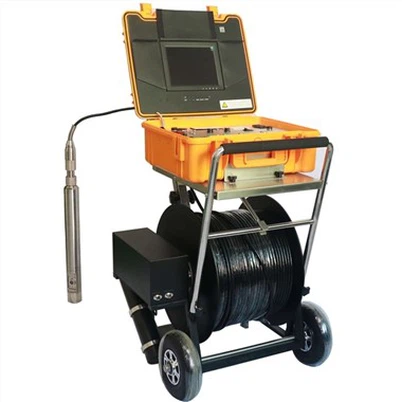
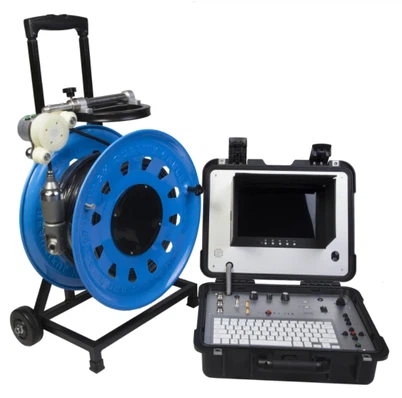
But the temperature - resistance capabilities of our ROVs aren't the only thing that makes them great. We also offer a range of high - quality accessories. One of our popular products is the Waterproof Camera System For Deep Well. This camera system is designed to provide clear and detailed images even in the most challenging underwater conditions. It's waterproof and can withstand the pressure and temperature variations of deep - well environments.
Another great accessory is the Borehole Inspection Camera. This camera is perfect for inspecting boreholes. It has a high - resolution lens and can be easily attached to our ROVs. With this camera, you can get a close - up view of the borehole walls and detect any potential issues.
And if you're into fishing, our Underwater Pan and Tilt HD Underwater Camera For Fishing Depth 500m GLF - UDC - V11S Supplier China is a must - have. It allows you to see what's going on underwater at a depth of up to 500m. You can pan and tilt the camera to get a better view of the fish and the underwater environment.
In conclusion, the temperature - resistance capabilities of our ROV robots are crucial for their performance in different underwater environments. Whether you're exploring the cold Arctic waters or the hot areas near underwater volcanoes, our ROVs can be customized to meet your specific temperature requirements. And with our high - quality accessories, you can enhance the functionality of your ROV even further.
If you're interested in purchasing an ROV robot or have any questions about our products, don't hesitate to get in touch. We're here to help you find the perfect ROV for your needs.
References:
- "Underwater Robotics: Technology and Applications" - A comprehensive book on ROV technology and its various aspects.
- Industry reports on the development of temperature - resistant materials for underwater equipment.