
What is the full - meaning of ROV robot?
Leave a message

As a supplier deeply entrenched in the ROV (Remotely Operated Vehicle) robot industry, I've witnessed firsthand the transformative impact these remarkable machines have had across a multitude of sectors. The term "ROV robot" might seem straightforward at first glance, but its full meaning encompasses a vast spectrum of capabilities, applications, and technological marvels. In this blog post, I'll delve into the intricacies of ROV robots, exploring their components, functions, and the diverse industries they serve.
Understanding the Basics of ROV Robots
At its core, an ROV robot is an unmanned underwater vehicle that is remotely controlled by an operator on the surface. Unlike autonomous underwater vehicles (AUVs), which operate independently based on pre - programmed instructions, ROVs are directly controlled in real - time, allowing for immediate response to changing conditions.
The basic components of an ROV typically include a frame, propulsion system, control system, and a variety of sensors and tools. The frame provides structural support and protection for the internal components, while the propulsion system enables the ROV to move in different directions, including forward, backward, up, down, and sideways. The control system, usually connected to the ROV via a tether, allows the operator to send commands and receive feedback from the vehicle.
Propulsion and Maneuverability
One of the key features of an ROV is its ability to navigate through complex underwater environments. The propulsion system is the heart of this capability. Most ROVs are equipped with multiple thrusters, which can be adjusted independently to control the vehicle's movement. For example, by adjusting the thrust of the vertical thrusters, the ROV can ascend or descend in the water column. Similarly, the horizontal thrusters can be used to control the forward, backward, and sideways movement of the vehicle.
This high level of maneuverability makes ROVs ideal for a wide range of applications, from exploring deep - sea trenches to inspecting underwater pipelines. For instance, in the oil and gas industry, ROVs are used to inspect subsea infrastructure such as pipelines, wellheads, and platforms. Their ability to access hard - to - reach areas and perform detailed inspections helps to ensure the safety and integrity of these critical assets.
Sensors and Tools
ROVs are often equipped with a variety of sensors and tools to perform specific tasks. These can include cameras, sonars, manipulator arms, and sampling devices.
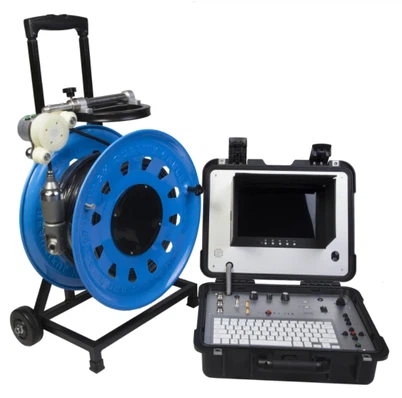
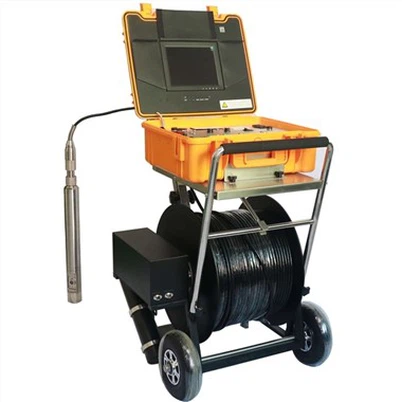
Cameras are one of the most common sensors on an ROV. They provide visual feedback to the operator, allowing them to inspect the underwater environment and identify potential issues. High - definition cameras can capture detailed images and videos, which can be used for documentation, analysis, and decision - making. For example, a Borehole Inspection Camera With DVR Unit can be used to inspect the interior of boreholes, providing valuable information about the condition of the well.
Sonars are another important sensor on an ROV. They use sound waves to detect objects and measure distances in the water. Sonars can be used to map the underwater terrain, detect obstacles, and locate targets. For example, in search and rescue operations, sonars can help to locate sunken vessels or missing persons.
Manipulator arms are often used to perform physical tasks underwater. They can be used to pick up objects, turn valves, and perform maintenance tasks. Manipulator arms are especially useful in industries such as offshore oil and gas, where they can be used to perform repairs and inspections on subsea equipment.
Sampling devices are used to collect samples of water, sediment, or biological specimens. These samples can be analyzed in a laboratory to gain a better understanding of the underwater environment. For example, in environmental monitoring, ROVs equipped with sampling devices can be used to collect water samples from different depths to measure water quality.
Applications of ROV Robots
The applications of ROV robots are diverse and span across multiple industries.
Oil and Gas Industry
In the oil and gas industry, ROVs play a crucial role in exploration, production, and maintenance. During the exploration phase, ROVs can be used to survey the seabed for potential oil and gas reserves. They can also be used to inspect and install subsea equipment such as pipelines, wellheads, and risers. In production, ROVs are used to monitor the performance of subsea equipment and perform maintenance tasks. For example, they can be used to clean the exterior of subsea pipelines to prevent corrosion.
Scientific Research
ROVs are also widely used in scientific research. They can be used to explore the deep - sea environment, study marine life, and collect data on oceanographic processes. For example, scientists can use ROVs to study hydrothermal vents, which are home to unique ecosystems that thrive in extreme conditions. ROVs can also be used to study the impact of climate change on the ocean, such as the melting of ice shelves and the acidification of seawater.
Underwater Construction
In underwater construction projects, ROVs are used to perform a variety of tasks, such as installing and inspecting underwater structures. They can be used to place and secure piles, connect pipelines, and inspect the integrity of underwater foundations. For example, in the construction of offshore wind farms, ROVs can be used to inspect the subsea cables and foundations to ensure their safety and reliability.
Search and Rescue
ROVs are invaluable in search and rescue operations. They can be used to search for sunken vessels, missing persons, and other objects in the water. Their ability to operate in deep and murky waters makes them an ideal tool for these types of operations. For example, in the aftermath of a shipwreck, ROVs can be used to search the wreckage for survivors or to locate the cause of the accident.
The Future of ROV Robots
The future of ROV robots looks promising, with continuous advancements in technology driving innovation in the industry. One of the key trends is the development of more autonomous ROVs. While current ROVs are mainly remotely controlled, researchers are working on developing ROVs that can perform certain tasks autonomously. This would reduce the need for human operators and increase the efficiency and safety of underwater operations.
Another trend is the integration of artificial intelligence (AI) and machine learning (ML) into ROV systems. AI and ML algorithms can be used to analyze the data collected by ROV sensors, such as images and sonar data, to identify patterns and make predictions. For example, AI - powered ROVs could be used to detect signs of corrosion on underwater pipelines before they become a major problem.
Conclusion
In conclusion, the full meaning of an ROV robot goes far beyond its basic definition as a remotely operated underwater vehicle. It encompasses a wide range of capabilities, from precise maneuverability to the use of advanced sensors and tools. ROVs have become an indispensable tool in various industries, including oil and gas, scientific research, underwater construction, and search and rescue.
As a supplier of ROV robots, I'm excited to be part of this dynamic industry. We offer a wide range of ROV products, including Drilling Inspection Camera Waterproof 30 Bar and Borehole Water Well Inspection Camera System, which are designed to meet the diverse needs of our customers.
If you're interested in learning more about our ROV products or have specific requirements for your underwater operations, I encourage you to reach out to us for a procurement discussion. We're committed to providing high - quality ROV solutions and excellent customer service.


References
- "Underwater Robotics: Technology and Applications" by Richard A. Blidberg
- "Remotely Operated Vehicles: Design and Development" by John R. Craig