
What harsh underwater environments can an ROV robot withstand?
Leave a message

Hey there, fellow underwater exploration enthusiasts! I'm stoked to be here as a supplier of ROV (Remotely Operated Vehicle) robots. Today, we're gonna dive deep into the question: What harsh underwater environments can an ROV robot withstand?
First off, let's talk about the basics. ROV robots are like our eyes and hands in the underwater world. They're used for all sorts of things, from scientific research and oil and gas exploration to underwater archaeology and even fishing inspections. But the underwater world is no walk in the park. It's full of challenges that can really put these robots to the test.
Extreme Pressures
One of the most significant challenges in the deep sea is the extreme pressure. As you go deeper underwater, the pressure increases exponentially. For every 10 meters you descend, the pressure increases by about one atmosphere. That means at a depth of 1,000 meters, the pressure is a whopping 100 times greater than at the surface.
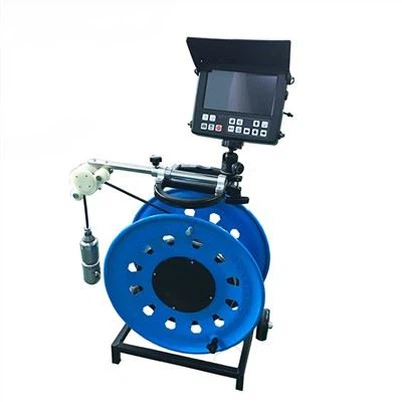
Our ROV robots are built to handle these extreme pressures. We use high - quality materials like titanium and thick - walled steel to construct their frames. These materials are incredibly strong and can withstand the crushing force of the deep sea. For example, our 5000m Depth Oil Inspection Camera is designed to operate at depths of up to 5,000 meters. At this depth, the pressure is around 500 atmospheres, but our camera and the ROV it's attached to can handle it like a champ.
Cold Temperatures
Another harsh environment that ROVs might encounter is the cold. In the deep sea, temperatures can drop to near freezing. Cold temperatures can affect the performance of electronic components, making them slower or even causing them to malfunction.
To combat this, we insulate our ROVs' electronic systems. We use special heat - resistant materials that keep the internal temperature stable. Additionally, our ROVs are equipped with heaters in critical areas to ensure that the electronics stay within their optimal operating temperature range. This way, even in the coldest parts of the ocean, our ROVs can keep working efficiently.
Corrosive Saltwater
Saltwater is a highly corrosive environment. It can eat away at metal components over time, leading to structural damage and equipment failure. That's why we take extra precautions when it comes to protecting our ROVs from corrosion.
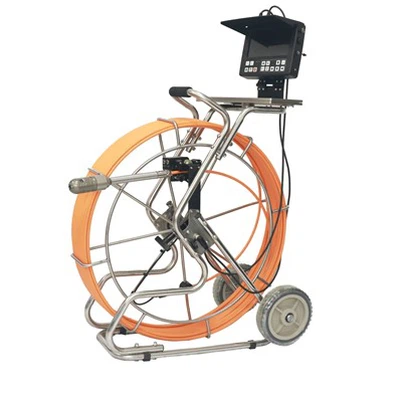
We coat the metal parts of our ROVs with anti - corrosion paints and coatings. These coatings act as a barrier between the metal and the saltwater, preventing corrosion from occurring. We also use corrosion - resistant materials like stainless steel in many of our components. For example, our Stainless Steel Pan and Tilt Underwater Video Camera Fishing Inspection Camera System On Sales is made with high - quality stainless steel, which is highly resistant to the corrosive effects of saltwater.
Turbulent Currents
Underwater currents can be incredibly strong and unpredictable. Turbulent currents can push and pull on an ROV, making it difficult to maneuver and potentially causing damage.
Our ROVs are designed with strong thrusters and advanced control systems. The thrusters provide enough power to counteract the force of the currents, allowing the ROV to maintain its position and move in the desired direction. The control systems are also very precise, allowing the operator to make small adjustments to the ROV's movement to navigate through the currents safely.
Poor Visibility
In many underwater environments, visibility can be extremely poor. There might be sediment in the water, or it could be dark due to the depth. This can make it challenging for the ROV to perform its tasks, especially if it's equipped with cameras for inspection or research.
To deal with poor visibility, our ROVs come with high - powered lights and advanced camera systems. The lights can illuminate the area around the ROV, improving visibility. And our cameras are designed to capture clear images and videos even in low - light conditions. For instance, our Well Inspection Dual View Camera System is equipped with a dual - view camera that can provide a wide - angle view of the area, making it easier to inspect wells and other underwater structures even when visibility is limited.
Biological Hazards
The underwater world is full of all sorts of creatures, some of which can pose a threat to an ROV. For example, large marine animals might accidentally bump into the ROV, causing damage. And some smaller organisms, like barnacles and mussels, can attach themselves to the ROV, affecting its performance.
We design our ROVs with a streamlined shape to minimize the chances of being hit by large animals. And we use anti - fouling coatings on the exterior of the ROV to prevent organisms from attaching to it. These coatings make the surface of the ROV slippery, so it's difficult for barnacles and other organisms to stick.
In conclusion, our ROV robots are built to withstand a wide range of harsh underwater environments. Whether it's extreme pressures, cold temperatures, corrosive saltwater, turbulent currents, poor visibility, or biological hazards, we've got you covered.


If you're in the market for an ROV robot for your underwater projects, whether it's for scientific research, industrial inspections, or any other application, don't hesitate to reach out. We're here to help you find the perfect ROV that meets your specific needs. Let's start a conversation about how our ROVs can take your underwater exploration to the next level!
References
- Oceanography textbooks for general knowledge on underwater environments
- Engineering manuals on the design and construction of ROVs