

How to upgrade a pipe camera?
Leave a message

Pipe cameras are essential tools for inspecting the interior of pipes, boreholes, and other confined spaces. As a leading pipe camera supplier, we understand the importance of keeping your equipment up - to - date to ensure accurate and efficient inspections. In this blog post, we'll explore how you can upgrade your pipe camera to enhance its performance, reliability, and functionality.
Assessing Your Current Pipe Camera
Before embarking on an upgrade, it is crucial to evaluate your current pipe camera system. Consider factors such as the camera's resolution, lighting capabilities, depth rating, and adjustable features. Check for any existing technical issues, such as blurred images, unreliable cables, or malfunctioning controls. If the camera is frequently returning low - quality images in well - lit areas, it may point to a problem with the camera sensor or lens. You should also keep in mind the specific needs of your inspection projects, like the size and type of pipes you usually work with, and the depth requirements.
Upgrading the Camera Head
The camera head is the most critical component of a pipe camera, as it captures the images. Upgrading to a camera head with higher resolution can significantly improve image clarity. This allows you to detect more subtle defects, such as small cracks or thin layers of corrosion, which might be missed with a lower - resolution camera. For example, a high - definition camera can provide sharp, detailed images even in low - light conditions.
Some advanced camera heads also come with adjustable focus, allowing you to zoom in on specific areas of interest within the pipe. Additionally, consider camera heads with wide - angle lenses. These lenses can cover a larger area in a single shot, reducing the need to reposition the camera frequently and speeding up the inspection process. Our Borehole Deep Water Inspection Camera features a high - resolution camera head that is suitable for deep - water and borehole inspections, offering clear and detailed images.
Improving Lighting Systems
Proper lighting is essential for obtaining clear images inside pipes, especially in dark or poorly lit areas. Many older pipe cameras have limited lighting capabilities. Upgrading the lighting system can make a huge difference in the quality of the inspection. LED lighting is a popular choice for pipe cameras due to its high brightness, low power consumption, and long lifespan.
Some advanced lighting systems can be adjusted in terms of intensity and color temperature. This flexibility allows you to optimize the lighting for different pipe materials and inspection conditions. For instance, a higher color temperature might be better for detecting color - based defects, such as rust stains on metal pipes. Our Borehole Water Well Camera is equipped with an adjustable LED lighting system, ensuring optimal illumination for water well inspections.
Enhancing Cable and Deployment Mechanisms
The cable is another important part of the pipe camera system. It not only transmits the video signal but also supports the camera head as it moves through the pipes. Over time, cables can become damaged, resulting in signal loss or restricted movement of the camera. Upgrading to a more durable cable with better insulation can prevent these issues.
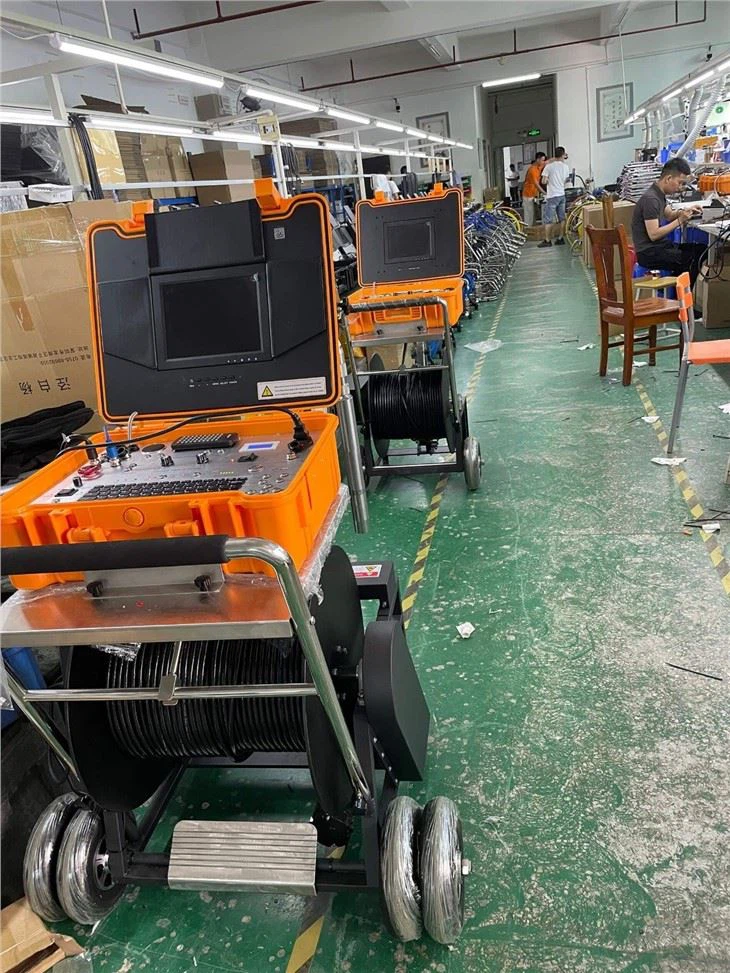

In addition, consider upgrading the deployment mechanism. Manual reels can be labor - intensive, especially for long pipes. An automated reel system can streamline the deployment and retrieval process, reducing operator fatigue and improving efficiency. Some automated systems also come with features like cable length measurement, which provides accurate information about how far the camera has traveled into the pipe.
Software and Data Management Upgrades
Modern pipe cameras often come with software that allows you to manage and analyze the inspection data. Upgrading the software can provide access to new features, such as advanced image processing, defect annotation, and report generation. With advanced image processing, you can enhance the contrast, sharpness, and color of the captured images to make it easier to identify defects.
Defect annotation tools enable you to mark and describe specific issues directly on the images, which is useful for creating detailed inspection reports. Some software can also generate comprehensive reports in various formats, such as PDF or Excel, which can be easily shared with clients or colleagues.
Compatibility and Integration
When upgrading your pipe camera, it's important to ensure that the new components are compatible with your existing system. Check the specifications of your current camera, cable, and control unit to make sure that the upgraded parts can work together seamlessly. In some cases, you may need to consult with a technical expert or the manufacturer to determine the best upgrade options for your specific system.
If you are using other inspection equipment, such as a GPS device or a data logger, consider integration possibilities. Some pipe camera systems can be integrated with these external devices, allowing you to collect and analyze more comprehensive data during the inspection process.
Training and Support
After upgrading your pipe camera, proper training is essential to ensure that you can make the most of the new features. As a pipe camera supplier, we offer training programs to help you and your team understand how to operate the upgraded system effectively. Our technical support team is also available to provide assistance in case you encounter any issues during or after the upgrade.
Cost - Benefit Analysis
Before proceeding with an upgrade, conduct a cost - benefit analysis. Consider the cost of the new components, installation, and training, as well as the potential savings and benefits in terms of improved inspection accuracy, efficiency, and reduced downtime. In most cases, the long - term benefits of upgrading your pipe camera, such as better defect detection and faster inspections, can outweigh the initial investment.
Conclusion
Upgrading your pipe camera is a strategic investment that can significantly enhance the performance and functionality of your inspection equipment. By assessing your current system, upgrading the camera head, improving the lighting, enhancing the cable and deployment mechanisms, and investing in software and data management upgrades, you can ensure that your pipe camera is up - to - date and capable of meeting the challenges of modern inspection projects.
If you're interested in upgrading your pipe camera or have any questions about our products, such as the Borehole Inspection Camera, please don't hesitate to contact us. We're here to help you find the best solutions for your inspection needs.
References
- Industry standards for pipe inspection cameras
- Manufacturer's guidelines for camera upgrades
- Case studies on successful pipe camera upgrades


