
Downhole PAN TILT Camera Industry Knowledge
Leave a message
Downhole PAN TILT Camera Industry Knowledge
Ⅰ. Basic Concepts
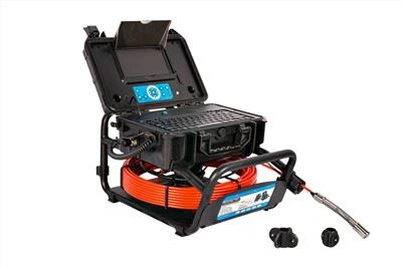
Downhole PAN TILT Camera is a monitoring device designed for underground operations. It uses PAN-TILT technology to achieve horizontal and vertical rotation, thereby capturing images from all angles underground. The device is usually equipped with a high-resolution camera and a strong light illumination system to ensure that clear images can be captured even in dim underground environments.
Ⅱ. Product Features
1: 360-degree panoramic monitoring: The PAN-TILT part of the downhole PAN-TILT camera can achieve 360-degree horizontal rotation and a certain angle of vertical tilt (such as 90 degrees or 180 degrees), thereby achieving comprehensive monitoring of the underground environment.
2: High-resolution display: The device is usually equipped with a high-resolution display (such as an 11.6-inch IPS screen) with a resolution of up to 1920*1080 to ensure clear and delicate images.
3: Strong light illumination system: Both the front and rear ends are equipped with high-brightness LED lights to ensure that clear images can be captured even in dim underground environments.
4: Lossless signal transmission: AHD signal lossless transmission technology is used to ensure that the image will not be distorted or reduced in quality during transmission.
5: Multiple interfaces and functions: Support USB storage, online playback, photo taking, playback and other functions, and have multiple interfaces (such as standard M16 aviation connector) to meet different needs.
6: Durability and protection: The equipment is made of durable materials and processes, such as PP alloy polymer materials, cold-rolled iron plates, etc., and has waterproof and dustproof protection measures.
III. Application fields
Underground PTZ cameras are widely used in various scenarios that require monitoring of underground environments, including but not limited to:
1: Mining: used to monitor the operation conditions and safety hazards in mines.
2: Oil and gas exploration: used to monitor the equipment status and fluid flow conditions in oil and gas wells.
3: Underground pipeline maintenance: used to monitor the internal conditions of underground pipelines, such as blockages and leaks.
4: Geological disaster monitoring: used to monitor the deformation of geological disaster risk points, such as landslides, mudslides, etc.
IV. Development trend
With the continuous development of science and technology, underground PTZ cameras are also constantly upgraded and improved. In the future, the industry may show the following development trends:
1: High definition: With the continuous advancement of image acquisition and processing technology, the resolution of underground PTZ cameras will be further improved and the image quality will be clearer.
2: Intelligence: By introducing artificial intelligence technology, underground PTZ cameras can achieve higher-level image analysis and processing functions, such as target detection, tracking and recognition.
3: Wireless: With the continuous development of wireless transmission technology, underground PTZ cameras are expected to achieve longer-distance wireless monitoring and transmission functions.
4: Miniaturization: In order to meet a wider range of application needs, the size and weight of underground PTZ cameras may be further reduced, making them easier to carry and install.
In summary, underground PTZ cameras, as an important monitoring device, play an important role in many fields. With the continuous advancement of technology and the changing application needs, the industry will continue to maintain a rapid development momentum.