
What sensors are used in ROV robots?
Leave a message

Hey there! As a supplier of ROV (Remotely Operated Vehicle) robots, I've had the privilege of diving deep into the world of these amazing machines. One of the most fascinating aspects of ROVs is the sensors they use. These sensors are like the robot's eyes, ears, and nose underwater, allowing them to navigate, collect data, and perform various tasks. So, let's take a closer look at what sensors are used in ROV robots.
Camera Sensors
First up, we have camera sensors. These are probably the most well - known sensors in ROVs. Cameras are essential for visual inspection, whether it's for underwater construction, pipeline inspection, or marine research.
There are different types of cameras used in ROVs. High - definition (HD) cameras are becoming more and more common. They can capture clear, detailed images and videos, which are crucial for getting an accurate view of the underwater environment. For example, if you're inspecting an underwater structure, an HD camera can show you any signs of damage, corrosion, or growth.
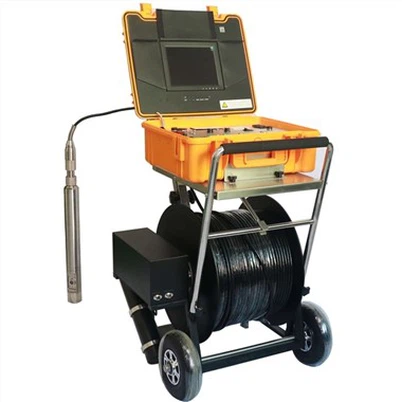
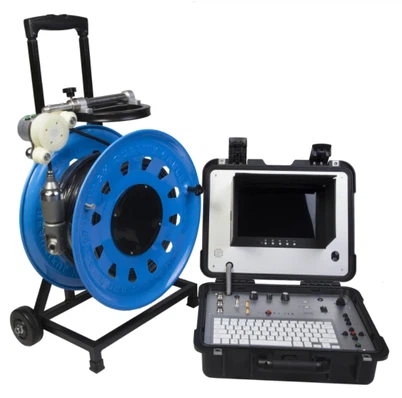
We offer some great camera options. Check out our Borehole Inspection Camera 200 Meters. It's designed to go deep into boreholes and provide clear visuals up to 200 meters below the surface. And the Underwater Borehole Inspection Camera is perfect for general underwater borehole inspections. It's reliable and gives you a good view of what's going on down there. Also, the Borehole Pipe Inspection Camera is ideal for inspecting pipes in boreholes, with high - quality imaging.
Sonar Sensors
Sonar sensors are another key component in ROVs. They work by emitting sound waves and measuring the time it takes for the waves to bounce back after hitting an object. This helps the ROV to detect objects in the water, even in low - visibility conditions.
There are two main types of sonar sensors used in ROVs: imaging sonar and scanning sonar. Imaging sonar can create a visual representation of the underwater environment, similar to a camera but using sound. It's great for getting a general idea of what's around the ROV. Scanning sonar, on the other hand, can provide more detailed information about specific objects. It can measure the distance, size, and shape of objects, which is very useful for tasks like mapping the seabed or detecting underwater obstacles.
Sonar sensors are especially important when the water is murky or dark, where cameras may not work as well. For example, if you're exploring an old shipwreck in a deep, sediment - filled area, a sonar sensor can help you find the wreck and understand its layout before you get too close.
Depth Sensors
Depth sensors are crucial for ROVs to know how deep they are in the water. They usually work based on pressure measurements. As the ROV goes deeper, the water pressure increases, and the depth sensor can convert this pressure change into a depth reading.
Accurate depth sensing is important for many reasons. It helps the operator to control the ROV's altitude and ensure it stays at the desired depth. For example, if you're conducting a scientific study at a specific depth, the depth sensor allows you to keep the ROV at that exact level. It also helps in safety, as the ROV can't go beyond its designed depth limit, which could damage the equipment.
Temperature and Salinity Sensors
Temperature and salinity sensors are used to measure the temperature and salt content of the water. These sensors are important for scientific research, as the temperature and salinity of the water can affect many aspects of the marine environment, such as the distribution of marine life and the movement of ocean currents.
Temperature sensors can detect changes in water temperature, which may indicate the presence of underwater thermal vents or the influence of different water masses. Salinity sensors, on the other hand, can measure the amount of salt in the water. This information can be used to study the mixing of fresh and saltwater in estuaries or to understand the ocean's circulation patterns.
Compass and Inertial Measurement Unit (IMU) Sensors
Compass sensors are used to determine the ROV's orientation in the water. They work by detecting the Earth's magnetic field and providing a heading direction. This helps the operator to navigate the ROV in a straight line or to follow a specific course.


An Inertial Measurement Unit (IMU) combines a gyroscope, accelerometer, and sometimes a magnetometer. It can measure the ROV's acceleration, angular rate, and orientation. The IMU is very useful for maintaining the ROV's stability and for performing precise maneuvers. For example, if you want the ROV to rotate in a certain direction or to move smoothly in a curved path, the IMU can provide the necessary data to control these movements accurately.
Pressure Sensors
In addition to depth sensors, pressure sensors are also used in other parts of the ROV. They can be used to monitor the pressure inside the ROV's housing to ensure that it's not being damaged by the external water pressure. Pressure sensors can also be used in hydraulic systems within the ROV, if it has any, to control the flow and force of the hydraulic fluid.
Chemical Sensors
Chemical sensors are used to detect the presence of various chemicals in the water. For example, they can detect pollutants, dissolved oxygen, or other substances. These sensors are very important for environmental monitoring and research.
If you're interested in studying the health of a marine ecosystem, chemical sensors can tell you if there are any harmful chemicals in the water, which could be affecting the marine life. They can also be used in industrial applications, such as detecting leaks from underwater pipelines.
Light Sensors
Light sensors are used to measure the amount of light in the water. This is important because the amount of light can affect the performance of the ROV's cameras. If the light is too low, the camera may not be able to capture clear images. Light sensors can help the ROV to adjust its own lighting system, if it has one, to provide the right amount of illumination for the camera.
Conclusion
As you can see, ROV robots use a wide variety of sensors to perform their tasks effectively. Each sensor plays a unique role in helping the ROV to navigate, collect data, and interact with the underwater environment. Whether you're in the oil and gas industry, marine research, or underwater construction, having the right sensors on your ROV is essential.
If you're looking for high - quality ROV robots with top - notch sensors, you've come to the right place. We're here to provide you with the best solutions for your underwater needs. If you're interested in purchasing an ROV or have any questions about the sensors or our products, don't hesitate to reach out. Let's start a conversation about how we can meet your specific requirements.
References
- "Underwater Robotics: Science, Design and Fabrication" by Joseph E. Brown
- "Marine Sensors and Instrumentation" by David R. Lide