
How do ROV robots ensure stability underwater?
Leave a message

As an ROV (Remotely Operated Vehicle) robot supplier, I have witnessed firsthand the remarkable advancements in underwater technology. One of the most critical aspects of ROV operation is ensuring stability underwater. This blog post will delve into the various techniques and technologies we use to guarantee that our ROV robots remain stable in the challenging underwater environment.
Understanding the Underwater Environment
The underwater environment is a complex and dynamic place. It is subject to currents, waves, temperature variations, and different types of seabeds. These factors can significantly affect the stability of an ROV robot. For instance, strong underwater currents can push the ROV off - course, while uneven seabeds can cause it to tilt or lose balance.
To counter these challenges, we first need to understand the specific conditions of the operation area. This involves conducting pre - operation surveys, which can provide valuable information about water currents, temperature, and the topography of the seabed. With this data, we can design and configure our ROVs to adapt to the specific underwater environment.
Design Features for Stability
Buoyancy Control
Buoyancy is a fundamental factor in ensuring the stability of an ROV. Our ROVs are designed with a carefully calculated buoyancy system. We use high - quality floatation materials that are lightweight yet durable. These materials help the ROV achieve neutral buoyancy, which means the upward buoyant force equals the downward gravitational force. In neutral buoyancy, the ROV can remain stationary at a specific depth without expending excessive energy.
Moreover, we incorporate adjustable buoyancy systems in many of our ROV models. These systems allow operators to make real - time adjustments to the buoyancy of the ROV. For example, if the ROV needs to move to a different depth, the operator can increase or decrease the buoyancy to achieve a smooth transition.
Hydrodynamic Design
The shape of an ROV plays a crucial role in its stability underwater. Our ROVs are designed with a hydrodynamic shape that minimizes drag and turbulence. A streamlined body reduces the resistance caused by water flow, allowing the ROV to move more efficiently and stably. Additionally, the placement of sensors, cameras, and other equipment on the ROV is carefully considered to maintain a balanced hydrodynamic profile.
Propulsion and Maneuverability
Thruster Configuration
The propulsion system of an ROV is essential for maintaining stability. Our ROVs are equipped with multiple thrusters that are strategically placed to provide precise control. Typically, we use a combination of horizontal and vertical thrusters. Horizontal thrusters are used for forward, backward, and lateral movement, while vertical thrusters control the depth and pitch of the ROV.
The configuration of thrusters allows us to counteract external forces such as currents. For example, if there is a strong current pushing the ROV to the side, the horizontal thrusters can be adjusted to maintain the desired position. Our advanced control algorithms continuously monitor the position and orientation of the ROV and make automatic adjustments to the thrusters' output.
Maneuverability and Response Time
In addition to stability, good maneuverability is also crucial for an ROV. Our ROVs are designed to have a quick response time, which means they can change direction and speed rapidly. This is especially important in complex underwater environments where the ROV may need to avoid obstacles or follow a specific path. The ability to maneuver quickly also helps in maintaining stability by allowing the ROV to adapt to sudden changes in the underwater conditions.
Sensor Technology
Inertial Measurement Units (IMUs)
IMUs are an integral part of our ROVs' stability control system. These sensors measure the ROV's acceleration, angular velocity, and orientation. By continuously monitoring these parameters, the control system can detect any deviations from the desired position or orientation. If the ROV starts to tilt or drift, the IMU sends signals to the thruster control system, which then adjusts the thrusters to correct the position.
Depth Sensors
Depth sensors are used to accurately measure the depth of the ROV. Maintaining a stable depth is crucial for many underwater operations. Our depth sensors are highly accurate and can provide real - time data to the control system. This data is used to adjust the buoyancy and the vertical thrusters to ensure that the ROV remains at the desired depth.
Sonar Systems
Sonar systems are used for obstacle detection and mapping the underwater environment. By emitting sound waves and analyzing the echoes, the sonar can provide information about the distance and shape of objects in the vicinity of the ROV. This information is essential for maintaining stability as it allows the ROV to avoid collisions with obstacles that could disrupt its balance.
Advanced Control Systems
Closed - Loop Control
Our ROVs use a closed - loop control system to ensure stability. In a closed - loop system, the control unit continuously monitors the output of the sensors and compares it with the desired values. If there is a difference between the actual and desired values, the control unit sends commands to the thrusters and other actuators to correct the situation. This feedback mechanism allows for precise and continuous adjustment of the ROV's position and orientation.
Autonomous Navigation
Many of our advanced ROV models are equipped with autonomous navigation capabilities. These ROVs can pre - programmed to follow a specific path or perform a series of tasks without constant operator intervention. Autonomous navigation systems use a combination of sensors, control algorithms, and mapping data to ensure that the ROV stays on course and maintains stability throughout the mission.
Applications of Stable ROVs
The stability of our ROVs makes them suitable for a wide range of underwater applications. For example, in the field of underwater exploration, stable ROVs can be used to explore deep - sea trenches and underwater caves. They can carry high - resolution cameras and other scientific instruments to collect data and images without being affected by the harsh underwater conditions.
In the oil and gas industry, stable ROVs are used for pipeline inspection and maintenance. They can navigate along the pipelines, detect leaks, and perform minor repairs. Our ROVs' stability ensures that the inspection and maintenance operations are carried out accurately and efficiently.


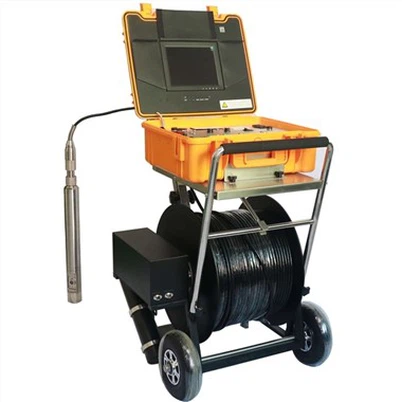
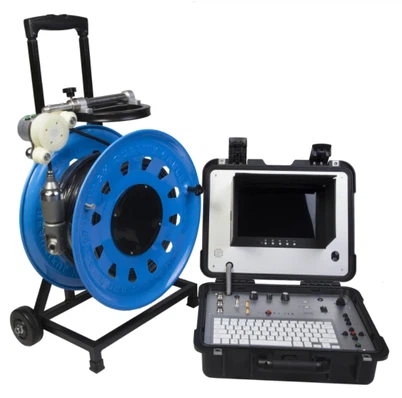
If you are interested in our ROV robots, you may also find our underwater camera systems useful. Check out our Underwater Borehole Inspection Camera for borehole inspection tasks, Drilling Deep Well Underwater Operation Camera System for deep - well operations, and our Stainless Steel Pan and Tilt Underwater Video Camera Fishing Inspection Camera System On Sales for various underwater inspection needs.
Conclusion
Ensuring the stability of ROV robots underwater is a complex but achievable task. Through careful design, advanced propulsion systems, state - of - the - art sensor technology, and sophisticated control systems, we are able to provide ROVs that can operate stably in a wide range of underwater environments.
If you are in need of high - quality, stable ROV robots for your underwater projects, we invite you to contact us for procurement and further discussions. Our team of experts is ready to assist you in finding the most suitable ROV solutions for your specific requirements.
References
- Fossen, T. I. (2011). Handbook of Marine Craft Hydrodynamics and Motion Control. John Wiley & Sons.
- Yoerger, D. R., & Slotine, J. J. (1985). Model - based control of underwater vehicles. IEEE Journal of Oceanic Engineering, 10(3), 219 - 228.
- Whitcomb, L. L., Yoerger, D. R., Howland, J. C., & Kantor, G. (2000). Dynamic simulation of underwater vehicles in a graphic environment: With experimental validation. Journal of Field Robotics, 17(1), 29 - 52.