
Can ROV robots be used for environmental monitoring?
Leave a message

Can ROV robots be used for environmental monitoring?
Hey there! I'm from a ROV robot supplier, and I've been thinking a lot about the potential of ROV (Remotely Operated Vehicle) robots in environmental monitoring. In this blog, I'll share my thoughts on whether these nifty machines can play a big role in keeping our environment in check.
First off, let's talk about what ROV robots are. These are unmanned underwater vehicles that are controlled remotely by an operator on the surface. They come equipped with a variety of sensors and cameras, which allow them to explore and gather data from the depths of the ocean, lakes, and other water bodies.
One of the key advantages of using ROV robots for environmental monitoring is their ability to access hard - to - reach areas. There are many parts of our water bodies that are difficult or dangerous for humans to reach. For example, deep - sea trenches, areas with strong currents, or locations near underwater volcanoes. ROV robots can easily navigate these areas, providing us with valuable data that would otherwise be impossible to obtain.
Take, for instance, the use of ROVs in monitoring coral reefs. Coral reefs are incredibly important ecosystems, but they're also under threat from climate change, pollution, and overfishing. ROV robots can be used to survey these reefs in detail. They can capture high - resolution images and videos of the coral, allowing scientists to assess the health of the reef, detect any signs of disease or damage, and monitor changes over time. This data is crucial for developing conservation strategies to protect these precious ecosystems.


Another area where ROV robots shine is in detecting and monitoring water pollution. They can be equipped with sensors that can measure various parameters such as water temperature, pH levels, dissolved oxygen, and the presence of pollutants like heavy metals and chemicals. By continuously monitoring these parameters, we can get a better understanding of the quality of the water and identify sources of pollution. This information can then be used to take appropriate action to clean up the water and prevent further damage to the environment.
ROV robots can also be used for monitoring the movement and behavior of marine life. They can follow schools of fish, observe the behavior of whales and dolphins, and track the migration patterns of other marine species. This data is important for understanding the ecological balance of our oceans and for developing sustainable fishing practices.
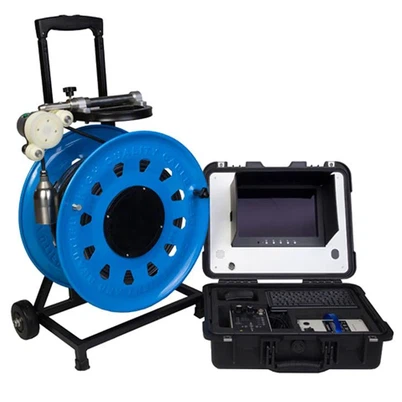
Now, let's talk about some of the specific ROV - related products that can be useful for environmental monitoring. We offer products like the Borehole Deep Water Inspection Camera. This camera is designed to provide clear images of the inside of boreholes, which can be useful for monitoring groundwater quality and detecting any signs of contamination.
The Borehole Water Well Camera is another great tool. It allows for detailed inspection of water wells, helping to identify any issues such as leaks or blockages. This is important for ensuring the safety and quality of our drinking water.
And then there's the Waterproof Camera System For Deep Well. This system is built to withstand the harsh conditions of deep wells and can provide real - time video footage, enabling us to monitor the well environment effectively.
Of course, like any technology, ROV robots also have their limitations. One of the main challenges is the cost. ROVs can be quite expensive to purchase, operate, and maintain. This can be a barrier for some organizations, especially smaller ones with limited budgets. Another challenge is the complexity of operating the robots. It takes a certain level of skill and training to control an ROV effectively, and not everyone has the necessary expertise.
However, despite these challenges, the potential benefits of using ROV robots for environmental monitoring are significant. As technology continues to improve, we can expect to see more advanced and cost - effective ROVs in the market. This will make it more accessible for a wider range of organizations to use these robots for environmental monitoring.
In conclusion, ROV robots definitely have a lot of potential for environmental monitoring. They can provide us with valuable data from hard - to - reach areas, help us detect and monitor pollution, and understand the behavior of marine life. If you're interested in using ROV robots for environmental monitoring or have any questions about our products, we'd love to have a chat with you. Whether you're a research institution, an environmental agency, or a private company, we can work together to find the right ROV solution for your needs. So, don't hesitate to reach out and start a conversation about how we can help you in your environmental monitoring efforts.
References
- Various scientific studies on the use of ROVs in environmental monitoring.
- Industry reports on the development and application of ROV technology.