
Can coaxial lines be used for high - frequency applications?
Leave a message

Can coaxial lines be used for high - frequency applications?
Hey there! As a coaxial line supplier, I get this question a lot. And the answer is a resounding yes! Coaxial lines are not only suitable for high - frequency applications but are also a go - to choice in many industries.
Let's start by understanding what coaxial lines are. A coaxial cable consists of an inner conductor, surrounded by a dielectric insulator, then a metallic shield, and finally an outer insulating jacket. This structure gives coaxial lines some unique properties that make them great for high - frequency use.
One of the key advantages of coaxial lines in high - frequency applications is their ability to minimize signal loss. At high frequencies, signals are more prone to attenuation, which can lead to a degradation of the signal quality. The design of coaxial cables, with the shield protecting the inner conductor, helps to reduce electromagnetic interference (EMI) and keep the signal intact. This means that even over long distances, the high - frequency signals can be transmitted with relatively low loss.
Another important aspect is the impedance matching. Coaxial lines are designed to have a specific characteristic impedance, usually 50 or 75 ohms. This impedance matching is crucial in high - frequency circuits as it ensures maximum power transfer between the source and the load. If the impedance is not matched correctly, a significant amount of the signal can be reflected back, leading to signal distortion and reduced efficiency.
In the world of telecommunications, coaxial lines are widely used for high - frequency applications. For example, in cable television systems, coaxial cables carry high - frequency signals that deliver a wide range of channels to our homes. The high - frequency signals can carry a large amount of data, allowing for high - definition video and other multimedia content.
In the field of wireless communication, coaxial lines are used to connect antennas to transmitters and receivers. The high - frequency signals generated by the transmitter need to be efficiently transferred to the antenna for radiation. Coaxial cables provide a reliable and low - loss connection for these high - frequency signals.
Now, let's talk about some of the products that are related to high - frequency applications and coaxial lines. If you're in the business of pipe inspection, you might be interested in the Snake Camera WiFi Inspection Camera Endoscope. This camera uses high - frequency signals to transmit the video feed, and coaxial lines can be used to ensure a stable and high - quality connection.
For those working in underwater applications, the Underwater network high definition and low light video camera on sale is a great option. High - frequency signals are used to transmit the high - definition video from the underwater camera to the surface. Coaxial lines can handle these high - frequency signals well, even in the challenging underwater environment.
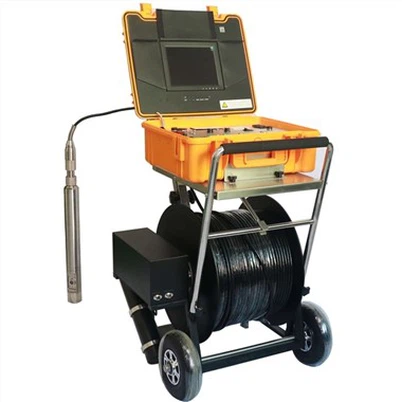
And if you need to inspect water pipes, the 100m Water Pipe Inspection Camera Pan Tilt Drilling Pipelines Camera is a powerful tool. Coaxial lines can be used to connect the camera to the control unit, ensuring that the high - frequency signals for pan - tilt control and video transmission are reliable.
Of course, like any technology, coaxial lines also have some limitations. At extremely high frequencies, the losses in coaxial lines can start to increase, and other transmission media might be more suitable. However, for most high - frequency applications in the range of a few megahertz to several gigahertz, coaxial lines are still a very viable option.
When choosing coaxial lines for high - frequency applications, there are a few things to consider. The quality of the cable is crucial. Look for cables with high - quality materials, such as a good - quality inner conductor and a thick shield. The flexibility of the cable is also important, especially if it needs to be installed in tight spaces.
In addition, the length of the coaxial line can affect the signal quality. Longer cables can introduce more signal loss, so it's important to choose the appropriate length for your application. You might also need to consider the connectors used with the coaxial line. High - quality connectors can ensure a good electrical connection and minimize signal reflections.
If you're in the market for coaxial lines for high - frequency applications, I'd love to have a chat with you. We have a wide range of coaxial cables that are designed to meet the needs of different high - frequency applications. Whether you're in the telecommunications, industrial, or consumer electronics industry, we can provide you with the right coaxial solution.
So, if you're interested in learning more about our coaxial lines or have any questions about high - frequency applications, don't hesitate to reach out. We're here to help you find the best coaxial line for your specific needs.


References:
- "High - Frequency Electronics: Design and Applications" by John Doherty
- "Coaxial Cable Handbook" by Andrew Smith