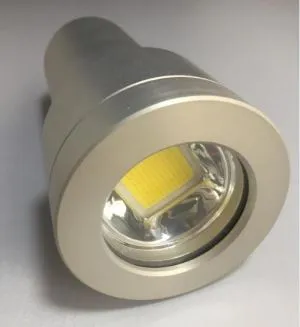

What are the common faults of LED underwater lights
Leave a message
In order to do a good job of waterproofing, manufacturers will use a variety of waterproof components: waterproof driving, etc. , only the type of sealant will be used 4 to 6 kinds. LED underwater lamps go through several stages of inspection from production to factory. First look at some of the most common problems encountered in site use:

1. Test the lamp directly with 220V voltage:
The situation is very common in engineering. Once the product arrives on the construction site, the installer doesn't even think about it. First try it with 220V. When you are out of luck, dozens of them will be burnt in one line. In fact, when guiding the installation of the project on the spot, the misconnection of the wiring by the master is often checked.
2. It is not waterproof when installed:
Sometimes customers say that the light is broken, and during on-site inspections, it is found that some wire skins have been exposed to water.
3. The underwater light is too far away from the transformer:
The situation causes the voltage at both ends of the underwater lamp to be far less than 12V. Even though the lamp is good, it will not light up normally if it does not reach a certain voltage.How to choose a transformer?
Transformer type:
Ordinary transformer: Ordinary coil transformer.
Rainproof transformer: add rainproof shell.
Waterproof transformer: a fully waterproof transformer filled with glue, which can be used under water.
Precautions for installation of LED underwater lamps:
a. Configure a suitable transformer according to the total power of the LED underwater lamps:
Generally speaking, the utilization rate of the transformer is 75%, that is, a 100W transformer drives a lamp that does not exceed 75W. Pay attention to the inlet and outlet wires of the transformer.
b. The distance between the transformer and the lamp:
Due to the resistance of the wire itself, a part of the voltage will be distributed, causing the voltage of the remote underwater light to be less than 12V. Therefore, the distance between the underwater light and the outlet of the transformer should not be too far. If the distance is too far, you can increase the number of transformers.
c. Be waterproof:
Waterproof the connection between power supply and transformer, transformer and underwater light:
Use waterproof junction box and sealant.
d. The safest method in theory is to put the high voltage (220V) part outside the water surface, the low pressure part can be placed in the water.
If you want know more, you can contact us: info@granfoo-cn.com